EXCAVATION TRADE
Utility Trenching Insurance in Colorado
You hit a gas line. Here's who pays, and what your policy has to say for the carrier to be in the conversation. Trenching is the excavation trade where the law, the locate ticket, and the GL form all show up on the same claim.
Most trenching contractors know the locate rule and still get burned by it. The ticket was valid on Monday. The rain delay ran into the second week. The paint washed off a Colorado Springs curb line in one hailstorm. And the bucket found the gas service on the day nobody re-checked. This page sits under our excavation hub and covers what an underwriter sees, the five claims that actually happen, and what the Colorado excavation statute does to each of them. If you also grade pads, see grading and site prep.
What the underwriter sees on a trenching application
Two things: the class and the letters.
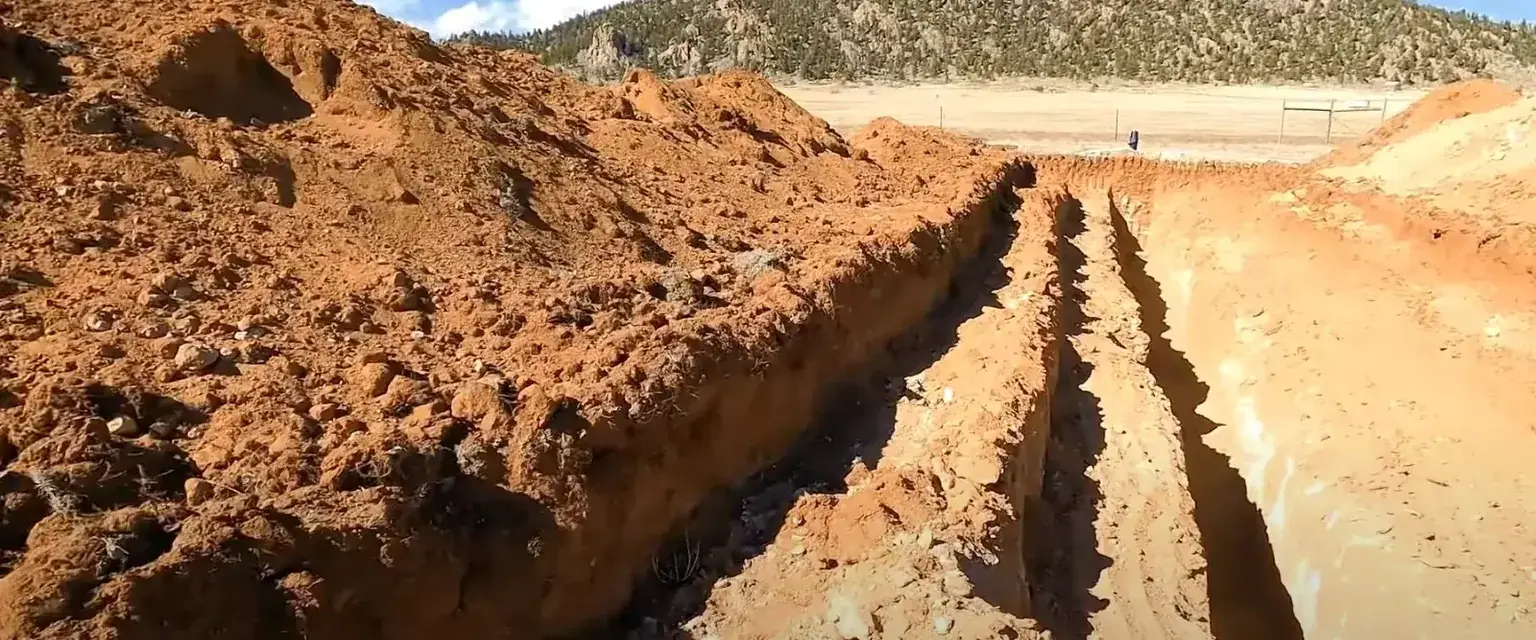
The class is typically excavation, at the higher-hazard end of it. Trenching is the definition of underground work: opening ground next to live gas, electric, water, and fiber, in public right-of-way, with people in the hole. Nothing on the application changes the class.
The letters are XCU. Explosion, collapse, underground. Some GL forms exclude all three, and on a trenching policy that removes the gas strike, the trench wall, and the water main in the sidewall. In other words, the trade. We won’t place a trenching GL with the XCU exclusion on it, and we read the endorsement schedule to confirm, because it doesn’t always show on the dec page.
What the application asks after that: depth, and how often you’re past the point where a protective system is required. Trench boxes owned or rented. Directional boring. Which utilities you work near, and whether any of it is gas transmission rather than distribution. How much is in public right-of-way. Your locate practice: who calls, who tracks ticket dates, what happens when the marks disappear. Radius. And loss runs, because a strike with a valid ticket reads differently from one without.
The five exposures that produce trenching claims
- Gas strike. A mid-size excavator opening a service trench in Colorado Springs clips a gas line in an area nobody pre-marked, the block gets evacuated, and the utility’s repair bill arrives with the fire department’s.
- Fiber strike. A trencher cuts a fiber backbone under a Fort Collins sidewalk. The cable is cheap. The claim is the outage, the splice crew’s overtime, and every business downstream that lost a day.
- Trench collapse. A trench in Denver’s expansive clay stands fine through two days of sun, then sloughs after a night of rain with a laborer bedding pipe. Workers’ comp for him, GL for the water main in the sidewall.
- Working in CDOT right-of-way. A road crossing on US 287 near Loveland runs long, the traffic-control plan lapses at dusk, and a motorist hits the steel plate. GL, commercial auto, and the permit bond all get a call.
- Your own equipment. A trench box and a plate compactor walk off a Fort Collins lot overnight, and a trencher loaded wrong slides off the trailer on I-25. Inland marine, and the transit coverage is the part that matters.
On the fiber strike, a word. Some GL forms limit loss-of-use and consequential damages, and the utility’s claim is almost all consequential. The policy language controls. Read that section before you assume a clean XCU line means the strike is covered.
The coverage stack we’d build
| Coverage | Why | Typical contract requirement |
|---|---|---|
| General liability, occurrence form, no XCU exclusion | Strikes, collapse damage to third parties, the motorist and the plate, the neighbor’s foundation. Defense when the utility sues. | $1M per occurrence / $2M aggregate; additional insured; primary and non-contributory |
| Commercial auto | Dump trucks, the vac truck, service trucks, and the trailer with the trencher on it. In right-of-way work, the truck is often part of the traffic control. | $1M combined single limit; hired and non-owned |
| Contractors equipment (inland marine) | Excavator, trencher, trench boxes, plates, compactors, the laser. Theft off an open lot, rollover, transit. | Your lender |
| Workers’ compensation | The person in the trench. Required at the first employee. | Statutory; employer’s liability commonly $500K / $500K / $500K; waiver of subrogation |
| Umbrella / excess | A gas strike with an evacuation, or a fiber strike with a hospital downstream, passes $1M fast. | $2M to $5M on CDOT, municipal, and utility work |
| Contractors pollution liability | A cut sewer main, a hydraulic hose in a creek crossing, dewatering discharge in the wrong place. Excluded under most standard GL forms. | Common on utility and public work |
| Bonds | Right-of-way and permit bonds for CDOT, county, and city work; performance bonds on public jobs. Surety, not insurance. | Set by the permit or the bid documents |
Contract requirements you’ll run into
- CDOT and public agencies. The permit itself carries the insurance section: the limits above, the agency as additional insured, a certificate before you break ground, traffic control, and a bond. Counties and cities copy the same form.
- Utility owners and their primes. Gas, electric, and telecom primes push their master service agreement down to you. Look for indemnity covering the utility’s own negligence, damage-to-facility clauses, and consequential-damage language. These are the contracts that ask for the umbrella.
- GCs on site work. The usual $1M/$2M with CG 20 10 and CG 20 37, primary and non-contributory, and a waiver of subrogation. Some add a per-project aggregate.
- Directional boring. If you bore, the contract and the carrier both want to know.
Colorado notes for trenching contractors
The locate rule. Colorado law requires notice to Colorado 811 at least two business days before excavating, not counting the day you call (C.R.S. 9-1.5-103(3)(b)); Colorado 811 phrases the same window as three full business days, so a Monday call means a Thursday dig. (C.R.S. 9-1.5-103(3)(b)) Two business days, not counting the day you call. Colorado 811 counts it as three. Either way, a Monday call means a Thursday dig.
How long the marks last. Locate markings stay valid while clearly visible, but for no more than thirty calendar days after the locate request due date (C.R.S. 9-1.5-103). (C.R.S. 9-1.5-103) Hail, rain, and a week of traffic erase paint well before thirty days. If you can’t see the marks, re-call. It costs a day. The strike costs more.
Commission fines. SB 18-167 (2018) created the Underground Damage Prevention Safety Commission (C.R.S. 9-1.5-104.2), whose maximum fines under C.R.S. 9-1.5-104.4(3) run from $250 for a first minor violation to $75,000 for a fourth or later major violation within twelve months. (C.R.S. 9-1.5-104.2; 9-1.5-104.4(3); SB 18-167) Fines are not insurable under most standard forms. They come out of your pocket.
Civil penalties. Separately from commission fines, C.R.S. 9-1.5-104.5 lets an owner, operator, excavator, aggrieved party, district attorney, or the attorney general sue for civil penalties: $200 for excavating without notice, and $5,000 for a first offense (up to $25,000 for later ones, and up to $75,000 after more than three in twelve months) when that failure damages a facility. (C.R.S. 9-1.5-104.5(2)(b), (2)(c), (3)) Separate from the commission and from the repair bill.
Presumed liability. Under C.R.S. 9-1.5-104.5(2)(d), a contractor who damages an underground facility after failing to notify Colorado 811, or failing to use reasonable care, is presumed liable for the owner's repair or replacement costs, litigation costs and attorney fees, and any resulting injury or property damage. (C.R.S. 9-1.5-104.5(2)(d)) Read that twice. Dig without a valid ticket and the law starts from the assumption that the strike is yours. The mirror rule helps: if the owner failed to mark with reasonable care after a valid notice, the presumption flips to them. Your ticket records are the most valuable paper you own.
Colorado Springs. Colorado Springs City Code § 12.10.104 requires anyone planning an excavation to identify the dig area when calling 811, by pre-marking it with white paint, flags, or stakes, or by providing an electronic map or aerial delineation; utility owners may decline to locate until an unclear area is pre-marked. (Colorado Springs City Code §§ 12.10.101, 12.10.104, 12.10.106 (Ord. 20-70; Ord. 24-09)) In Colorado Springs, white paint or an electronic map is part of the ticket, not an extra. Other cities have their own ordinances; see Denver and Fort Collins and Loveland.
CDOT right-of-way. CDOT utility and special-use permits for work in state highway right-of-way require commercial general liability of $1,000,000 per occurrence and $2,000,000 aggregate and $1,000,000 auto liability, with CDOT named as additional insured and certificates furnished before work starts; access-permit projects may also require a performance bond. (CDOT Form 1233 (Utility Permit) and Form 1283 (Special Use Permit); 2 CCR 601-18 § 2.2.2) [VERIFY] That’s the template most public agencies copy, and the reason $1M/$2M shows up on a county culvert job that has nothing to do with CDOT.
Workers’ comp. Colorado employers must carry workers' compensation insurance as soon as they have one or more employees, whether part-time, full-time, or family members (C.R.S. 8-40-203(1)(b), 8-44-101); the state can fine an uninsured employer up to $500 for every day without coverage. (C.R.S. 8-40-203(1)(b); 8-44-101; 8-43-409) The laborer in the trench is who the statute was written for.
Trench protection. Federal rules set the depth at which a protective system is required and call for a competent person on site. We don’t quote the depth because the rule and its exceptions are longer than a number; OSHA’s excavation standard is the source, and the carrier will ask for your competent-person records on a collapse claim.
Where to go from here
Already carry GL? Send the dec pages to the policy review and we’ll find the XCU line, the consequential-damage wording, and whether the umbrella actually sits over the auto. Starting fresh, or picking up your first utility prime contract? Get Insured lists what to have ready. No online quote. A trenching book is built around what you dig next to and who you sign with.
Serving businesses located in Colorado. Coverage is determined by the policy language and the carrier.
Coverage
Coverage built for utility trenching.
-
 Coverage
General liability
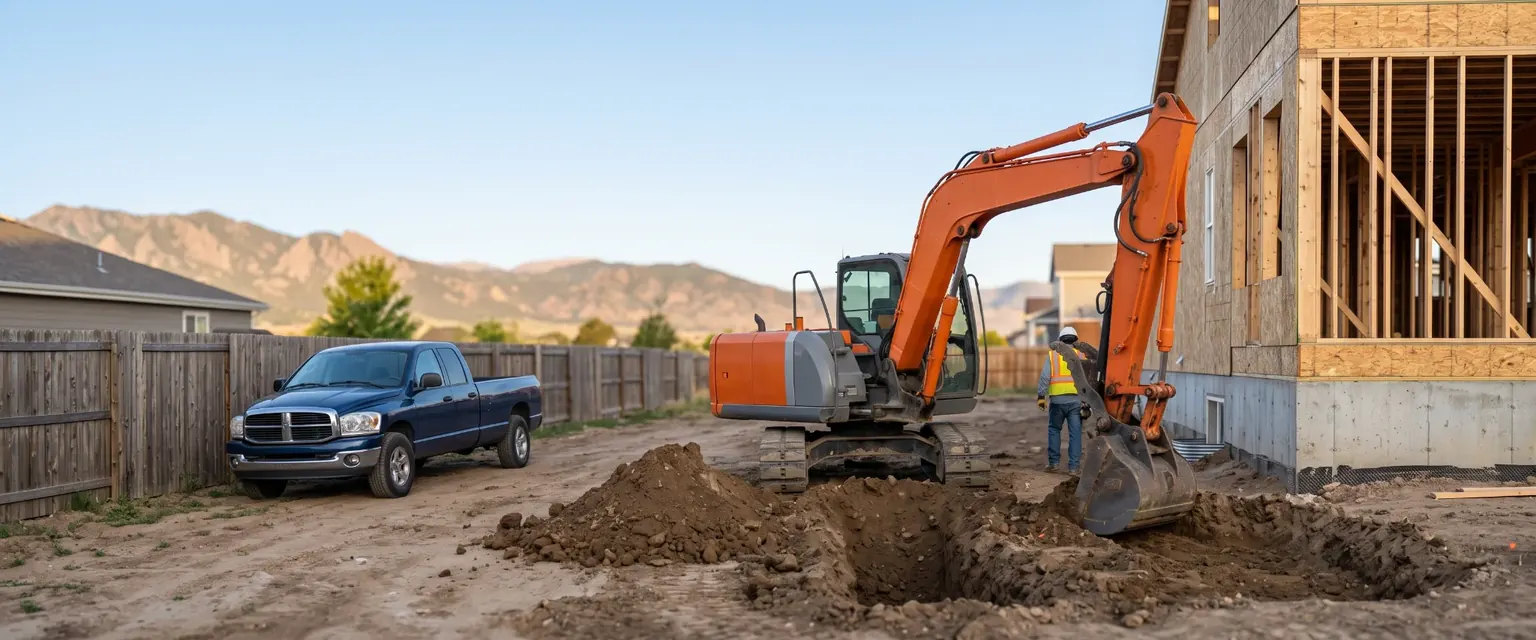
Pays when your work hurts someone else or their property. The one every GC asks about first. General liability explained -
 Coverage
Umbrella and excess
Stacks on top of GL, auto, and employer's liability for the claim that blows past $1M. Umbrella and excess explained -
 Coverage
Bonds
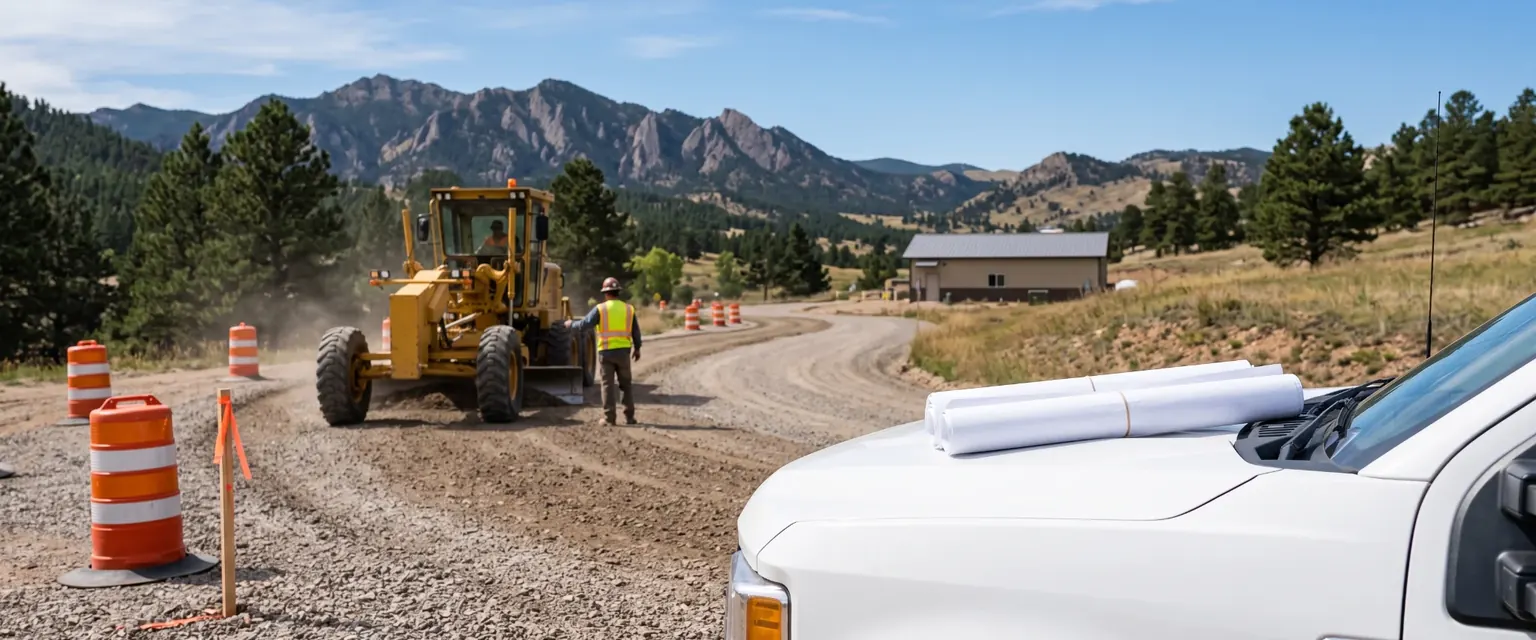
A bond is credit, not insurance. License, permit, and performance bonds, and how you build capacity. Bonds explained
Does general liability cover hitting a gas or fiber line?
What does Colorado law say if I hit a line without a locate ticket?
What insurance does CDOT require to work in a state highway right-of-way?
Is a trench collapse covered?
Statutes and numbers on this page last verified September 2, 2026 by a licensed Colorado producer. How we verify.