LANDSCAPING
Landscaping Insurance in Colorado, Written by People Who Run the Skid Steer
Mower rock-throw, a retaining wall that moves in expansive clay, herbicide drift, a trencher through a gas line, and a property manager who wants a certificate by Friday. Here's what a Colorado landscaping policy has to do, and what most of them skip.
Trades we write
The landscaping trades, one page each.
Each one covers the exposures that produce claims in that trade, the coverage stack we would build, and the Colorado rules that apply.
-
 LANDSCAPING TRADE
Hardscape and Paver Installer
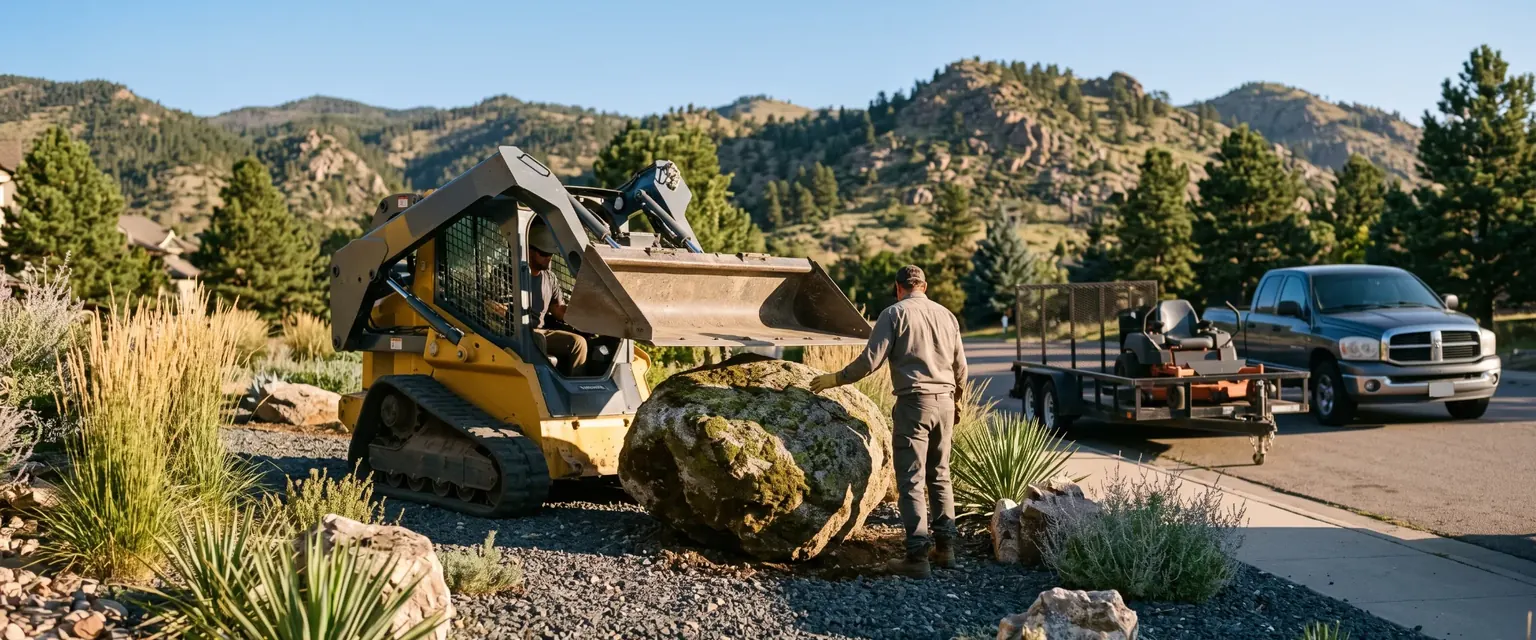
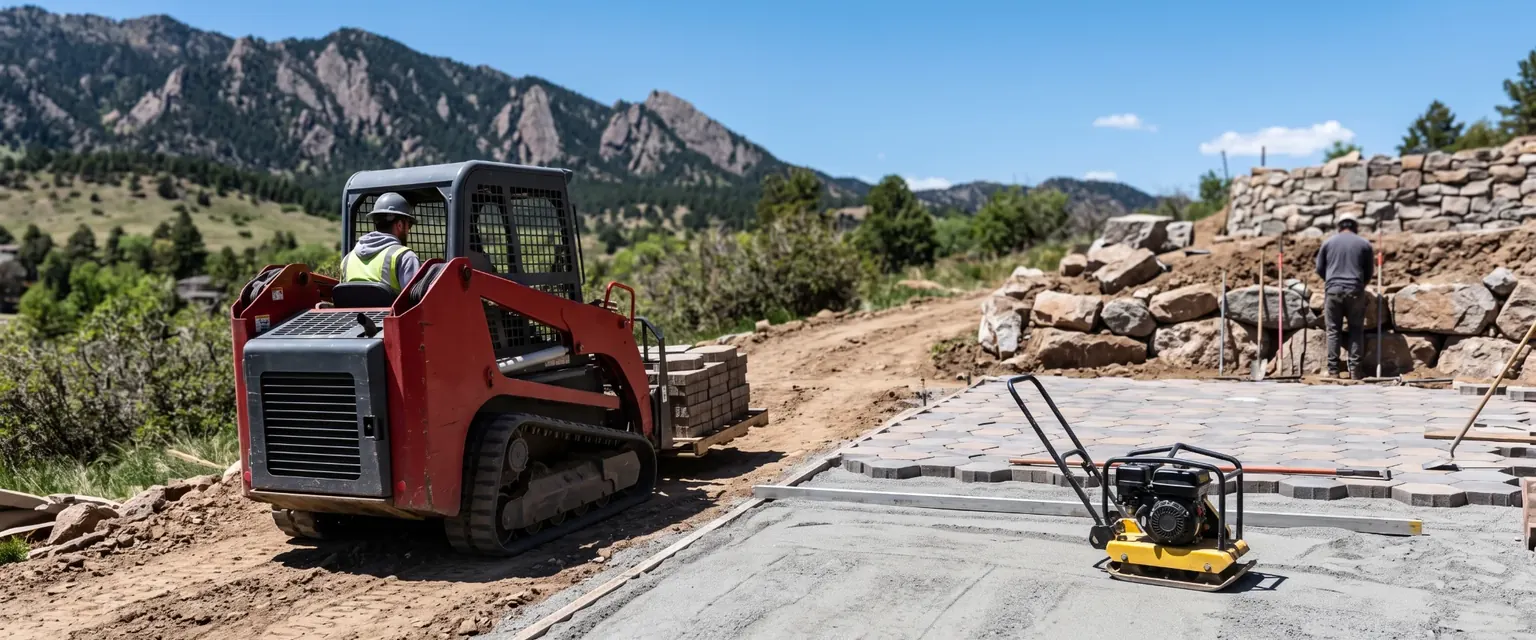
A retaining wall is the one thing a landscaper builds that can hurt somebody three years after the final payment. Hardscape and Paver Installer insurance -
 LANDSCAPING TRADE
Irrigation Contractor
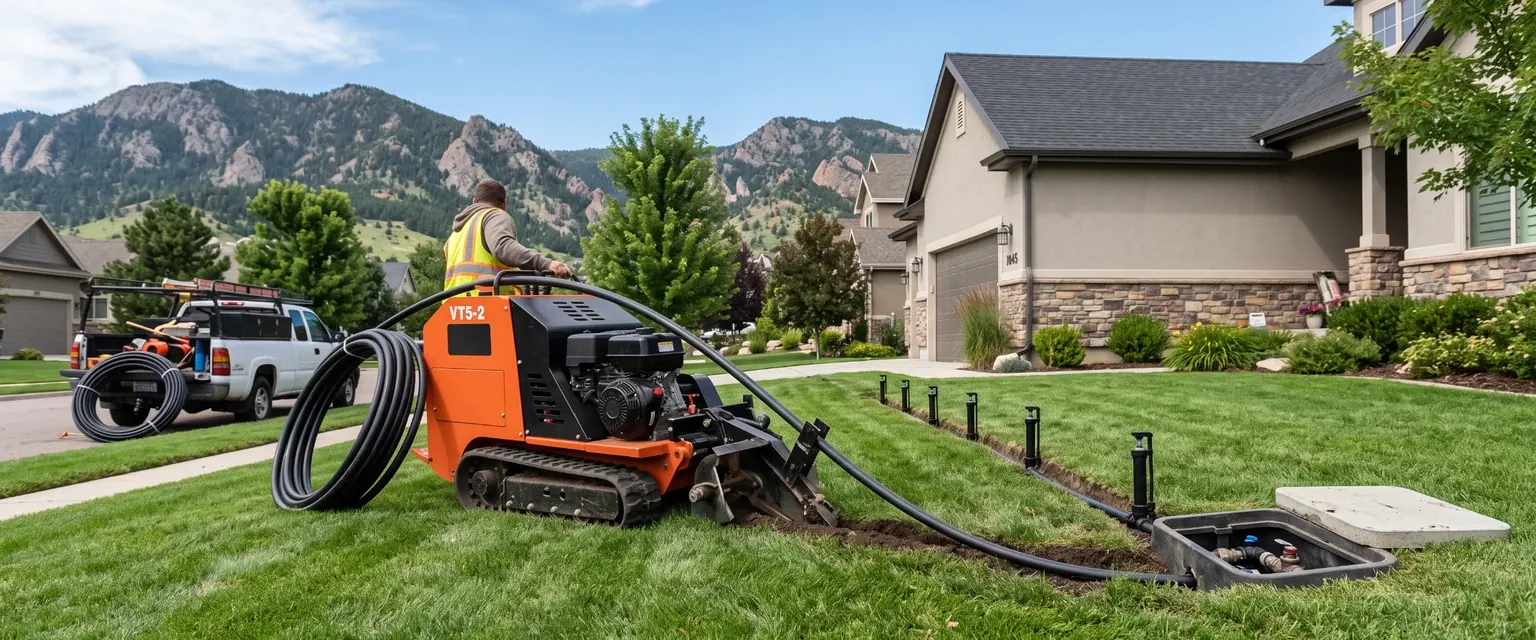
Irrigation is the landscaping trade that puts water under pressure next to somebody's foundation. Irrigation Contractor insurance -
 LANDSCAPING TRADE
Lawn Care and Maintenance
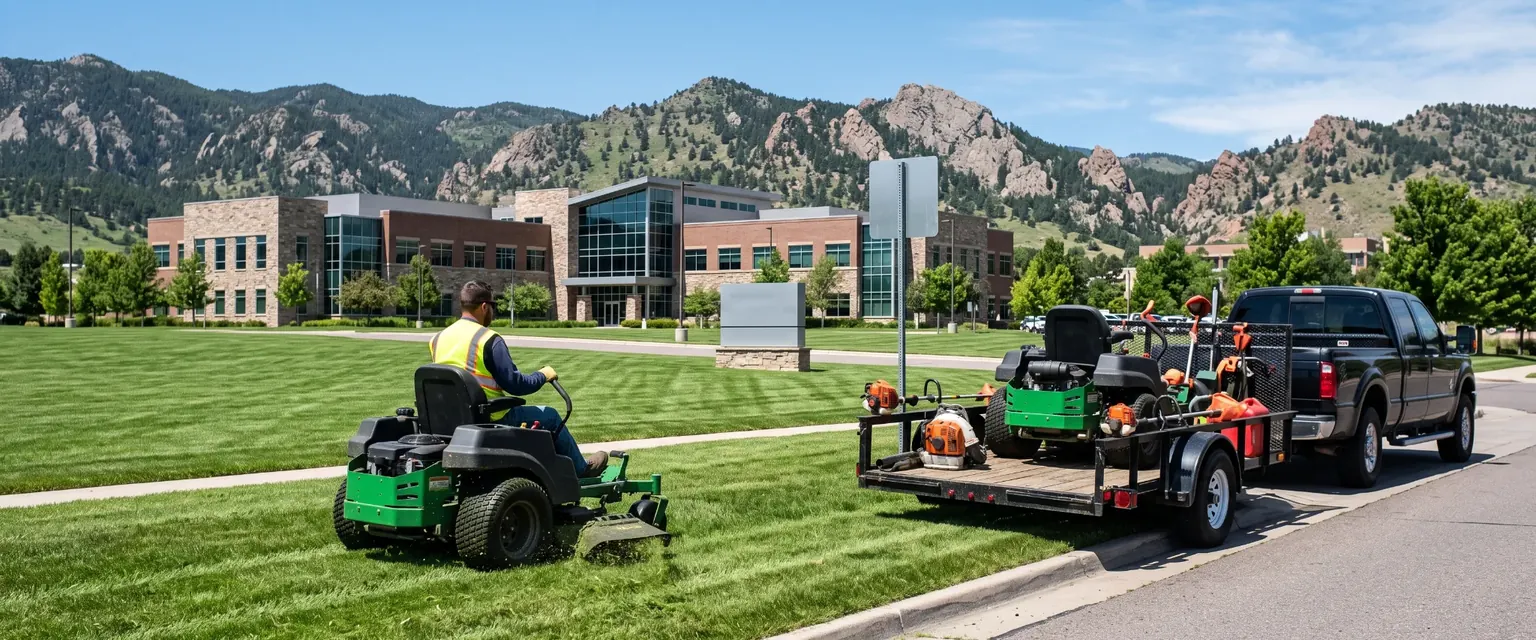
Maintenance is the landscaping trade with the most claims per dollar of revenue. Not the biggest claims. The most. Lawn Care and Maintenance insurance -
 LANDSCAPING TRADE
Tree Service
Tree work is the landscaping trade carriers are most careful with, and the one landscapers most often do without telling anyone. Tree Service insurance
Landscaping in Colorado is three businesses wearing one logo. Maintenance (mowers, trimmers, crews, chemicals). Install (skid steers, pavers, walls, irrigation, trees). And for most outfits on the Front Range, plowing from November to April. Most landscaping policies we review were written for the first one and silently ignore the other two.
We run a Yanmar mini skid steer, a mid-size excavator, and a Bomag roller on landscape-adjacent work in Park County: boulder walls, driveways, drainage, defensible space. We know what a base needs in expansive clay, and what happens to a wall that didn’t get it. This page covers what an underwriter sees, the claims that actually happen, the stack we’d build, the licensing patchwork, and the winter problem. If you’d rather skip to the part where we mark up your current policy, the policy review is right here.
What your operation actually looks like to an underwriter
The underwriter is sorting you into buckets before they read a word of the narrative. Maintenance or install. Residential or commercial. Chemicals or no chemicals. Trees or no trees. Snow or no snow. Each bucket carries a different rate, and the honest answer is that most landscapers live in four of them at once.
Then the numbers. Payroll split by task, because landscape gardening, lawn maintenance, and tree work rate under three different class codes. Equipment list with values. Vehicle list. Revenue from HOAs and property managers versus homeowners. Chemical application, and whether you hold the applicator license or sub it out. Retaining walls, and how tall. Irrigation, and whether you tie into potable water. Subcontractor use. Loss runs.
Colorado adds a few lines. Expansive clay on the Front Range moves walls and patios that were fine on paper. Hail wrecks plant material, vehicles, and equipment in the yard from May to September. Wind on the plains east of Aurora turns a herbicide application into a drift claim. Freeze-thaw above 7,000 feet heaves paver bases and cracks irrigation lines. And the season ends hard, which is why the snow question is on the application whether you like it or not.
One more thing an underwriter notices: certificate requests. A landscaper with twelve HOA accounts in Highlands Ranch asks for additional insured endorsements constantly. That’s not a problem. It’s a signal that the GL needs a blanket additional insured endorsement rather than one per request. Get Insured lists what to bring.
The exposures that actually produce claims
We’ve seen landscaping claims come from the same handful of places, over and over.
- Mower rock-throw. A zero-turn on a corner lot in Aurora sends a rock through a passing car’s window, or a neighbor’s sliding door. Small, frequent, and the reason GL exists for maintenance crews.
- Retaining wall failure. A segmental block wall on a Castle Rock slope goes up without drainage behind it. Two springs of freeze-thaw and expansive clay later, it leans, then it goes. Property damage, and an argument over whether your work or the soil caused it.
- Herbicide and fertilizer drift. A pre-emergent goes down on a windy afternoon in Fort Collins and the neighbor’s vegetable garden dies. Under most standard GL forms that’s a pollution claim, and the pollution exclusion is the first thing the adjuster reads.
- Irrigation water damage. A backflow assembly gets installed wrong or a line is left charged through a hard freeze, and the water goes into the crawl space. Faulty work is typically excluded; the resulting damage to the house is typically covered. Worth understanding before the claim.
- Utility strikes. A walk-behind trencher for a drip line finds a gas service on a lot in Denver. Locate rules apply to irrigation trenching the same way they apply to an excavator.
- Crew injuries. Trimmer kickback, a mower on a slope, heat, a hand under a boulder being set with the skid steer. Workers’ comp.
- Trailer and equipment theft. An enclosed trailer with three mowers and every hand tool the crew owns disappears from a gas station in Thornton at 6 a.m. Inland marine, and the schedule decides what comes back.
- Tree work gone wrong. A limb drops on a roof, or a climber gets hurt on a removal you took because the customer asked. If tree work isn’t on the policy, this is where you find out.
- Vehicle accidents. A crew truck pulling a dump trailer down I-25 in a spring hailstorm. Commercial auto, plus hired and non-owned for the crew member in his own truck.
Things go wrong on every job. The point is that each one lands on a policy written to catch it.
The coverage stack we’d build
| Coverage | Why | Typical contract requirement |
|---|---|---|
| General liability | Injury and property damage you cause on someone else’s property: rock-throw, a wall that fails, a trailer backed into a garage. | $1M per occurrence / $2M aggregate; additional insured for HOAs, property managers, and GCs |
| Commercial auto | Crew trucks, trailers, and the dump truck. Personal auto forms commonly exclude business use, and a trailer full of mowers is business use. | $1M combined single limit; hired and non-owned auto for employees driving their own trucks |
| Contractors equipment (inland marine) | Skid steers, mowers, trenchers, hand tools, and the trailer they ride on. Theft is the common claim. | Not usually in the contract; required by lenders and by the price of a stolen trailer |
| Workers’ compensation | Landscaping is crew work. Colorado requires it at the first employee, and seasonal help counts. | Statutory limits; waiver of subrogation on most commercial and HOA contracts |
| Pollution liability (or an endorsement) | Herbicide and fertilizer drift, fuel spills, and a GL pollution exclusion that reads broadly enough to catch both. | Required by some municipal and school district contracts; the applicator statute does not require it |
| Umbrella / excess liability | For the HOA, municipal, or commercial property contract that asks for more than the GL and auto limits. | $2M to $5M on larger commercial and municipal accounts; rare on residential |
| Installation floater | Pavers, block, plant material, and boulders on site before the job is done. Hail and theft are the Front Range claims. | Sometimes required on commercial installs; usually a business decision on residential |
| License and permit bonds | Some cities require a bond with a contractor or right-of-way permit for work in the parkway. | Set by the city; surety, not insurance |
The line that trips up landscapers is the pollution one. Under most standard GL forms, the pollution exclusion is written broadly enough to catch a herbicide application that drifts, a fertilizer spill that runs into a storm drain, and a fuel can that tips over in a customer’s garage. What the GL still covers is everything else: the rock-throw, the wall, the injury to a passerby, the defense. The fix is a pollution endorsement on the GL or a standalone contractors pollution policy. The endorsement is fine for a maintenance outfit doing a few applications a month. The standalone policy makes more sense once chemicals are a real line of business. The policy language controls, so we read the endorsement, not the summary.
Colorado law and licensing notes for landscapers
The licensing question comes up on almost every landscaping call. The answer is less tidy than people expect.
No state license, a lot of city rules. Colorado has no state landscape-contractor license (DORA licenses landscape architects only); landscapers answer instead to local business-license, right-of-way, and trade-permit rules that vary by city, and most Front Range building departments do not issue a landscape-specific contractor license. (DORA Division of Professions and Occupations program list; City of Aurora and Denver contractor class lists) So the question is never “am I licensed in Colorado.” It’s “what does Denver require, what does Aurora require, what does Colorado Springs require,” and the answers differ. Business license, right-of-way permit for work in the parkway, trade permits for irrigation tie-ins and retaining walls. Ask each building department before you bid there.
Pesticide application. Under C.R.S. 35-10-106(1)(a), a Colorado commercial pesticide applicator business must carry liability insurance of at least $400,000 (a policy with a pollution exclusion still qualifies) with ten days' cancellation notice to the Commissioner of Agriculture. (C.R.S. 35-10-106(1)(a); 8 CCR 1203-2) Read the middle of that sentence again. A policy with a pollution exclusion satisfies the statute. Which means a licensed applicator can be fully compliant with the Department of Agriculture and still have no coverage for the drift claim. That’s how the statute is written, and it’s the reason the pollution line is in the table above.
Retaining walls. Taller walls and any wall holding back a surcharge (a driveway, a structure, a slope above it) commonly need an engineer’s design and a building permit. The height threshold is set by the local building department, and it varies. Build a wall that needed a stamp without one and the claim becomes an argument about faulty work, typically excluded, versus resulting damage, typically covered. More on the hardscape and paver page.
Irrigation and backflow. Tying into potable water usually means a backflow assembly the water utility expects to see tested. Whether the tap needs a permit, an inspection, or a licensed plumber depends on the city, so ask before you bid. An assembly that fails a test is a service call. One that contaminates a supply is a different kind of claim. Ask us about it.
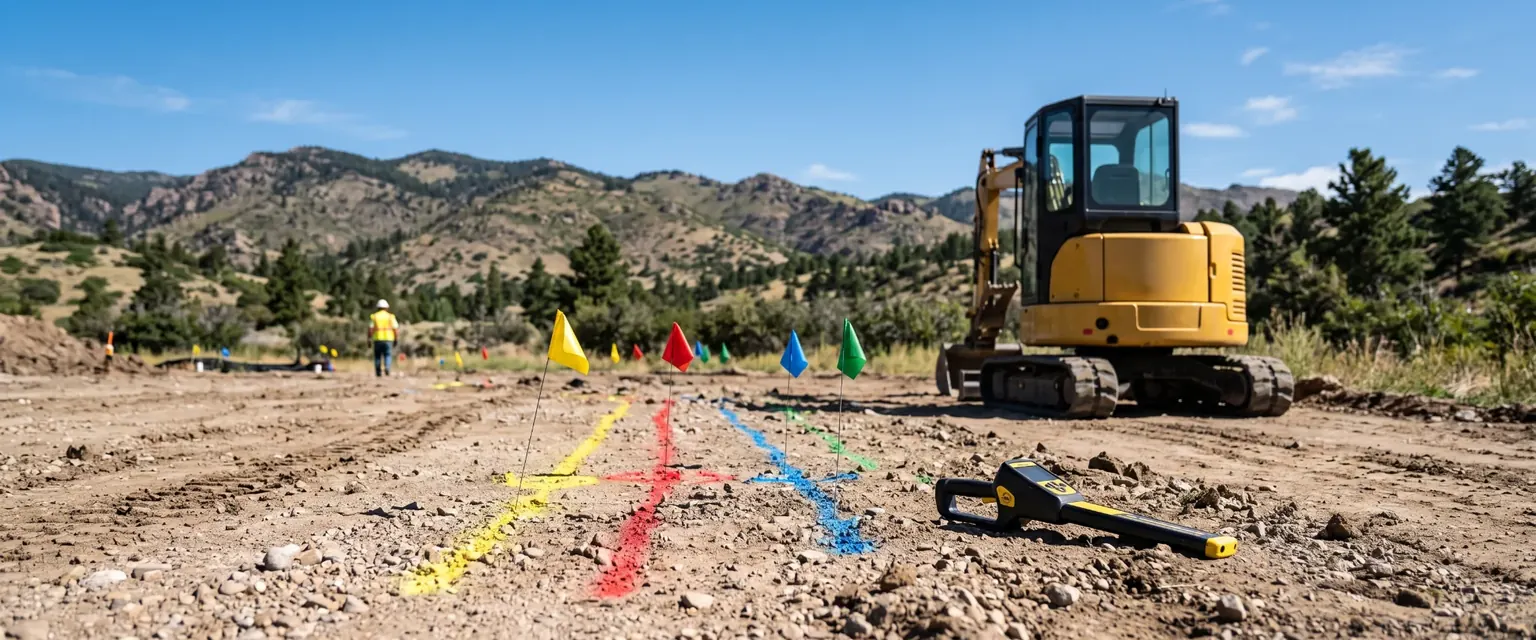
Locates apply to you too. Colorado law requires notice to Colorado 811 at least two business days before excavating, not counting the day you call (C.R.S. 9-1.5-103(3)(b)); Colorado 811 phrases the same window as three full business days, so a Monday call means a Thursday dig. (C.R.S. 9-1.5-103(3)(b)) A walk-behind trencher for a drip line is excavation under the statute. So is an auger for a tree. The presumed-liability rule for digging without a ticket does not care that the trench was eight inches deep.
Workers’ comp. Colorado employers must carry workers' compensation insurance as soon as they have one or more employees, whether part-time, full-time, or family members (C.R.S. 8-40-203(1)(b), 8-44-101); the state can fine an uninsured employer up to $500 for every day without coverage. (C.R.S. 8-40-203(1)(b); 8-44-101; 8-43-409) Seasonal crews are still employees under the statute.
Class codes. Landscaping contractors are typically rated under NCCI code 0042 (Landscape Gardening & Drivers; lawn maintenance under 9102), excavation under 6217 (Excavation & Drivers), tree work under 0106 (Tree Pruning), and stand-alone snow-clearing under 9402 (Street Cleaning & Drivers); the carrier makes the final assignment under NCCI rules. (NCCI Scopes Manual) [VERIFY] A crew that does landscape gardening, lawn maintenance, and tree work needs its payroll split three ways. Tree work rates separately, and some carriers restrict it. If you take down trees, say so up front.
Auto minimums. Colorado requires minimum auto liability limits of $25,000 per person and $50,000 per accident for bodily injury and $15,000 per accident for property damage (C.R.S. 10-4-620; 42-7-103(14)(a)), unchanged as of 2026; commercial contracts commonly ask for $1,000,000 combined single limit instead. (C.R.S. 10-4-620; 42-7-103(14)(a)) State minimum keeps the crew truck legal. The property manager’s contract wants $1M, and a personal auto policy on that truck commonly excludes business use.
Trades we write under landscaping
Landscaping splits into trades that rate differently and carry one exposure the others don’t.
- Hardscape and paver installers: retaining wall failure, completed operations, and an installation floater for the block on site.
- Irrigation contractors: water damage, backflow, faulty work versus resulting damage, licensing by city.
- Lawn care and maintenance: rock-throw, chemical application, crews and workers’ comp, trailer theft.
- Tree service: separate rating, climbing and aerial work, dropped limbs, and which markets restrict it.
- Residential and HOA snow plowing: the winter half of most Front Range landscaping outfits.
If you also move dirt with your own excavator, the excavation hub covers the XCU and utility-strike side. Who we serve sorts out which bucket you’re in if it isn’t obvious.
Landscape in summer, plow in winter
This is the gap we find most often on a policy review. A Front Range landscaper picks up plowing for the same HOAs they mow for. The GL policy was written for landscaping and never updated. The plow went on a pickup with a personal auto policy. Nobody lied. Nobody asked.
Then someone falls in a parking lot in Parker at 5 a.m. in February. The property manager tenders the claim to the landscaper, because that’s what the contract says. The GL carrier sees no snow operations on the application and starts asking questions. The auto carrier sees the plow and does the same. Two carriers, two questions, neither one “how can we help.”
The fix is not complicated. Snow operations get disclosed and rated on the GL. Plow trucks go on commercial auto. Logs get kept. The snow plow hub covers the rest, including the Colorado statute on indemnity clauses in snow contracts. Have that conversation in September, not February.
What drives the cost
No premium figures on this page, on purpose. The only accurate number is a quote built on your operation. What moves it:
- Payroll and class codes. The biggest lever. How payroll splits among landscape gardening, lawn maintenance, tree work, and snow sets both the GL and the workers’ comp premium.
- Chemical application. Whether you apply, how much of the revenue it is, and whether you carry pollution coverage to go with it.
- Install versus maintenance mix. Walls, patios, irrigation, and trees rate higher than mowing.
- Equipment values and vehicles. Skid steer, mowers, trailers, and the trucks that pull them. Driver records and radius.
- Commercial and HOA percentage. More certificates, higher limits, additional insured endorsements, sometimes an umbrella.
- Snow. Whether you plow, how many accounts, commercial versus residential, and whether you sub any of it out.
- Loss history. A rock-throw claim every summer reads differently from a clean run.
- Subcontractor use. Subs without certificates become your payroll at audit and your claim when something breaks.
Class codes and loss history are set for this year. The rest you can change. The glossary defines the terms that show up on the quote.
Where to go from here
Starting fresh? Get Insured walks through what to have ready and how the call goes. Already insured? Send the dec pages to the policy review and we’ll show you where the pollution exclusion, the missing snow operations, or the personal auto policy will cost you. The FAQ answers the short questions.
Serving businesses located in Colorado. Coverage is determined by the policy language and the carrier.
Coverage
The three coverages that do the most work for landscaping.
-
 Coverage
General liability
Pays when your work hurts someone else or their property. The one every GC asks about first. General liability explained -
 Coverage
Commercial auto
Covers the dump truck, the plow truck, and the crew pickup on the road. Personal auto typically won't. Commercial auto explained -
 Coverage
Contractor's equipment (inland marine)
Insures your own iron: theft, rollover, fire, transit. Pays what you scheduled, so the schedule matters. Contractor's equipment (inland marine) explained
Resources
Read before you sign.
- Contracts and COIs · 8 min read
Additional insured vs certificate holder: the two-paragraph version
A certificate holder gets a piece of paper. An additional insured gets a piece of your policy. The two-paragraph version, then what goes wrong at claim time. Read the article -
 Colorado law · 8 min read
 Colorado 811: the two-business-day rule, the fines, and the part contractors get wrong
Colorado 811 for contractors: the statute says two business days, 811 says three, marks last 30 days, fines run $250 to $75,000. The part people get wrong. Read the article - Coverage explained · 8 min read
Workers comp in Colorado starts at one employee. Seasonal counts.
Colorado requires workers comp the day you hire your first employee, part-time or seasonal, family or not. The statute, the fine, and what a small outfit does. Read the article
Do landscapers need a license in Colorado?
Does my general liability policy cover herbicide overspray?
What certificate limits do HOAs and property managers ask for?
I landscape in summer and plow in winter. Is one policy enough?
Is tree work covered under my landscaping policy?
Do I need workers' comp for two seasonal crew members?
Statutes and numbers on this page last verified September 2, 2026 by a licensed Colorado producer. How we verify.