EXCAVATION TRADE
Septic Installer Insurance in Colorado
The tank is in, the county signed off, and the customer paid. Your exposure on that system runs for years after that. Here's what a septic installer's policy has to do in Colorado, and where the standard forms fall short.
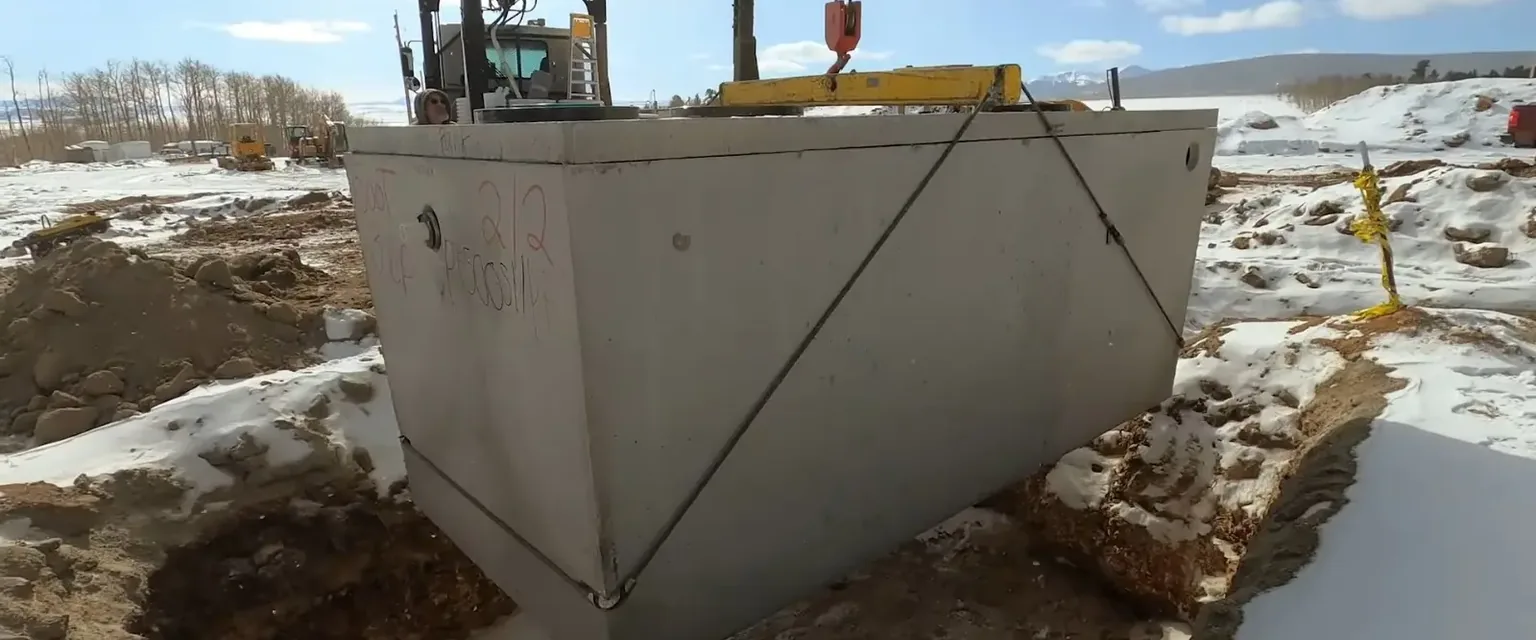
Septic is the excavation trade with the longest memory. A driveway either drains or it doesn’t, and you know inside a season. A drain field in bentonite near Bailey can look perfect for three years and then quit, and the claim comes to whoever’s name is on the county permit. We install systems in Park County ourselves, so this page is written from both sides of that call. It sits under our excavation hub; if you also grade pads, see the grading and site prep page.
What the underwriter sees on a septic application
Two things: the class and the tail.
The class is typically excavation. A mid-size excavator opening a tank hole, laterals, backfill, compaction. Rated like any other dirt outfit, underground and collapse exposure included.
The tail is what makes septic different. Every system you install is a completed-operations exposure that starts the day the inspector leaves and runs for years. The underwriter sees a growing stack of buried systems, each able to produce a property damage claim, a pollution claim, or both, long after the policy year that paid for it closed. So the questions are about volume and design: systems per year, engineered versus conventional, who designs them, whether you also pump, and whether one has ever failed.
Here’s what Colorado adds. High-water-table lots along the South Platte near Fairplay, bentonite that swells three times its size when wet, decomposed granite above 9,000 feet that percs too fast, and a growing share of engineered systems (mounds, pressure-dosed fields, treatment units) with more parts to fail. Engineered is usually the right call on a bad lot. It also puts your work next to an engineer’s design, and when one fails, the first question is whose fault it was.
The five exposures that produce septic claims
- The system fails years later. A drain field you built in bentonite near Bailey stops taking water in year three, effluent surfaces in the yard, and the claim lands on completed operations from a policy year that closed long ago.
- Pollution from a failed system. A tank shifts after backfill on a high-water-table lot outside Fairplay and effluent reaches the neighbor’s well. Under most standard GL forms that is a pollution claim, and the pollution exclusion is broad.
- Utility strike on the tank hole. A mid-size excavator opening a tank excavation in Castle Rock finds the gas service line that feeds the house. Same 811 rules as every other dig, same presumption if the ticket lapsed.
- Collapse and crew injury. A tank hole in saturated clay outside Durango sloughs while a laborer is setting the inlet baffle. His injury is a workers’ compensation claim; the crushed tank is your problem either way.
- Your own equipment. A Yanmar mini skid steer setting a distribution box rolls on a steep Douglas County lot after a hailstorm greases the slope. That is your machine, so it is inland marine, not general liability.
Things go wrong on every job. The stack below is built so each of these lands on a policy that was written to catch it.
The coverage stack we’d build
| Coverage | Why | Typical contract requirement |
|---|---|---|
| General liability, occurrence form, no XCU exclusion, completed operations included | Third-party injury and property damage during the install and after: the gas line, the neighbor’s driveway, the failed field three years out. | $1M per occurrence / $2M aggregate; builder or lender as additional insured |
| Contractors pollution liability, with completed operations | Effluent in a well, a creek, or the neighbor’s yard. Excluded under most standard GL forms. For septic it is the claim. | Often required by GCs, districts, and system designers |
| Contractors equipment (inland marine) | Excavator, mini skid steer, compactor, laser. Rollover, theft off a remote lot, fire, transit. | Your lender, not your customer |
| Workers’ compensation | Collapse, lifting, and machine injuries. Required at the first employee. | Statutory; waiver of subrogation on GC work |
| Commercial auto | Service truck, trailer, and the dump truck hauling gravel to the field. Personal auto forms commonly exclude business use. | $1M combined single limit on any contract with an insurance section |
| Umbrella / excess | A well contamination claim with three neighbors on it can pass $1M. | Sometimes on subdivision or district work; rarely on a single install |
The line that bites is the GL pollution exclusion. Still covered on a clean occurrence form: the injury, the property damage the failed system caused, and the defense, subject to the limits. Commonly excluded even then: the sewage itself, the cleanup, and the well. That’s the shape of a septic claim, which is why the second line in the table isn’t optional for us.
Contract requirements you’ll run into
Most septic work is residential and direct to the owner, so you’ll see less paper than a GC sub does. What shows up anyway:
- The county application. Most county OWTS programs we’ve dealt with ask for a certificate of insurance with the license application, and some ask for a bond. Park County and La Plata County don’t ask for the same thing.
- Builders and lenders. On a new build, the GC’s contract carries the usual $1M/$2M ask, additional insured on ongoing and completed operations, primary and non-contributory, and a waiver of subrogation. The completed-operations half matters more for you than the framer.
- Engineered systems. The designer sometimes asks to be listed as additional insured, and the contract may try to push design liability onto you. Installing a design is not the same as owning it.
- Districts and public work. A sanitation district copies the CDOT template: higher limits, an umbrella, and a bond. Our bonds page explains why surety is not insurance.
Colorado notes for septic installers
The license. Colorado's OWTS Act (C.R.S. 25-10-109) and Regulation 43 (5 CCR 1002-43 § 43.4.K) let each local board of health license septic "systems contractors," and working without that license where a county has adopted licensing rules is a violation, so installers must hold whatever license the local public health agency requires. (C.R.S. 25-10-109(1); 5 CCR 1002-43 §§ 43.3, 43.4.K, 43.4.Q) In practice that’s most counties. The county health department runs it, not the state, so Douglas County, La Plata County, and Park County each ask for something different. Call the county before you bid across a line you haven’t worked.
The locate rule still applies. Colorado law requires notice to Colorado 811 at least two business days before excavating, not counting the day you call (C.R.S. 9-1.5-103(3)(b)); Colorado 811 phrases the same window as three full business days, so a Monday call means a Thursday dig. (C.R.S. 9-1.5-103(3)(b)) A tank hole is an excavation, and the gas and electric services to the house are exactly where the tank wants to go.
Workers’ comp. Colorado employers must carry workers' compensation insurance as soon as they have one or more employees, whether part-time, full-time, or family members (C.R.S. 8-40-203(1)(b), 8-44-101); the state can fine an uninsured employer up to $500 for every day without coverage. (C.R.S. 8-40-203(1)(b); 8-44-101; 8-43-409) A laborer in a tank hole is who the statute was written for.
Class codes. Landscaping contractors are typically rated under NCCI code 0042 (Landscape Gardening & Drivers; lawn maintenance under 9102), excavation under 6217 (Excavation & Drivers), tree work under 0106 (Tree Pruning), and stand-alone snow-clearing under 9402 (Street Cleaning & Drivers); the carrier makes the final assignment under NCCI rules. (NCCI Scopes Manual) [VERIFY] Septic payroll typically rates as excavation. If you also pump tanks or service treatment units, tell the underwriter; that’s sometimes a different code.
Water table, soils, and setbacks. The state OWTS regulation and each county’s version of it set the perc rates, setbacks, and soil conditions that decide between a conventional field and an engineered system. We don’t quote those numbers because they change by county and by regulation cycle; the county’s design review and the site engineer are the source. A failed system on a lot that should have been engineered is the claim the carrier reads most carefully.
Where to go from here
Already carry GL? The fastest move is a policy review. Send the dec pages and we’ll mark the pollution exclusion, the completed-operations line, and the form type against the systems you have in the ground. Starting fresh? Get Insured lists what to have ready. No online quote. A septic book is built around how many systems are buried and where.
Serving businesses located in Colorado. Coverage is determined by the policy language and the carrier.
Coverage
Coverage built for septic installer.
-
 Coverage
Pollution liability
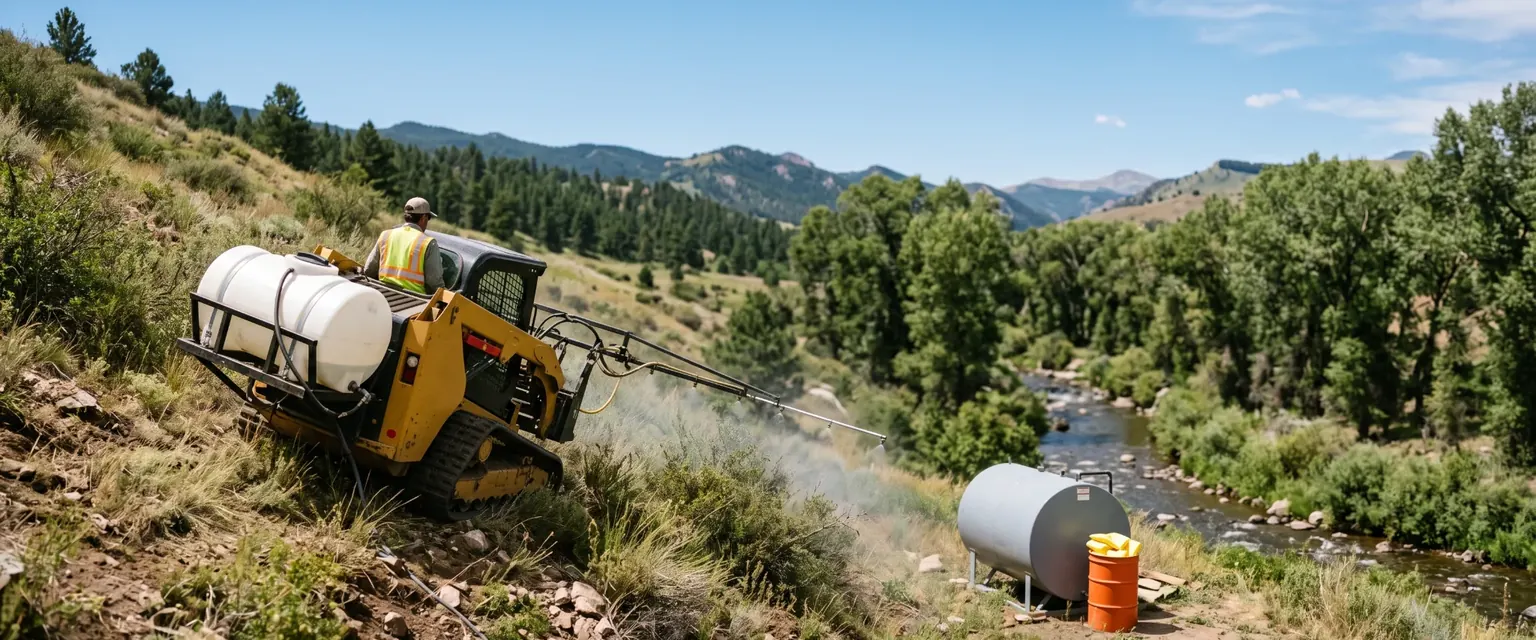
Covers the fuel spill, the brine runoff, the herbicide drift. GL excludes all three under most forms. Pollution liability explained -
 Coverage
General liability
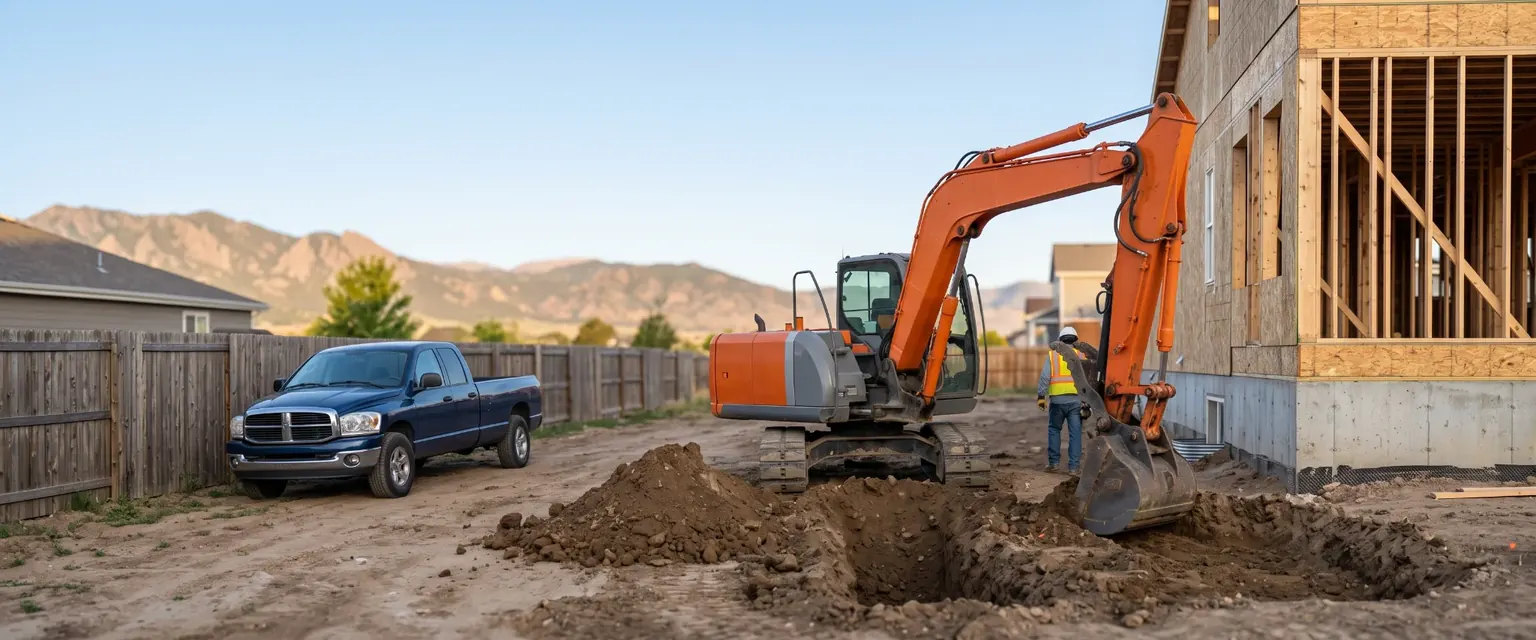
Pays when your work hurts someone else or their property. The one every GC asks about first. General liability explained -
 Coverage
Workers' compensation
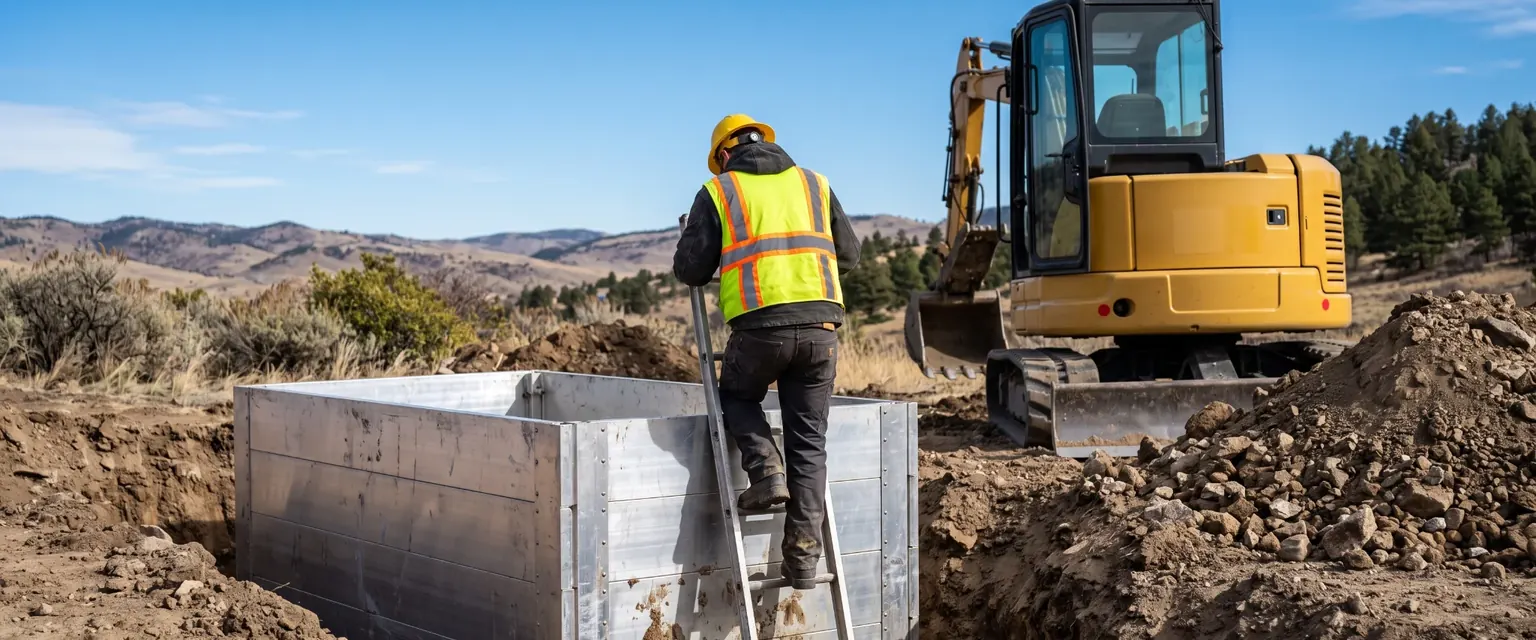
Pays your employee's medical and lost wages when they get hurt. Required at the first hire in Colorado. Workers' compensation explained
Does general liability cover a septic system that fails after I'm done?
Do I need pollution liability as a septic installer?
What license do I need to install septic systems in Colorado?
What happens to my completed-operations coverage if I switch carriers or retire?
Statutes and numbers on this page last verified September 2, 2026 by a licensed Colorado producer. How we verify.