
COLORADO · FRONT RANGE
Excavation, Landscaping, and Snow Insurance in Castle Rock and Douglas County
This is the town we drive to. Our trucks come down the hill to work here, and the ground under Douglas County is the reason half our completed-operations conversations start with the word bedrock.
Castle Rock at a glance
- Licensing
- The Town of Castle Rock requires contractor registration with a certificate naming the Town; Douglas County registers rather than licenses contractors, bonds right-of-way permits at not less than $20,000, and licenses septic system contractors through its health department.
- Ground
- Expansive clay and steeply dipping, heaving bedrock along the piedmont, sandstone caprock and decomposed arkose toward Franktown and Perry Park, and septic lots that need a soil profile before a bid.
- Snow
- Palmer Divide upslope that stacks deeper than Denver, drifting on the open ridges, HOA and metro-district contracts at one- and two-inch triggers, and a Town sidewalk rule we point you to the Town for.
- Contracts
- HOA and metro-district certificates at $1M/$2M with additional insured and waiver, production-builder master agreements in the new subdivisions, and county right-of-way permits with their own bond and insurance figures.
Castle Rock is the town we drive to. Our trucks come down US 85 from the hill, and most of what we know about Front Range clay we learned on lots between Sedalia and Franktown. Douglas County is also where the Front Range does something the rest of the state doesn’t: the bedrock stands on edge. This page covers what that means for excavation, landscaping, and snow removal contractors working from Highlands Ranch to Larkspur, how the Town and the county paper the work, and what the HOA boards ask for. The statewide view is on the Colorado hub.
The licensing reality in Castle Rock and Douglas County
Neither the Town nor the county licenses contractors. They register them. That changes what the certificate has to say.
The Town of Castle Rock makes it unlawful to perform construction, alteration, repair, moving, removal, or demolition work on any building or structure governed by Title 15.03.10 without registering with the Town, and registration requires a certificate of liability insurance and/or workers' compensation certificate naming the Town. (Town of Castle Rock, Contractor Registration (Title 15.03.10)) No dollar limits are published on the registration page, and we won’t invent one. What the Town wants is a certificate with its name on it, issued before the first permit, not after. The Town’s right-of-way checklist and snow page couldn’t be reached when we verified this, so for Town right-of-way work and sidewalk hours, call Public Works.
The county side: Douglas County's Building Division registers rather than licenses contractors: general, roofing, and mechanical contractors must register (electrical and plumbing contractors register by showing their state license), proof of business liability and, where applicable, workers' compensation insurance is required, and registration fees have been waived in unincorporated Douglas County since July 1, 2013. (Douglas County Building Division, Contractor Registration) General, roofing, mechanical. No excavation or grading category is named, and no landscape category either. Our read is that a dirt crew pulling a grading permit registers as a general contractor, but the Building Division is the authority on that, not us.
The county right-of-way is where the numbers live. Douglas County requires a permit for any construction or installation within the public right-of-way, a non-cancelable permit bond equal to the cost of the public improvements but not less than $20,000 per permit, and liability insurance of not less than $400,000 each for property damage, public liability, and bodily injury naming the County. (Douglas County Roadway Design and Construction Standards, Chapter 10 (Permit Procedures and Bonding Requirements)) A driveway culvert on a county road, a utility crossing, a curb cut: any of it needs the permit, the bond, and a certificate naming the County. The bond is surety, not insurance.
Septic is licensed. Colorado's OWTS Act (C.R.S. 25-10-109) and Regulation 43 (5 CCR 1002-43 § 43.4.K) let each local board of health license septic "systems contractors," and working without that license where a county has adopted licensing rules is a violation, so installers must hold whatever license the local public health agency requires. (C.R.S. 25-10-109(1); 5 CCR 1002-43 §§ 43.3, 43.4.K, 43.4.Q) Douglas County is one of the counties that did. The Douglas County Health Department issues OWTS permits for new installations, expansions, and repairs, and its OWTS Regulation No. 26-01 (stated effective April 26, 2026) provides that no person may install, construct, alter, or repair an OWTS without a valid System Contractor license issued by the Department. (Douglas County Health Department, Septic System FAQs; OWTS Regulation No. 26-01 § 26.7(B)(1)) [VERIFY] The regulation number and effective date carry a verify flag because the county’s FAQ page still cited the earlier regulation when we checked. Ask the Department which version is current; the license requirement is the part to plan around.
Site work over an acre: Construction that disturbs one acre or more, or is part of a larger common plan of development or sale that will disturb one acre or more, needs coverage under CDPHE's COR400000 Construction Stormwater General Permit (or a CDPHE-qualified local program for sites between one and five acres). (CDPS General Permit COR400000 (effective April 1, 2024)) Every phase of Sterling Ranch, Crystal Valley, or The Canyons meets that test.
And the locate rule doesn’t care whose road it is. Colorado law requires notice to Colorado 811 at least two business days before excavating, not counting the day you call (C.R.S. 9-1.5-103(3)(b)); Colorado 811 phrases the same window as three full business days, so a Monday call means a Thursday dig. (C.R.S. 9-1.5-103(3)(b)) The part contractors underrate: Under C.R.S. 9-1.5-104.5(2)(d), a contractor who damages an underground facility after failing to notify Colorado 811, or failing to use reasonable care, is presumed liable for the owner's repair or replacement costs, litigation costs and attorney fees, and any resulting injury or property damage. (C.R.S. 9-1.5-104.5(2)(d)) On a county road with a gas main under the shoulder, that presumption is the whole claim.
Terrain and soil
The Colorado Geological Survey reports that a large area of undeveloped land in Douglas County is underlain by potentially heaving, steeply dipping expansive bedrock, a hazard responsible for tens of millions of dollars of damage along the Front Range piedmont and several million dollars in Douglas County alone since suburban development began in the mid-1980s. (Colorado Geological Survey SP-42, Heaving Bedrock Hazards Associated with Expansive, Steeply Dipping Bedrock, Douglas County, Colorado (1997)) That’s the state geologist, not us. Along the piedmont from Highlands Ranch through Castle Pines and Castle Rock, the claystone and shale layers were tilted when the mountains came up, so they stand nearly on end. Wet one layer and it swells upward in a ridge. The result is heave along a line, not a lump, and it runs under foundations, driveways, and water lines.
For an excavator it means the bucket finds hard claystone a few feet down on one side of the lot and soft clay on the other, and both are expansive. For a grading crew it means overexcavation and moisture-conditioned fill on nearly every pad, and a geotechnical report the builder expects you to have read. For a hardscape crew it means a segmental wall or a paver patio on a Castle Pines slope is a completed-operations exposure for years, because the ground moves on its own schedule.
South and east the ground changes. Around Franktown, Perry Park, and the Black Forest edge you’re in sandstone caprock and decomposed arkose, that pink gravelly sand, over more claystone. Decent septic ground on the sandy lots, terrible where the clay lens sits under the leach field. That’s why we ask septic contractors about their soil profile process before we ask about limits.
What it does to the insurance: the completed-operations question on every wall and every pad, an inland marine schedule that includes the mini excavator and the compaction gear that live on these lots, and pollution coverage for the failed system nobody expected.
Snow, and what the contracts trigger
Castle Rock sits on the Palmer Divide, and the Divide makes its own weather. An upslope storm that gives Denver a few inches stacks up here, closes Monument Hill on I-25 to the south, and drifts across the open ridges in The Meadows and Crystal Valley all night. Then the sun comes out at this elevation and the refreeze is fast. The slip-and-fall on a Highlands Ranch community center walk happens at 5 p.m., not 5 a.m.
Contracts here are HOA and metro-district contracts. Highlands Ranch, Castle Pines, The Meadows, Stonegate, most of Parker: nearly every rooftop is under a board, and the boards hire plowing by the community. Two-inch triggers on the driveways and private streets, and per-push billing because a board treasurer can explain a per-push invoice to the annual meeting. Seasonal contracts show up with the commercial managers at the outlets and along Founders Parkway.
We can’t quote the Town’s sidewalk hours because the page was blocked when we verified. Ask the Town, then put the same clock in your contract.
Colorado’s snow law applies to all of it. Colorado's Snow Removal Service Liability Limitation Act (C.R.S. 13-21-129, effective August 8, 2018) voids any snow-and-ice contract clause that requires one party to indemnify, hold harmless, or defend the other for the other party's own acts or omissions, but only where the service provider was prohibited, by the contract or in writing, from mitigating the specific snow or ice event at issue. (C.R.S. 13-21-129(3), (4); SB 18-062) The residential and HOA plowing page covers the mailbox, the garage door, and the pickup with a Boss blade on a personal auto policy, which is the most common gap we find on Douglas County routes.
Contract norms we see here
Three kinds of paper. HOA and metro-district contracts ask for $1M per occurrence and $2M aggregate on the general liability, the association and its management firm as additional insured, and a waiver of subrogation on the workers’ comp. Production builders in the new subdivisions use a master subcontract agreement with a one-way indemnity and completed operations by endorsement number. County and Town right-of-way work carries the permit figures above, plus a bond.
Septic contracts are the odd one. Most are direct with the homeowner on acreage, no insurance exhibit at all, and that’s exactly when the pollution liability question matters, because the failed system years later is excluded as pollution under most standard GL forms.
What we don’t control: whether a homeowner’s engineer or the county inspector reads the soil profile the same way you did.
Nearby
We work with contractors from Parker, Highlands Ranch, Lone Tree, Castle Pines, Franktown, Larkspur, Sedalia, and Elizabeth. North, Denver licenses contractors by supervisor certificate and permits its streets through DOTI. South over Monument Hill, Colorado Springs has a city excavation license, a pre-marking rule for locates, and a different hail pattern.
Where to go from here
Already insured and working in Douglas County? Send the dec pages and one HOA contract to the policy review and we’ll check the earth-movement wording, the completed-ops term, and whether the plow trucks are on a commercial auto form. Starting out? Get Insured lists what to have ready. No online quote. A Douglas County book is built around what’s under the lot and who’s on the board.
Serving businesses located in Colorado. Coverage is determined by the policy language and the carrier.
Trades
Trades common in Castle Rock.
-
 EXCAVATION TRADE
Septic Installer
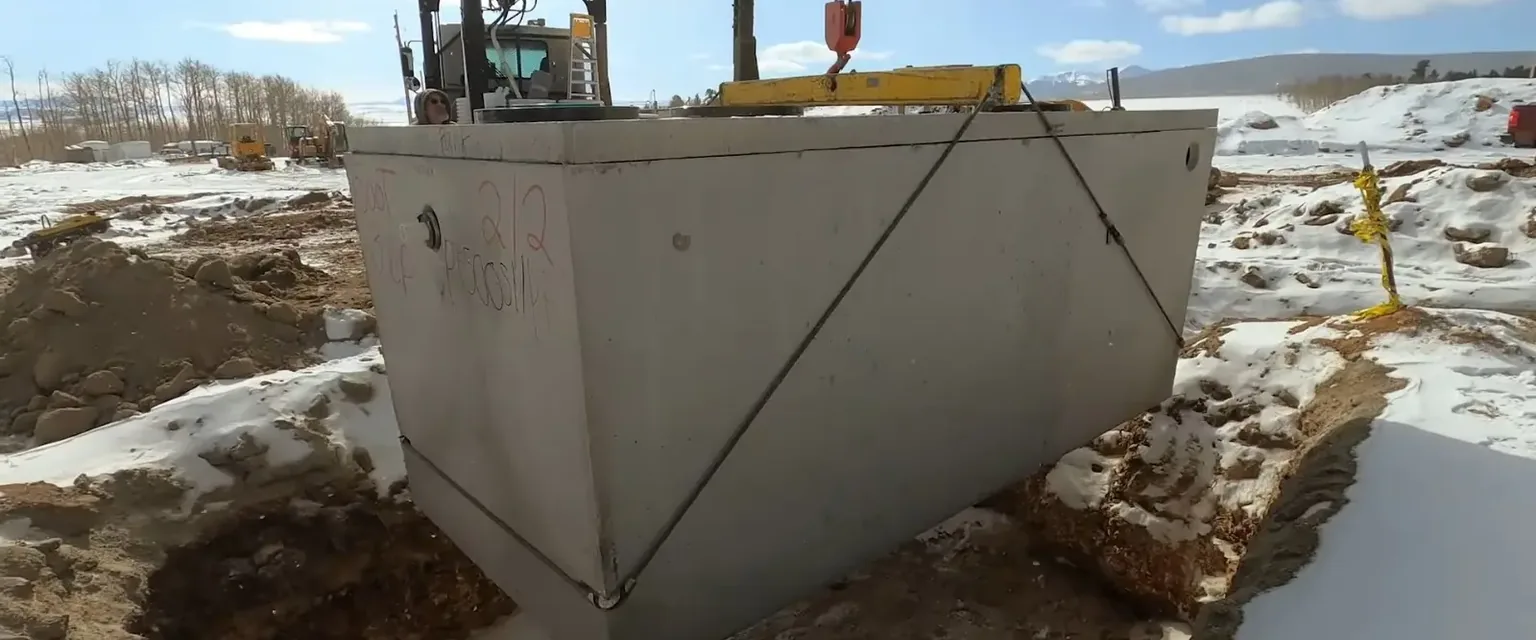
The tank is in, the county signed off, and the customer paid. Your exposure on that system runs for years after that. Here's what a septic installer's policy has to do in Colorado, and where the standard forms fall short. Septic Installer insurance -
 EXCAVATION TRADE
Grading and Site Prep
A pad that drains the wrong way, a wall that bulges after a wet spring, silt in the neighbor's yard after a July storm. Grading claims show up late and argue about who was at fault. Here's what the policy has to do. Grading and Site Prep insurance -
 SNOW TRADE
Residential and HOA Snow Plowing
Most residential plowing in Colorado starts with a pickup, a blade, and a personal auto policy that was never told. Here's what an HOA and driveway plowing policy has to do, from an agency that plows driveways above 9,000 feet in the dark. Residential and HOA Snow Plowing insurance
Nearby
Working outside Castle Rock? The next pages over.
Do I need a contractor license to work in Castle Rock or Douglas County?
What does a Douglas County right-of-way permit require?
Who licenses septic installers in Douglas County?
Statutes and numbers on this page last verified September 2, 2026 by a licensed Colorado producer. How we verify.