SNOW REMOVAL
Snow Plow Insurance in Colorado, from an Agency That Plows at 4 a.m.
A slip-and-fall names the owner and the contractor. The contract you signed decides who pays. Your logs decide whether you can prove anything. Here's what a Colorado snow removal policy has to do, from people who run a plow truck up Crow Hill in the dark.
Trades we write
The snow removal trades, one page each.
Each one covers the exposures that produce claims in that trade, the coverage stack we would build, and the Colorado rules that apply.
-
 SNOW TRADE
Commercial Snow and Ice Management
Commercial snow is a contract business first and a plowing business second. The lot, the log, and the indemnity clause decide the claim. Commercial Snow and Ice Management insurance -
 SNOW TRADE
Residential and HOA Snow Plowing
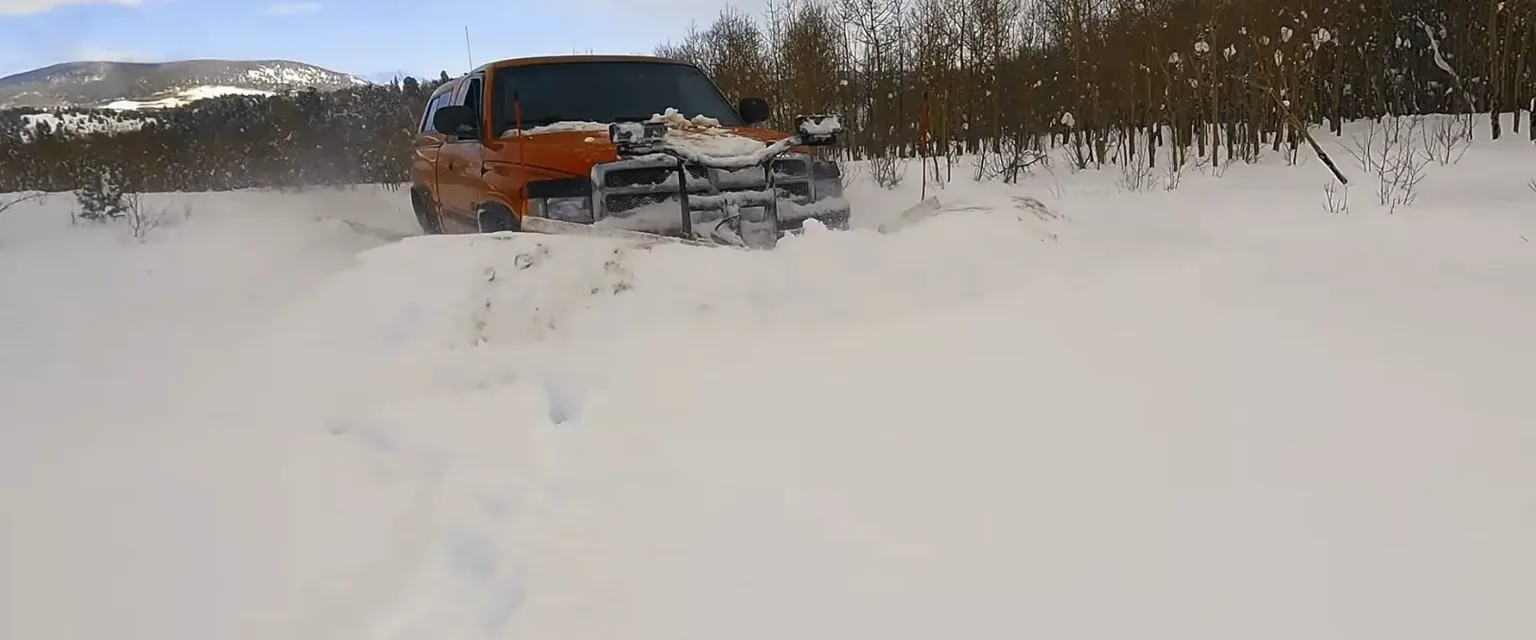
Most residential plowing in Colorado starts with a pickup, a blade, and a personal auto policy that was never told. Residential and HOA Snow Plowing insurance
Snow removal is the trade where the claim shows up months after the storm. Somebody slips on a lot in Lakewood in February. The letter arrives in June. It names the property owner and it names you, and the first thing anyone asks for is your service log from that night. The second is your certificate of insurance. Whether either holds up was decided in October, when you signed the contract and bought the policy.
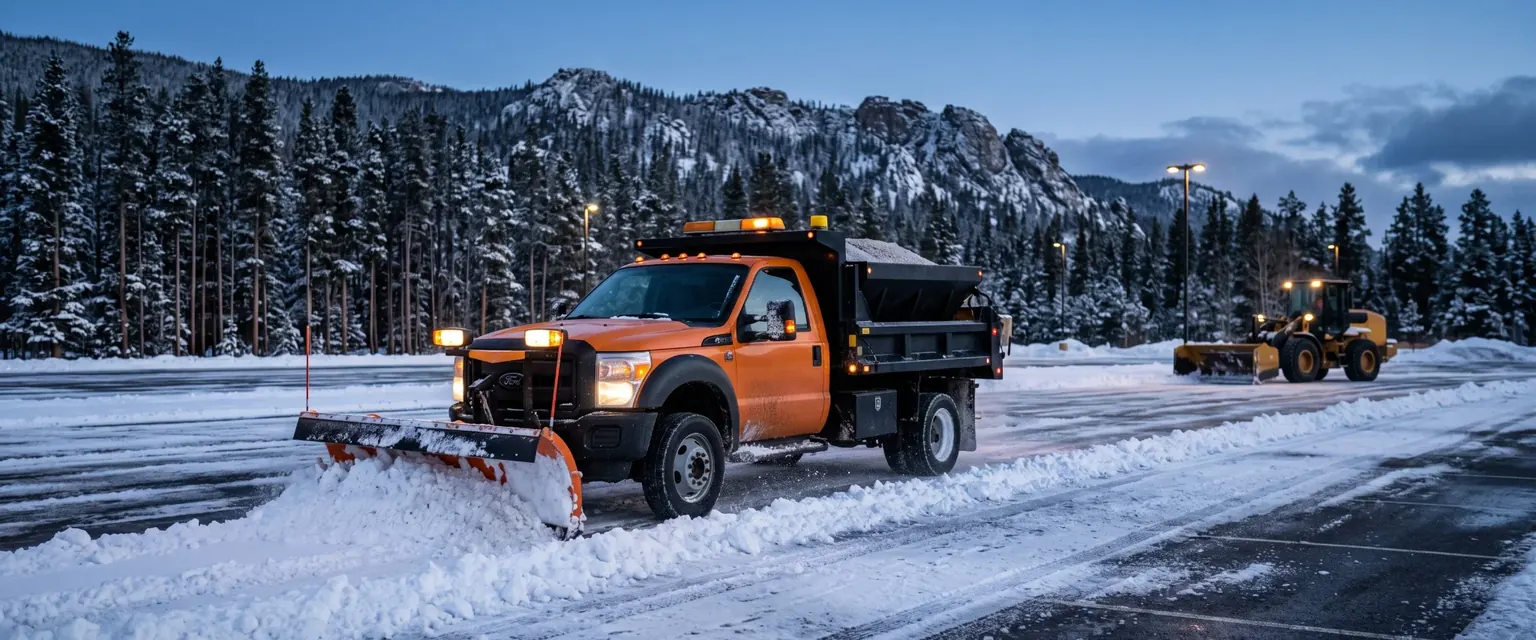
We plow above 9,000 feet in Park County, with a three-quarter-ton and a V-blade on driveways and a skid steer with a pusher box on the commercial lots. Wind-packed drifts in South Park, refreeze on every north-facing slope above Bailey, and a stretch of US 285 over Crow Hill that turns to glass by 3 p.m. This page covers what an underwriter sees, the claims that actually happen, the stack we’d build, the 2018 indemnity statute, and the personal-truck problem. Already insured? Send the dec pages to the policy review and we’ll find the gap before February does.
What your operation actually looks like to an underwriter
Snow scares underwriters, and the reason is simple. The claims are slip-and-fall injuries, they arrive late, and they’re hard to defend without records. So the underwriter looks for three things first: whether you keep logs, what your contracts say, and whether you know the difference between plowing and ice management.
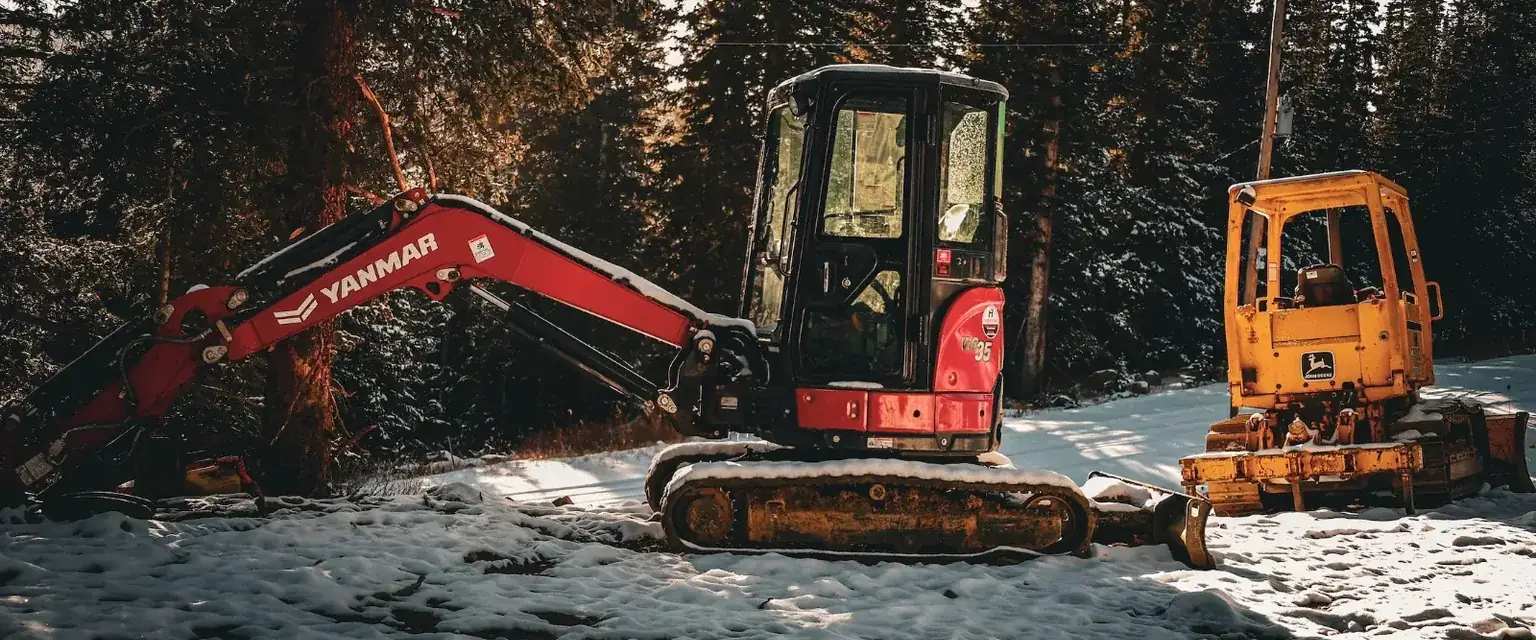
Then the picture. Number of accounts, split between commercial lots, HOAs, and residential driveways. Whether you do sidewalks, and with what (a crew with shovels is a workers’ comp question; a Yanmar mini skid steer with a broom is an equipment question). Whether you apply de-icer. Equipment list: trucks and blades, skid steers, loaders, pushers, spreaders. Whether you sub to a national snow management firm, or sub work out yourself. Payroll, loss runs, and the big one: whether snow is your whole business or the winter half of a landscaping outfit.
Colorado adds its own texture. Front Range storms are followed by sun, which means melt at noon and black ice at 4 p.m. on every lot you cleared that morning. Summit County gets volume that needs loaders and somewhere to stack it. Wind on the plains re-drifts a lot an hour after you leave. Each of those shows up in the claim as “did the contractor come back.”
The honest answer is that an application with real logs, a sample contract, and a written scope reads like a professional operation. One with a truck count and a guess at revenue gets rated like a risk. Get Insured lists what to bring.
The exposures that actually produce claims
In this business, the claims come from a short list.
- Slip-and-fall. A tenant falls in an apartment lot in Aurora at 6:30 a.m. after a Chinook melt refroze overnight. The property manager tenders it to you under the contract. Your log says you plowed at 2 a.m. and applied product at 2:40. Without the log, it’s your word against a broken hip.
- Property damage on the account. A windrow buries a fire hydrant. A blade catches a raised sidewalk seam in Highlands Ranch and lifts it. Mailboxes, garage doors, curbs, sod in April. Small claims, lots of them.
- Vehicle accidents. A plow truck backing across a lot at 4 a.m. finds the one car parked overnight. A truck with a blade on US 285 in a whiteout rear-ends a sander. Commercial auto.
- Equipment theft and rollover. A skid steer left on a lot in Thornton walks away over a holiday weekend. A loader slides off a stacked pile in Breckenridge. Inland marine, at the scheduled value.
- Crew injuries. Sidewalk crews on ice, a spreader operator with a wrenched back, a driver clearing a blade at 3 a.m. Workers’ comp, and the audit that follows a winter of seasonal payroll.
- De-icer and runoff. A spreader dumps a hopper of salt into a storm inlet. Magnesium chloride runoff kills a row of spruce along a client’s entry. Under most standard GL forms that’s pollution, and pollution is excluded. What GL still covers is the injury and property damage from everything else.
- Subcontractor problems. The guy you sub three HOAs to has a personal auto policy and no GL. His accident is your claim, because your certificate is the one on file.
Things go wrong every winter. The stack below is built so each of those lands on a policy written for it.
The coverage stack we’d build
| Coverage | Why | Typical contract requirement |
|---|---|---|
| General liability (snow operations disclosed and rated) | Slip-and-fall claims, damage to curbs, mailboxes, and garage doors, and the contractual liability you take on in an HOA or property manager agreement. | $1M per occurrence / $2M aggregate; additional insured; primary and non-contributory; contractual liability |
| Commercial auto | Every plow truck. A personal auto policy commonly excludes business use, and a truck with a blade on it clearing a lot for money is business use. | $1M combined single limit; hired and non-owned for subs and employees in their own trucks |
| Contractors equipment (inland marine) | Skid steers, pusher boxes, loaders, blades, spreaders, and sidewalk machines. Theft from a lot at 2 a.m. and rollovers on ice are the claims. | Rarely required by contract; required by lenders and by the cost of a stolen pusher box |
| Workers’ compensation | Sidewalk crews, drivers, and loader operators on ice at night. Colorado requires it at the first employee, seasonal included. | Statutory limits; waiver of subrogation on nearly every commercial snow contract |
| Umbrella / excess liability | A serious injury on a commercial lot goes past $1M fast, and national snow management subcontracts commonly require the extra layer. | $2M to $5M on commercial, municipal, and national-account subcontracts |
| Pollution liability (or an endorsement) | De-icer runoff, a spreader hopper dumped into a storm drain, a fuel spill from a loader. The GL pollution exclusion reaches all of it under most standard forms. | Occasionally required on municipal and environmentally sensitive sites; usually a business decision elsewhere |
Two lines in that table deserve a closer look. The first is “snow operations disclosed and rated.” A general liability policy responds to what the application described. If the application said landscaping and the claim says plowing, the carrier asks about the difference before it talks about coverage. What the policy still covers when snow is disclosed: the slip-and-fall, the property damage, the defense. What it commonly excludes even then: your own faulty work, pollution, and anything you promised in the contract beyond what the law would have required of you anyway.
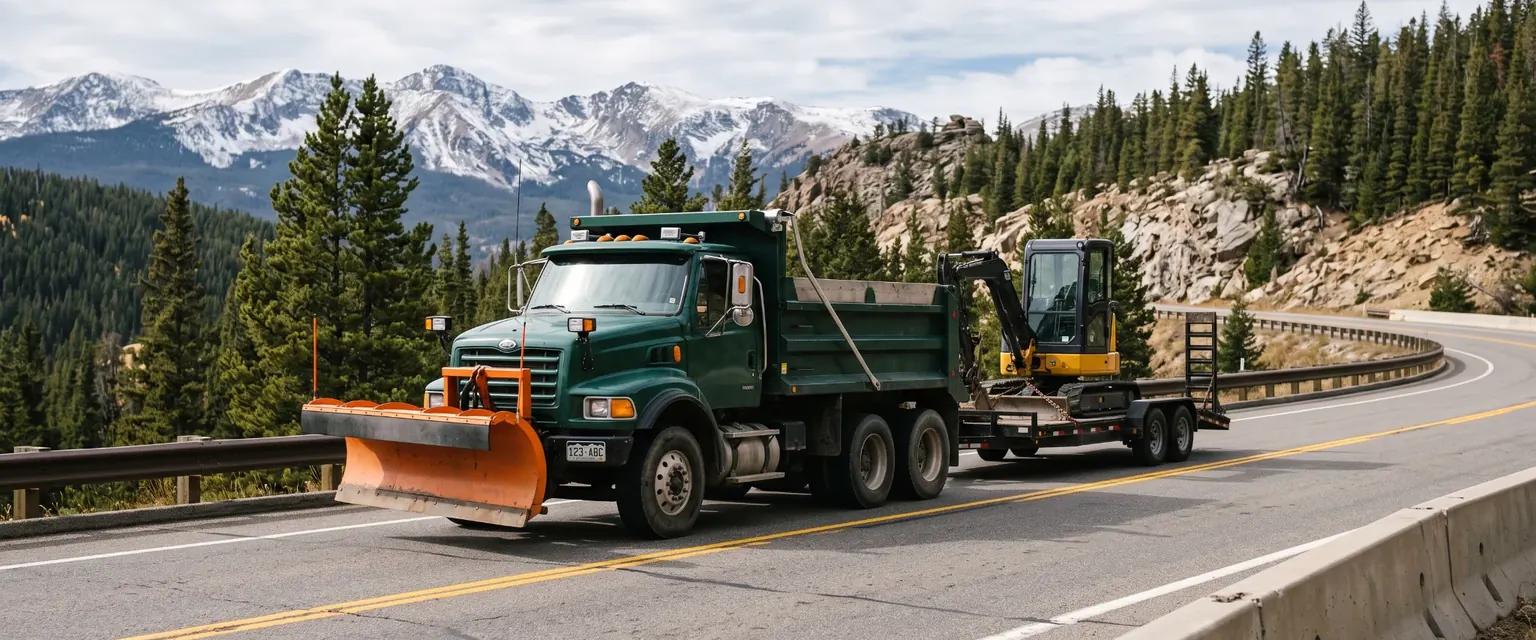
The second is the plow truck. Your truck with a plow on it is not covered the way you think. Under most personal auto forms, business use is excluded, and some carriers treat the blade as unlisted equipment on top of that. Commercial auto is the fix, and it’s where the $1M limit the property manager asked for actually lives.
Colorado law and licensing notes for snow contractors
There is no state license for snow removal. What there is, instead, is a statute about the contract you sign, plus the usual rules on trucks and crews.
The 2018 indemnity statute. Colorado's Snow Removal Service Liability Limitation Act (C.R.S. 13-21-129, effective August 8, 2018) voids any snow-and-ice contract clause that requires one party to indemnify, hold harmless, or defend the other for the other party's own acts or omissions, but only where the service provider was prohibited, by the contract or in writing, from mitigating the specific snow or ice event at issue. (C.R.S. 13-21-129(3), (4); SB 18-062) In plain terms: most snow contracts ask you to hold the owner harmless for everything that happens on the property, including things the owner caused. The statute voids that clause in one situation, where the owner, by contract or in writing, stopped you from treating the snow or ice event that hurt somebody. Told you not to salt because of the landscaping, then someone fell on that ice? The clause that makes you pay for their decision is void.
What it does not do matters just as much. It does not void indemnity for your own acts. Miss the trigger, plow late, leave a windrow across the walkway, and the clause still runs against you. It does not apply to contracts with public bodies, roads, public utilities, or airports, and it does not touch insurance, surety, or workers’ compensation agreements. The statute doesn’t say it in so many words, but our read is that it protects a contractor from paying for an owner’s bad call, and nothing more.
The plow truck. Colorado requires minimum auto liability limits of $25,000 per person and $50,000 per accident for bodily injury and $15,000 per accident for property damage (C.R.S. 10-4-620; 42-7-103(14)(a)), unchanged as of 2026; commercial contracts commonly ask for $1,000,000 combined single limit instead. (C.R.S. 10-4-620; 42-7-103(14)(a)) The state minimum keeps the truck legal. It does not satisfy a commercial snow contract, and it says nothing about whether a personal auto form covers plowing for money.
The crew. Colorado employers must carry workers' compensation insurance as soon as they have one or more employees, whether part-time, full-time, or family members (C.R.S. 8-40-203(1)(b), 8-44-101); the state can fine an uninsured employer up to $500 for every day without coverage. (C.R.S. 8-40-203(1)(b); 8-44-101; 8-43-409) Sidewalk crews hired for the winter are employees. So is the neighbor’s kid with a shovel.
Class codes. Landscaping contractors are typically rated under NCCI code 0042 (Landscape Gardening & Drivers; lawn maintenance under 9102), excavation under 6217 (Excavation & Drivers), tree work under 0106 (Tree Pruning), and stand-alone snow-clearing under 9402 (Street Cleaning & Drivers); the carrier makes the final assignment under NCCI rules. (NCCI Scopes Manual) [VERIFY] A stand-alone snow outfit and a landscaper who plows get rated differently on workers’ comp. Keep winter payroll separate from summer payroll so the audit goes the way you expect.
Service logs. No statute requires them. Your defense does. Date, time in, time out, conditions, what you did, what you applied, who did it, and photos. The log turns “we plowed that lot” into evidence.
Trades we write under snow removal
Snow splits into two trades that rate differently and carry different contracts.
- Commercial snow and ice management: the 2018 statute, national subcontracts, slip-and-fall defense, logs, loaders, and skid steers.
- Residential and HOA snow plowing: the personal truck with a plow, HOA certificates, mailbox and garage damage, and the combo with landscaping.
- Lawn care and maintenance and hardscape and paver installers: the summer trades most Front Range plow operators run.
If you plow with the same skid steer you use for site work in summer, the excavation hub covers that side. Not sure which page you belong on? Who we serve sorts it out.
Landscape in summer, plow in winter
This is the most common Colorado snow operation and the most common gap we find. A landscaper picks up plowing for the HOAs they already mow. The GL policy was written for landscaping and never updated. The plow went on a pickup with a personal auto policy. Nobody lied. Nobody asked. Then someone falls in Parker in February and two carriers start asking questions.
The fix: snow disclosed and rated on the GL, plow trucks on commercial auto year-round, logs from the first storm, and the HOA contract read before it’s signed. The landscaping hub covers the summer half. Have this conversation in September. February is too late.
National snow management subcontracts
A growing share of commercial snow work in Denver and Colorado Springs runs through national snow management firms that hold the retail accounts and sub the plowing to local contractors. The insurance packet is not casual. Commonly: $1M/$2M general liability with the firm and its client as additional insured on a primary and non-contributory basis, $1M auto, workers’ comp with a waiver of subrogation, an umbrella, contractual liability, and sometimes GPS-verified logs and response-time terms.
Two things to know before you sign one. The indemnity clause is usually broad, and the 2018 statute only reaches the narrow situation above. And a certificate one endorsement short gets you cut from the route in December. Send us the packet first. Certificates usually go out the same business day; it depends on the carrier and what the holder is asking for.
What drives the cost
No premium figures on this page. The only accurate number is a quote built on your operation. What moves it:
- Account mix. Commercial lots and HOAs carry more slip-and-fall exposure than residential driveways.
- Ice management. Whether you apply de-icer, and whether the contract makes you responsible for ice or only for snow. Owning ice is the bigger exposure.
- Contracts. Required limits, additional insured endorsements, umbrella requirements, and indemnity language.
- Trucks, drivers, and equipment. Number of plow trucks, driver records, radius, and the scheduled value of the skid steers, loaders, and pushers.
- Payroll and class codes. Night crews, sidewalk crews, and how the payroll splits between snow and any summer operation.
- Logs and procedures. Written scopes and logs move an underwriter’s read of the account. Their absence moves it the other way.
- Loss history. One defended slip-and-fall with a good log reads differently from one paid because there was no record.
- Subcontractor use. Subs without certificates are your claim and your audit problem.
Loss history and account mix are set for this season. Everything else you can change before the first storm. The glossary defines the terms on the certificate request.
Where to go from here
Starting fresh? Get Insured lists what to have ready, including a sample contract and your log template. Already insured? Send the dec pages to the policy review and we’ll show you whether snow is actually on the GL. The FAQ handles the short questions.
Serving businesses located in Colorado. Coverage is determined by the policy language and the carrier.
Coverage
The three coverages that do the most work for snow removal.
-
 Coverage
General liability
Pays when your work hurts someone else or their property. The one every GC asks about first. General liability explained -
 Coverage
Commercial auto
Covers the dump truck, the plow truck, and the crew pickup on the road. Personal auto typically won't. Commercial auto explained -
 Coverage
Contractor's equipment (inland marine)
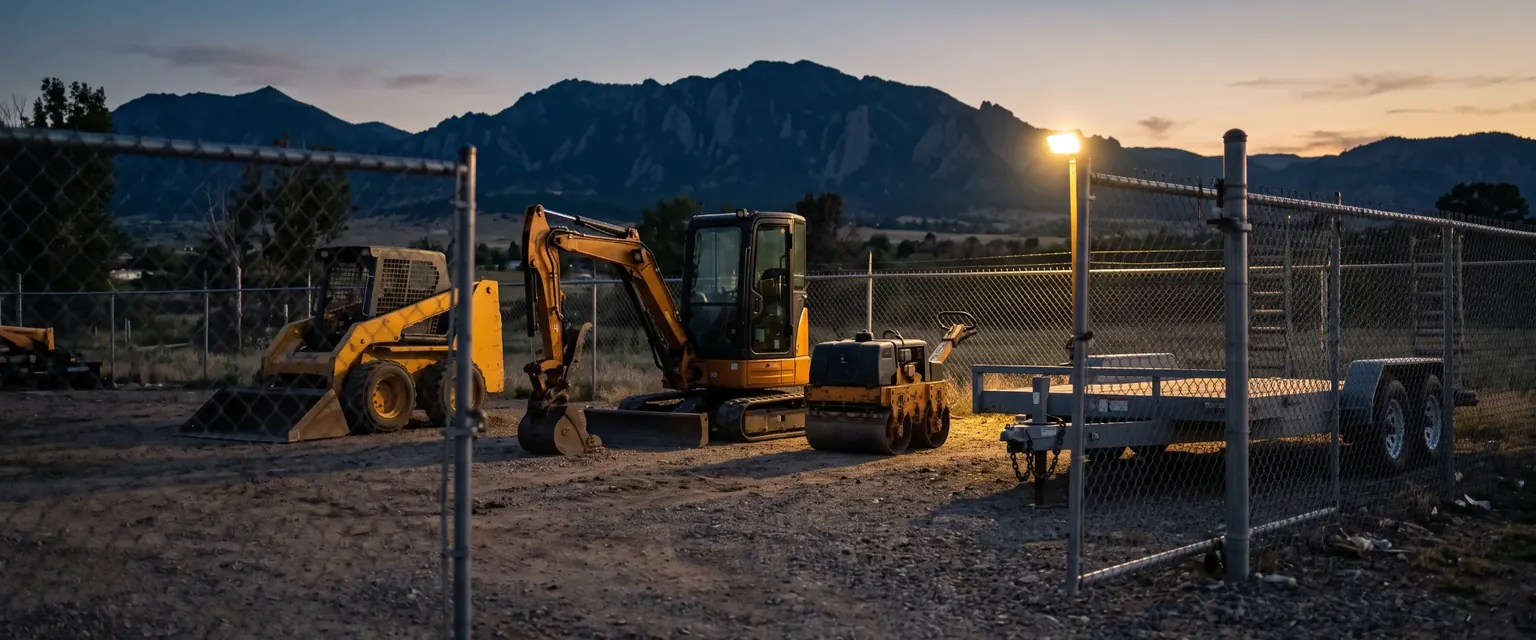
Insures your own iron: theft, rollover, fire, transit. Pays what you scheduled, so the schedule matters. Contractor's equipment (inland marine) explained
Resources
Read before you sign.
- Contracts and COIs · 8 min read
Additional insured vs certificate holder: the two-paragraph version
A certificate holder gets a piece of paper. An additional insured gets a piece of your policy. The two-paragraph version, then what goes wrong at claim time. Read the article -
 Colorado law · 8 min read
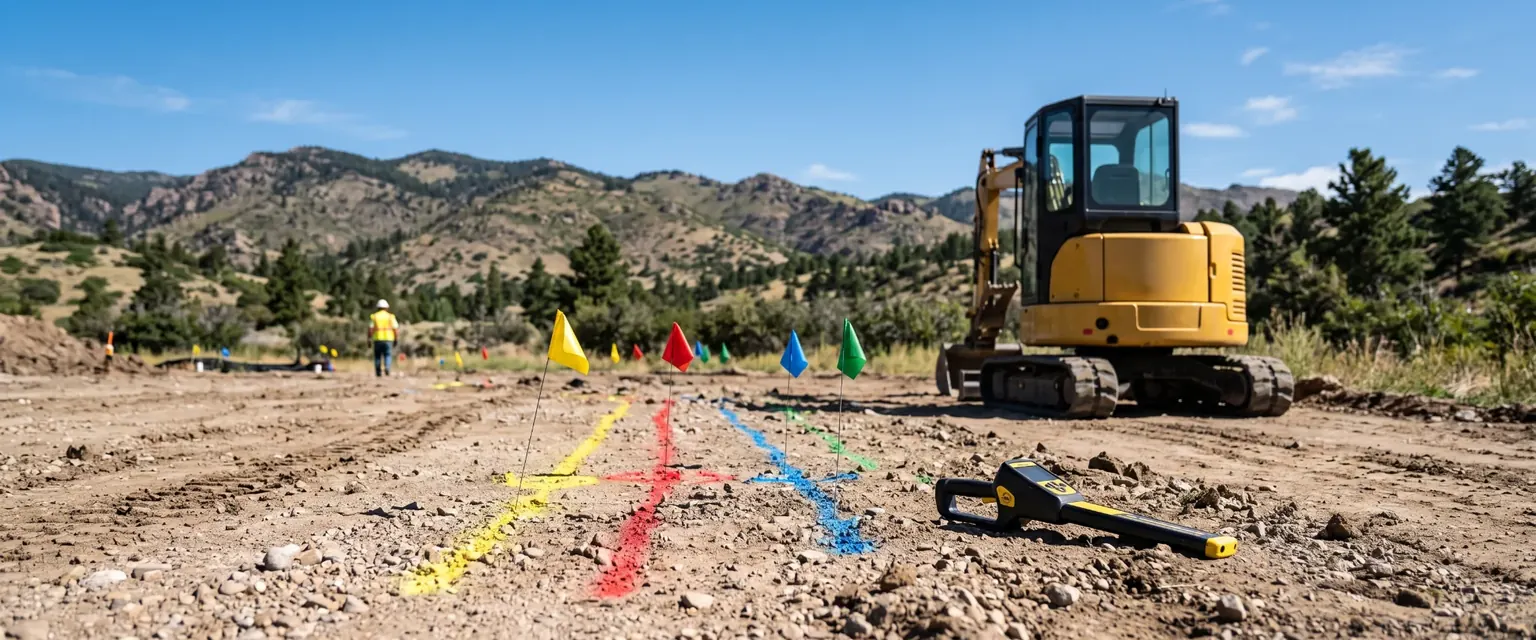
 Colorado 811: the two-business-day rule, the fines, and the part contractors get wrong
Colorado 811 for contractors: the statute says two business days, 811 says three, marks last 30 days, fines run $250 to $75,000. The part people get wrong. Read the article - Coverage explained · 8 min read
Workers comp in Colorado starts at one employee. Seasonal counts.
Colorado requires workers comp the day you hire your first employee, part-time or seasonal, family or not. The statute, the fine, and what a small outfit does. Read the article
Does my personal auto policy cover my truck with a plow on it?
What does Colorado's snow removal indemnity law actually do?
Who gets sued after a slip-and-fall on a lot I plowed?
Can I buy a seasonal snow-only policy?
What do national snow management subcontracts require?
I landscape in summer and plow in winter. Do I need two policies?
Statutes and numbers on this page last verified September 2, 2026 by a licensed Colorado producer. How we verify.