EXCAVATION TRADE
Grading and Site Prep Insurance in Colorado
A pad that drains the wrong way, a wall that bulges after a wet spring, silt in the neighbor's yard after a July storm. Grading claims show up late and argue about who was at fault. Here's what the policy has to do.
Grading claims arrive late and argue. A utility strike is a call the same afternoon. A pad that drains toward the foundation is a call two springs later, after the expansive clay under half the Front Range has done its work, and everyone from the framer to the gutter guy is pointing at everyone else. We grade roads and pads in Park County ourselves, and we’ve taken that call. This page sits under our excavation hub; if you also open trenches, see utility trenching.
What the underwriter sees on a grading application
Two things to know: the class and the water.
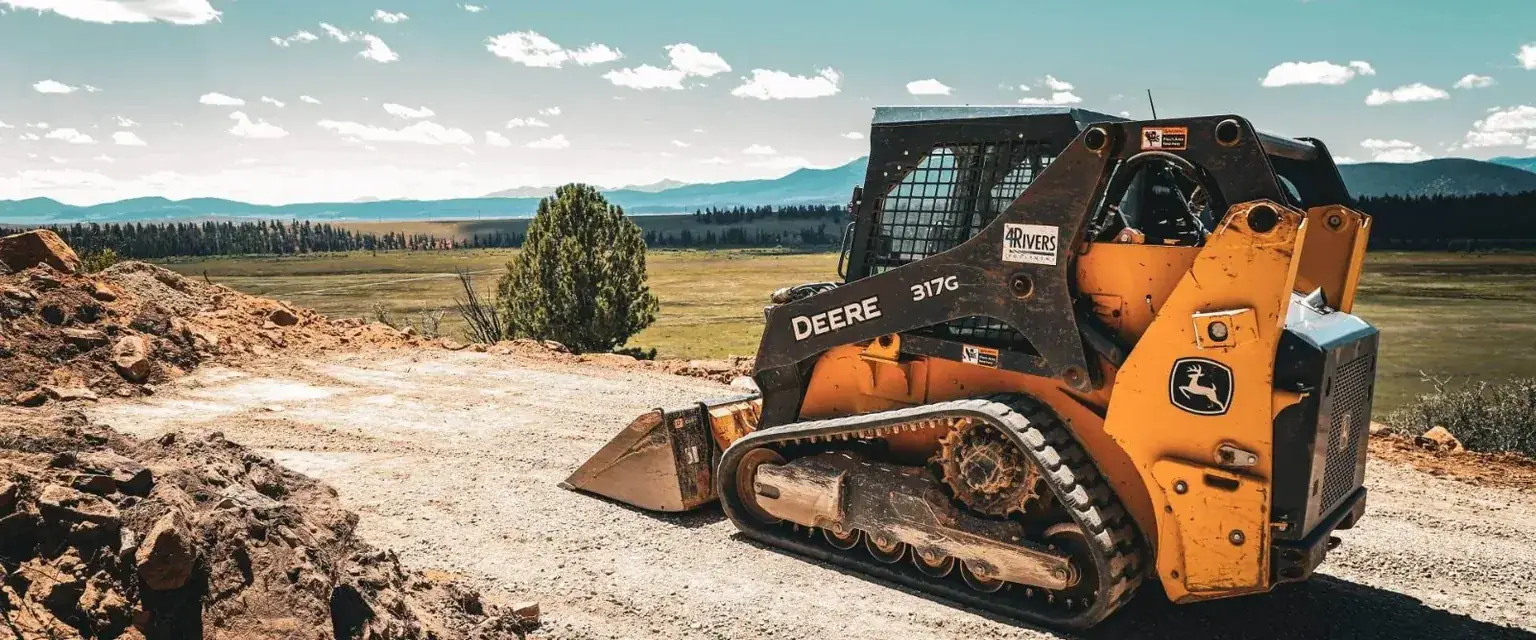
The class is typically excavation, same as a trenching or septic outfit. Where grading differs is the iron. A John Deere 772GP, an 84” Bomag, and a Bell haul truck are a lot of scheduled value, and they spend more time on lowboys than an excavator parked on one site for a month.
The water is what an experienced underwriter actually asks about. Grading decides where water goes on a lot, and water produces the late claims: basements, heaved slabs, eroded slopes, silt on the neighbor’s property. So the questions are about drainage and scope. Retaining walls, and how tall. Engineered fill, and who tests it. Who holds the stormwater permit. Whose design.
Here’s what Colorado adds. Expansive clay from Castle Rock up through Aurora and Denver that swells wet and shrinks dry, so a grade that was right in October is wrong by April. Freeze-thaw on every wall and cut. July thunderstorms on a stripped site. Wind on the plains east of Aurora that turns a dry site into a dust complaint.
The five exposures that produce grading claims
- Water intrusion on a pad you graded. A building pad you cut in Castle Rock drains toward the house after expansive clay heaves through a wet spring, and the finished-basement claim shows up two years after the final grade.
- Erosion and stormwater runoff. A July thunderstorm pushes silt off a two-acre site in Aurora onto the neighbor’s lot and into a storm inlet, and the complaint goes to the stormwater program before it goes to you.
- Retaining wall failure. A block wall you built to hold a driveway cut in Parker bulges after a winter of freeze-thaw and lets go onto the driveway below. Completed operations, and an engineer on each side.
- Engineered fill and compaction. A John Deere 772GP finish-grades a pad on fill that never got a density test, the slab cracks, and the GC’s engineer points at your lifts. Your work, their damage, and a fight over whose report controls.
- Your own equipment. An 84” Bomag slides off a wet cut, or a Bell haul truck rolls on a soft shoulder in Denver’s spring mud. Both are inland marine claims, not general liability, and the scheduled value decides what you get back.
Three of the five are completed-operations claims, the part of the GL form most grading contractors have never read.
The coverage stack we’d build
| Coverage | Why | Typical contract requirement |
|---|---|---|
| General liability, occurrence form, no XCU exclusion, completed operations included | The basement, the neighbor’s lot, the wall that let go, the slab on your fill. Third-party damage during the job and for years after. | $1M per occurrence / $2M aggregate; additional insured on ongoing and completed operations; primary and non-contributory |
| Contractors equipment (inland marine) | Grader, compactor, dozer, haul trucks, and the lowboy load in transit. Rollover on a wet cut is the grading claim. | Your lender; rarely the customer |
| Commercial auto | Haul trucks and service trucks between sites. A Bell truck is mobile equipment on site and an auto on the highway; the form draws that line. | $1M combined single limit; hired and non-owned |
| Workers’ compensation | Laborers on the compactor, spotters on the haul road, the guy checking grade in front of the blade. | Statutory; waiver of subrogation on GC and municipal work |
| Contractors pollution liability | Silt into a storm inlet, a fuel tank tipping on the haul road, dust off a stripped site. Excluded under most GL forms. | Common on subdivision and municipal work |
| Umbrella / excess | A wall failure that takes a foundation with it can pass $1M. | $2M to $5M on municipal and larger GC work |
| Builders risk / installation floater | A retaining wall half built when hail arrives, block and geogrid stacked on site. Often carried by the owner or GC; confirm. | Sometimes on commercial site work |
A word on the GL line. Some forms carry the XCU exclusion (explosion, collapse, underground), which removes a collapsed cut and a cracked foundation next door. We want a grading GL written without it. Still excluded even on a clean form: regrading your own work, your own machines, and the silt in the creek. Those are the other lines in the table.
Contract requirements you’ll run into
- Residential pads. Often no contract at all. The completed-operations exposure is still there, so your policy has to carry it even when nobody asks.
- Subdivision and GC work. $1M/$2M, additional insured for ongoing and completed operations (CG 20 10 and CG 20 37, and you need both), primary and non-contributory, waiver of subrogation, sometimes a per-project aggregate.
- Stormwater responsibility. On a site over an acre, somebody holds the permit. If that’s you, the fines from a failed inspection are typically not insurable; the damage the runoff did to a third party may be.
- Retaining walls and engineered fill. The contract will try to make you responsible for performance, not just installation. Get the design and the compaction spec in writing, and have someone else run the density tests.
- Municipal work. Cities and counties copy the CDOT template, add an umbrella, and require a bond with the permit. Our bonds page explains why surety is not insurance.
Colorado notes for grading contractors
The one-acre rule. Construction that disturbs one acre or more, or is part of a larger common plan of development or sale that will disturb one acre or more, needs coverage under CDPHE's COR400000 Construction Stormwater General Permit (or a CDPHE-qualified local program for sites between one and five acres). (CDPS General Permit COR400000 (effective April 1, 2024)) An underwriter who sees site work over an acre will ask who holds the permit. Under an acre, the city or county may still want an erosion-control plan; Douglas County, Aurora, and Denver each handle it their own way.
Locates. Colorado law requires notice to Colorado 811 at least two business days before excavating, not counting the day you call (C.R.S. 9-1.5-103(3)(b)); Colorado 811 phrases the same window as three full business days, so a Monday call means a Thursday dig. (C.R.S. 9-1.5-103(3)(b)) A cut for a pad or a road is an excavation. Grading crews get caught here more than trenching crews, because the ticket feels like someone else’s job. It isn’t.
Workers’ comp. Colorado employers must carry workers' compensation insurance as soon as they have one or more employees, whether part-time, full-time, or family members (C.R.S. 8-40-203(1)(b), 8-44-101); the state can fine an uninsured employer up to $500 for every day without coverage. (C.R.S. 8-40-203(1)(b); 8-44-101; 8-43-409) The laborer on the plate compactor counts, and so does the driver you bring on for the summer push.
Class codes. Landscaping contractors are typically rated under NCCI code 0042 (Landscape Gardening & Drivers; lawn maintenance under 9102), excavation under 6217 (Excavation & Drivers), tree work under 0106 (Tree Pruning), and stand-alone snow-clearing under 9402 (Street Cleaning & Drivers); the carrier makes the final assignment under NCCI rules. (NCCI Scopes Manual) [VERIFY] Keep grader, haul truck, and office hours split.
Expansive soils and engineering. Front Range building departments commonly require a soils report on expansive clay, and some require an engineer on retaining walls above a certain height. We don’t quote the thresholds because they change by jurisdiction; the building department and the geotechnical report are the source, and the first things a carrier asks for on a water claim.
Where to go from here
Already have a policy? Send the dec pages to the policy review and we’ll mark the XCU line, the completed-operations endorsement, and the equipment schedule against the machines you run. Starting fresh? Get Insured lists what to have ready. No online quote. A grading book is built around what the machines are worth and where the water goes.
Serving businesses located in Colorado. Coverage is determined by the policy language and the carrier.
Coverage
Coverage built for grading and site prep.
-
 Coverage
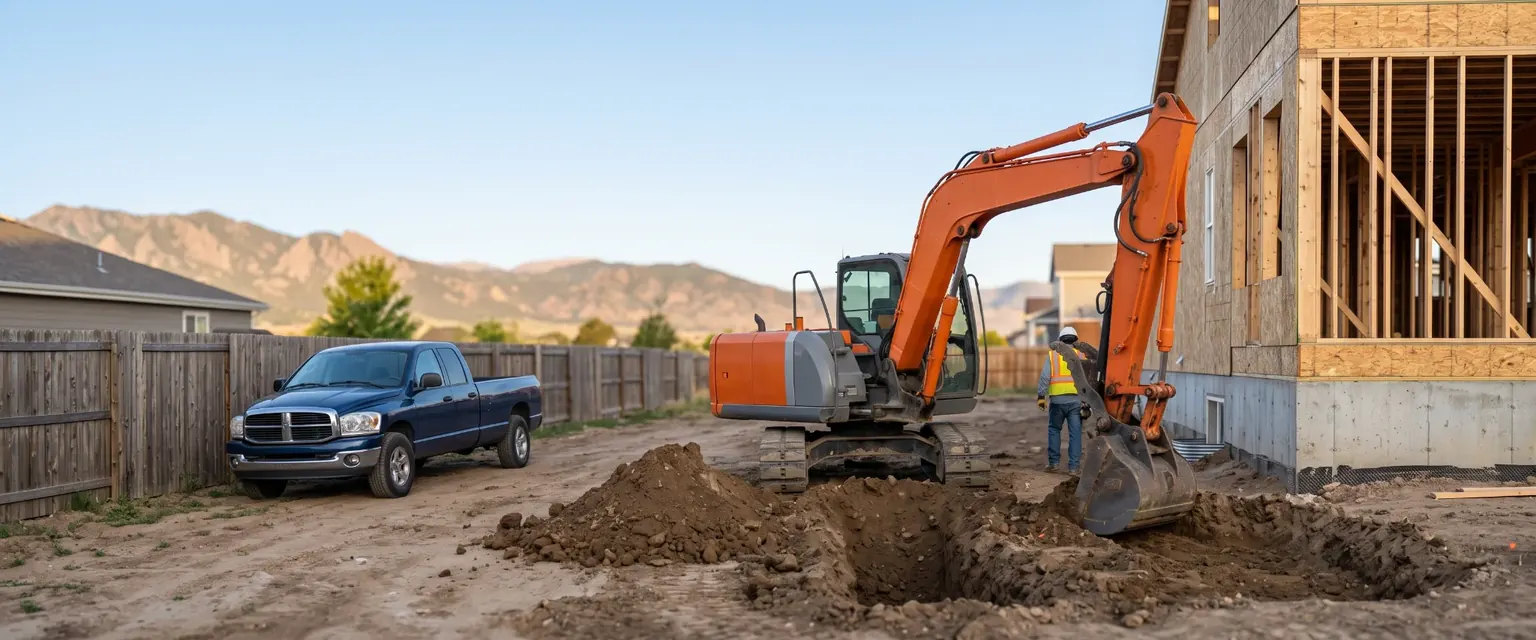
General liability
Pays when your work hurts someone else or their property. The one every GC asks about first. General liability explained -
 Coverage
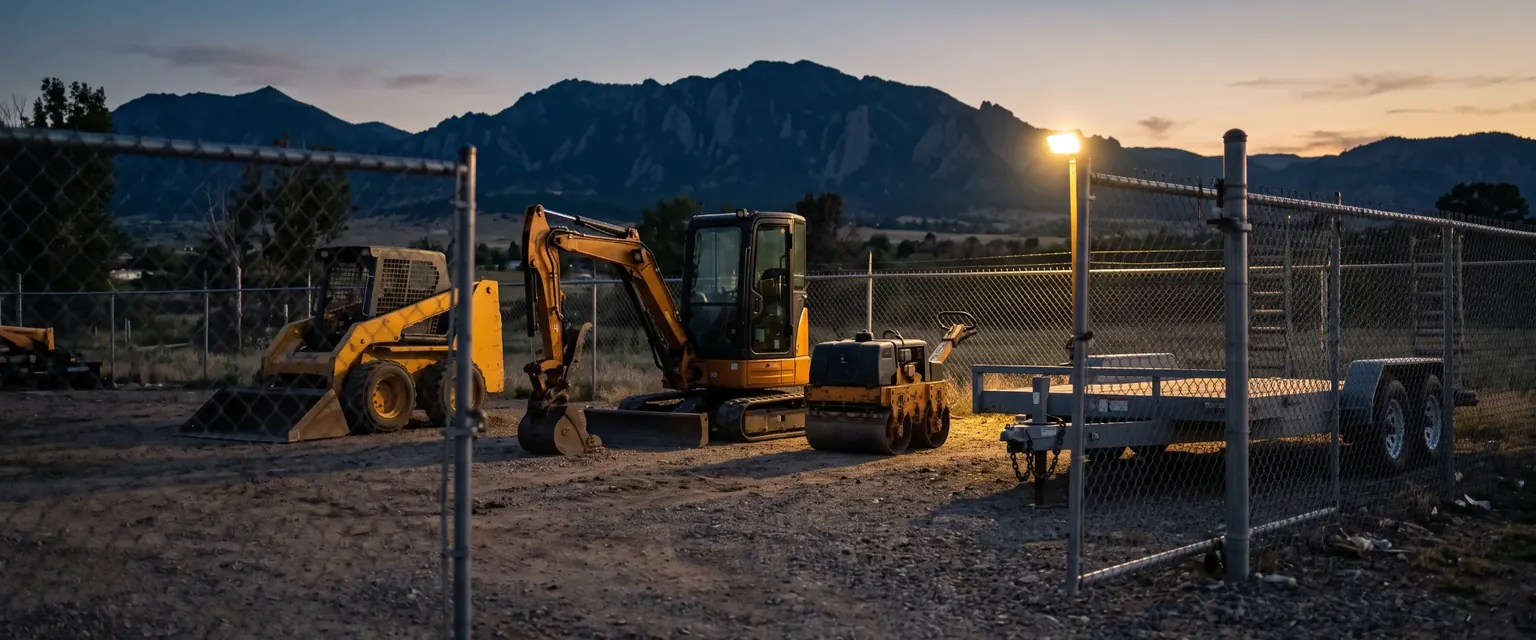
Contractor's equipment (inland marine)
Insures your own iron: theft, rollover, fire, transit. Pays what you scheduled, so the schedule matters. Contractor's equipment (inland marine) explained -
 Coverage
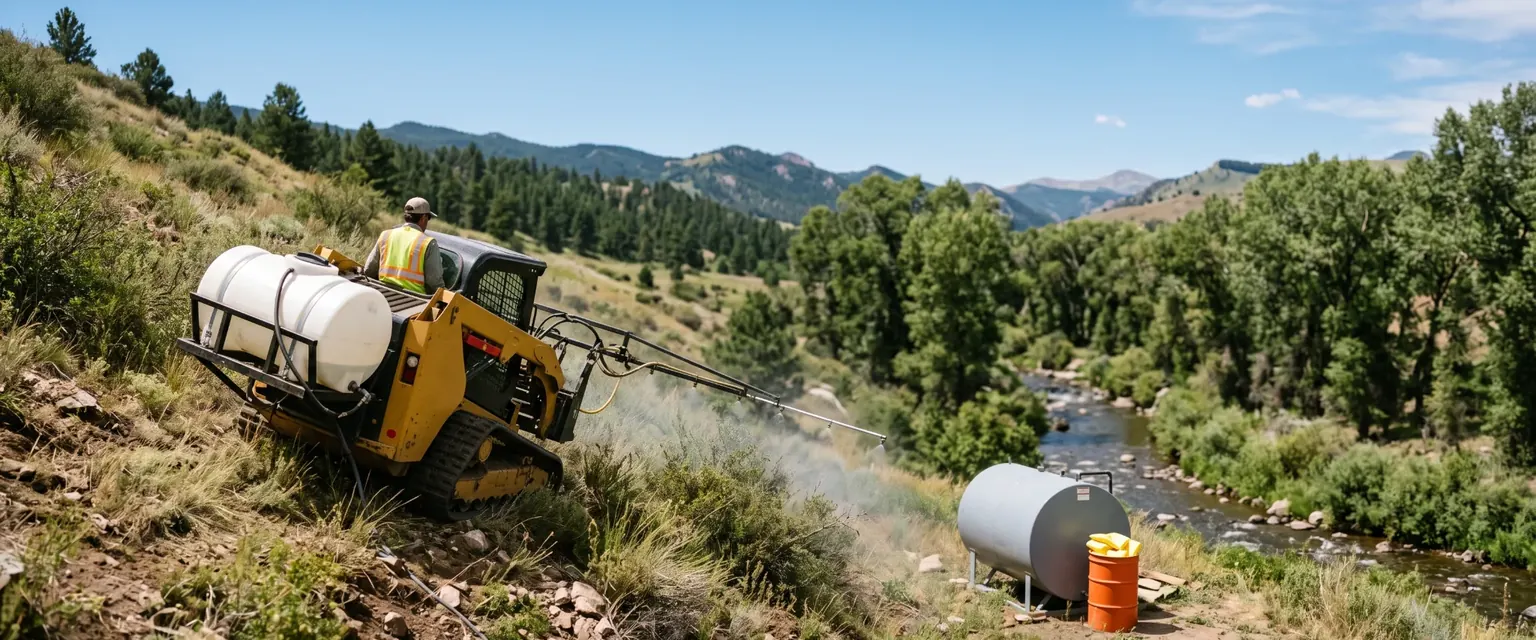
Pollution liability
Covers the fuel spill, the brine runoff, the herbicide drift. GL excludes all three under most forms. Pollution liability explained
Does general liability cover water in a basement on a lot I graded?
Do I need a stormwater permit for a grading job?
Who is liable if a retaining wall I built fails?
Is my grader covered under my general liability policy?
Statutes and numbers on this page last verified September 2, 2026 by a licensed Colorado producer. How we verify.