COLORADO · FRONT RANGE
Excavation, Landscaping, and Snow Insurance in Aurora
Aurora is building as fast as anywhere we see on the Front Range, on clay, in the wind, across three counties. The licensing question every landscaper asks us has a short answer.
Aurora at a glance
- Licensing
- Aurora licenses contractors under City Code Chapter 22 with eighteen classes and no landscaping class, puts all right-of-way excavation and grading under the Class 17 license, and requires a $20,000 bond and a Public Improvement Permit for right-of-way work.
- Ground
- Expansive clay from the older west side out to the E-470 subdivisions, sandier ground along Sand Creek and Toll Gate Creek, hail every summer, and wind that moves anything you left loose.
- Snow
- Upslope snow with wind-loaded drifts across the open east side, a 24-hour sidewalk rule with fines, and HOA and metro-district contracts that run two-inch triggers and per-push billing.
- Contracts
- HOAs and metro districts at $1M/$2M with additional insured and waiver language, production builders with master subcontract agreements, and city public-improvement work with its own bond and insurance figures.
Aurora is where the new rooftops are. Drive out Smoky Hill Road or south of Southlands and every quarter section that was dryland wheat a few years ago is a pad, a curb, and a landscape crew waiting on the builder’s schedule. That’s grading work, irrigation work, sod and hardscape work, and, come November, plow routes through HOAs that didn’t exist last winter. This page covers what changes for excavation, landscaping, and snow removal contractors working in Aurora, and how it differs from Denver next door. The statewide view is on the Colorado hub.
The licensing reality in Aurora
Start with the question we get most: is there a landscaper license? No. Colorado has no state landscape-contractor license (DORA licenses landscape architects only); landscapers answer instead to local business-license, right-of-way, and trade-permit rules that vary by city, and most Front Range building departments do not issue a landscape-specific contractor license. (DORA Division of Professions and Occupations program list; City of Aurora and Denver contractor class lists) Aurora is the clearest example. Aurora City Code § 22-61 requires a city contractor license for any person who, for compensation, builds, alters, repairs, demolishes, or moves any building or structure in the city or does work for which a license is required under Chapter 22; § 22-91 lists 18 license classes, with no landscaping or irrigation class. (Aurora City Code §§ 22-61, 22-91) We read the class list ourselves. Demolition is on it. Right-of-way is on it. Landscaping, irrigation, and lawn sprinklers are not. So a crew planting, laying sod, and setting pavers on a private lot works on a city business license and whatever building permit a wall or a structure needs, not a contractor license. Confirm with the Building Division before you assume, because the code can change and the class list is theirs, not ours.
The line that catches grading crews is the right-of-way. Aurora's Class 17 Right-of-way contractor license covers all excavation work in the public right-of-way (water, sanitary and storm mains, service lines, cable, gas and petroleum lines) and all grading and earthwork, fills, embankments, subgrade preparation, and gravel base course in or for the right-of-way. (Aurora City Code § 22-91 (Right-of-way contractor)) Read that scope again. It isn’t just pipe. Subgrade, fills, embankments, and gravel base course in or for the right-of-way sit under Class 17. A site-prep crew cutting a pad on private ground is outside it. The same crew grading the new street section in front of that pad is inside it, and the underwriter wants to know which one you are.
Then the permit and the bond. Aurora's Public Improvement Permit for work in the right-of-way requires a $20,000 surety/warranty bond payable to the City, valid two years from issue, and general liability insurance of at least $400,000 per occurrence for bodily injury or death and $100,000 per occurrence for property damage, plus an approved traffic control plan for any work restricting access to the right-of-way. (City of Aurora Public Improvement Permit application (Public Works)) Those are the city’s published minimums, and they’re lower than what most GC and HOA contracts ask for, so treat them as the floor. The bond is surety, not insurance; the bonds page covers the difference.
Site work over an acre adds the state permit. Construction that disturbs one acre or more, or is part of a larger common plan of development or sale that will disturb one acre or more, needs coverage under CDPHE's COR400000 Construction Stormwater General Permit (or a CDPHE-qualified local program for sites between one and five acres). (CDPS General Permit COR400000 (effective April 1, 2024)) On the east side, nearly every subdivision phase is part of a larger common plan, so the one-acre test is met before you park the dozer.
Septic follows the county line, not the city limit. The Adams County Health Department issues septic (OWTS) permits under its Regulation O-26 and requires that the system be installed by an installer licensed by the Adams County Health Department. (Adams County Health Department, Septic Systems; Regulation O-26) In the Arapahoe County portion of Aurora and unincorporated Arapahoe County, septic (OWTS) permits are issued by Arapahoe County Public Health under its On-Site Wastewater Treatment System Regulation. (Arapahoe County Public Health, Septic Systems; Arapahoe County OWTS Regulation (2026)) [VERIFY] Two counties, two agencies, and the Douglas County sliver in the south has a third. Check the parcel before you bid the system.
Terrain and soil
Expansive clay, and then more clay. The older west side around Fitzsimons and Del Mar Park has been settling for decades, and the new ground out toward E-470 is the same stuff, just fresher. It pumps under an 84” Bomag in a wet April, so a pad that compacted fine on Tuesday moves like a waterbed on Thursday. It shrinks in August and opens cracks you can drop a tape into. Anything built on it, a paver patio, a segmental wall, a driveway apron, moves unless the base was built for it. That’s the completed-operations claim in Aurora: not the day you built it, the second spring after.
Along Sand Creek and Toll Gate Creek the ground goes sandy and the water sits closer to the surface, which is good digging and bad trench walls. Out past Buckley the plains open up and the wind takes anything loose. Silt fence, dust, a tarp off a trailer, all of it ends up on the neighbor’s lot or in a storm inlet, and the complaint lands on your GL.
Hail is the other constant. Aurora catches it most summers, and a June storm will dimple every machine in the yard and scatter rock mulch into the turf for the mowers to find in July. The equipment schedule needs to say what the John Deere dozer and the trailer are worth today, not at purchase.
Snow, and what the contracts trigger
Aurora gets the same upslope storms as Denver, with one difference: wind. The east side is open, and a modest snowfall drifts across a cul-de-sac in Southshore or Painted Prairie into something a half-ton with a Boss blade can’t push. Then the sun comes out and the refreeze starts. Slip-and-fall claims here come from the drift line that melted at noon and froze at five.
The sidewalk rule has teeth. Aurora City Code § 126-313 makes it unlawful to leave snow and ice on sidewalks more than 24 hours after every snowfall (48 hours after a declared snow emergency ends), with fines up to $100 for a first violation at single-family homes and up to $200 at multi-family or non-residential property. (Aurora City Code § 126-313 Time for removal; penalty) Managers know the numbers, and it shows up in the contract as a 24-hour completion clause on walks and a two-inch trigger on lots. HOA and metro-district contracts in southeast Aurora usually bill per push, because the boards are new and cautious. Commercial lots near the medical campus and along I-225 want a seasonal number and a one-inch trigger. We tell every plow operator who asks: read the trigger, then read what “completion” means in the contract, because the ordinance clock and the contract clock are not the same clock.
Colorado’s snow law applies. Colorado's Snow Removal Service Liability Limitation Act (C.R.S. 13-21-129, effective August 8, 2018) voids any snow-and-ice contract clause that requires one party to indemnify, hold harmless, or defend the other for the other party's own acts or omissions, but only where the service provider was prohibited, by the contract or in writing, from mitigating the specific snow or ice event at issue. (C.R.S. 13-21-129(3), (4); SB 18-062) Keep the emails where the manager told you to skip the de-icer. That writing is the whole statute. The residential and HOA plowing page covers the personal-truck problem, which is common on Aurora HOA routes.
Contract norms we see here
Aurora is an HOA, metro-district, and production-builder market. The HOA ask is the Front Range standard: $1M per occurrence, $2M aggregate on the general liability, the association and the management outfit as additional insured, and a waiver of subrogation. Metro districts add primary and non-contributory language and sometimes a per-project aggregate.
Production builders are different. A master subcontract agreement covers every lot you touch for the year, the indemnity runs one direction, and the builder’s insurance exhibit lists completed operations by endorsement number. Grading and landscape crews sign these without reading them. Read them.
Crews grow fast here, and workers’ compensation is where the growth shows up. Colorado employers must carry workers' compensation insurance as soon as they have one or more employees, whether part-time, full-time, or family members (C.R.S. 8-40-203(1)(b), 8-44-101); the state can fine an uninsured employer up to $500 for every day without coverage. (C.R.S. 8-40-203(1)(b); 8-44-101; 8-43-409) A landscape crew that hires two seasonal hands in April is an employer in April.
What we don’t control: how a builder’s master agreement reads to the carrier on a claim two springs from now.
Nearby
We work with contractors from Centennial, Parker, Englewood, Commerce City, Brighton, Bennett, and Watkins, and most Aurora crews run routes that cross into Denver by lunch. West, Denver licenses by supervisor certificate and permits street cuts through DOTI. South, Castle Rock and Douglas County registers contractors, bonds the county right-of-way, and sits on the worst of the expansive bedrock.
Where to go from here
Already carry a policy for Aurora work? Send the dec pages and a builder’s insurance exhibit to the policy review and we’ll find the residential exclusion, the completed-ops gap, and whether the plow trucks are on a commercial auto form. Starting out? Get Insured lists what to have ready. No online quote, on purpose. An Aurora book is built around which side of the curb you work and how fast the crew is growing.
Serving businesses located in Colorado. Coverage is determined by the policy language and the carrier.
Trades
Trades common in Aurora.
-
 EXCAVATION TRADE
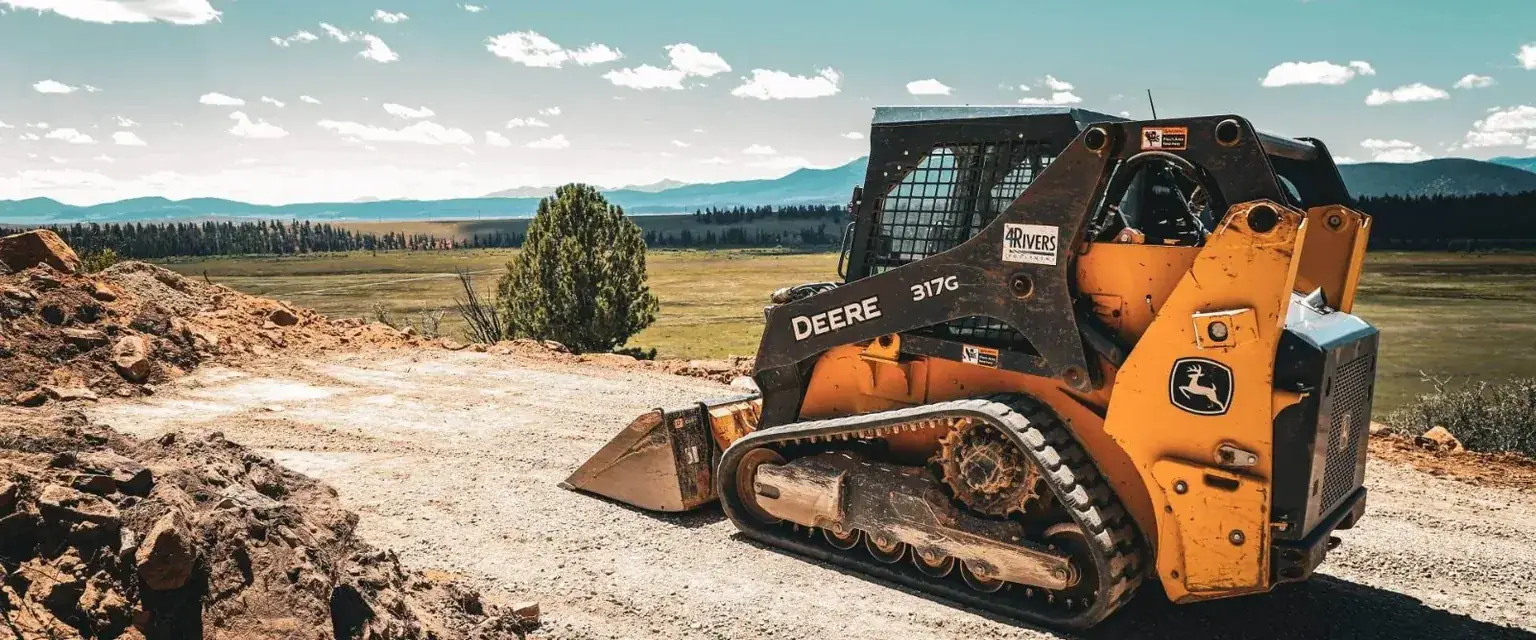
Grading and Site Prep
A pad that drains the wrong way, a wall that bulges after a wet spring, silt in the neighbor's yard after a July storm. Grading claims show up late and argue about who was at fault. Here's what the policy has to do. Grading and Site Prep insurance -
 LANDSCAPING TRADE
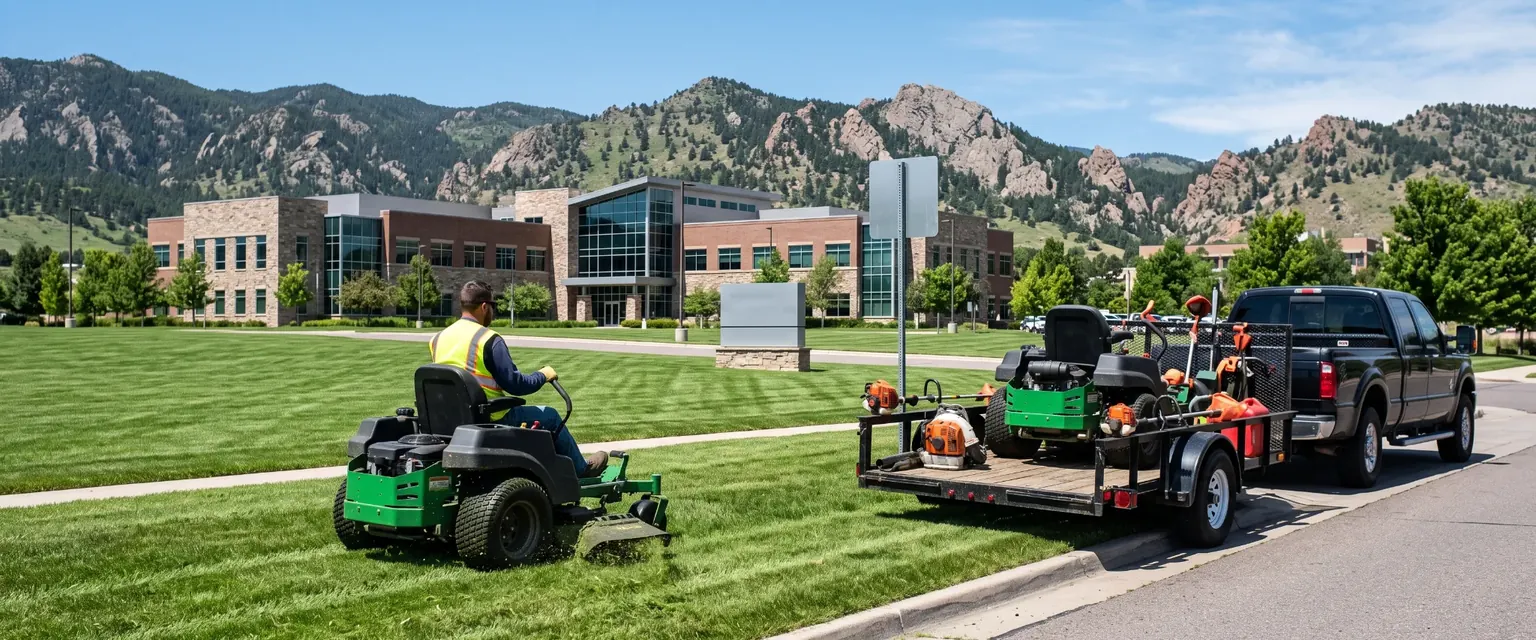
Lawn Care and Maintenance
Maintenance is the landscaping trade with the most claims per dollar of revenue. Not the biggest claims. The most. Here's what a Colorado lawn care policy has to catch, from rock-throw to the plow you put on the same truck in November. Lawn Care and Maintenance insurance -
 SNOW TRADE
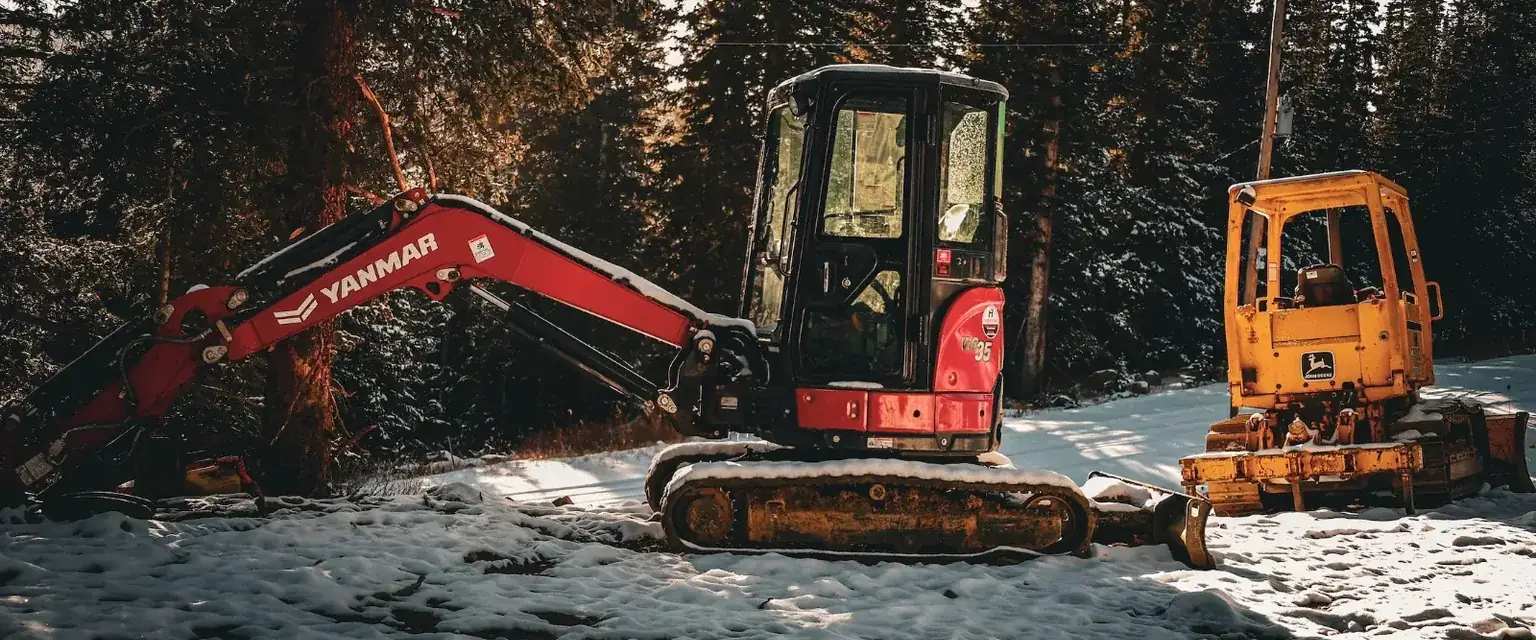
Residential and HOA Snow Plowing
Most residential plowing in Colorado starts with a pickup, a blade, and a personal auto policy that was never told. Here's what an HOA and driveway plowing policy has to do, from an agency that plows driveways above 9,000 feet in the dark. Residential and HOA Snow Plowing insurance
Does Aurora have a landscaper license?
What does Aurora require for right-of-way work?
Who permits septic systems in Aurora?
Statutes and numbers on this page last verified September 2, 2026 by a licensed Colorado producer. How we verify.