LANDSCAPING TRADE
Lawn Care and Maintenance Insurance in Colorado
Maintenance is the landscaping trade with the most claims per dollar of revenue. Not the biggest claims. The most. Here's what a Colorado lawn care policy has to catch, from rock-throw to the plow you put on the same truck in November.
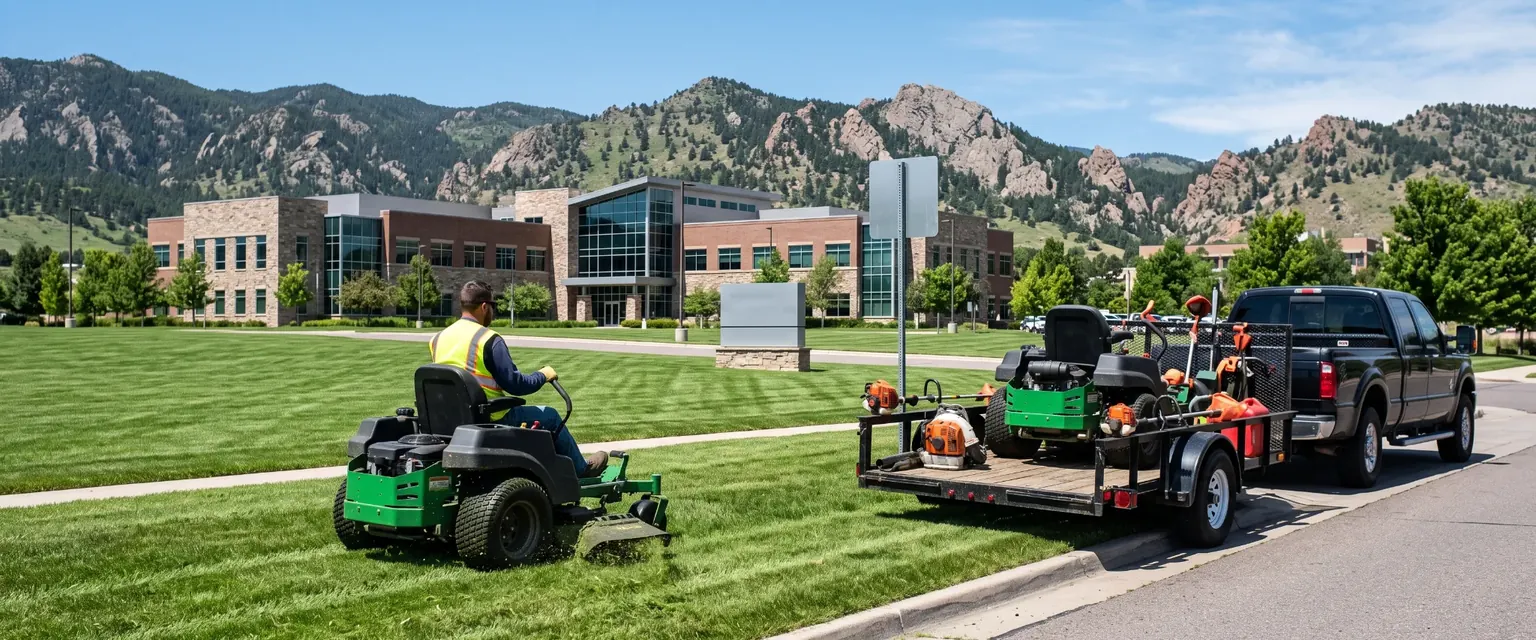
Lawn care runs on volume. Forty accounts a week, three crews, a trailer behind every truck, and a chemical program in the spring. The claims run on volume too. A rock through a window in Aurora, a burned strip along a fence in Greeley where the sprayer overlapped. None of them are big. Together they are the picture an underwriter sees. This page sits under our landscaping hub. If you also install drip and spray systems, the irrigation contractors page covers the water side.
What the underwriter sees on a lawn care application
Three questions before anything else. Do you apply chemicals? Do you plow? How many people are on the crew?
The chemical question decides whether the pollution exclusion matters. The plow question decides whether this is a landscaping policy or a landscaping-and-snow policy, which read differently after a February fall. The crew question decides workers’ comp, often the biggest line on a maintenance outfit.
Then the picture. Residential versus HOA and commercial accounts, because a property manager with twelve buildings in Denver sends certificate requests every month. Equipment: mowers, trimmers, aerators, the Yanmar mini skid steer you use for sod, and the trailers. Trucks and who drives them. Payroll split between mowing and install work, because they commonly rate under different codes. Whether you hold the applicator license or sub the chemical program out.
Colorado adds its own lines. Hail from May through September wrecks plant material and the equipment in the yard. Wind on the plains east of Aurora and across Weld County turns a normal herbicide application into a drift claim. Expansive clay on the Front Range heaves the sidewalks your crews trim along, which is where the trimmer meets the ankle. In our experience an application that names the chemical program, the plow trucks, and the payroll split reads like a professional operation. One that says “lawn care” and a truck count gets rated like a guess.
The five exposures that produce lawn care claims
- Mower rock-throw. A 60-inch zero-turn on a corner lot in Aurora picks up a piece of rock mulch that a June hailstorm scattered into the turf and puts it through the neighbor’s sliding glass door. Small, frequent, and the claim general liability was built for.
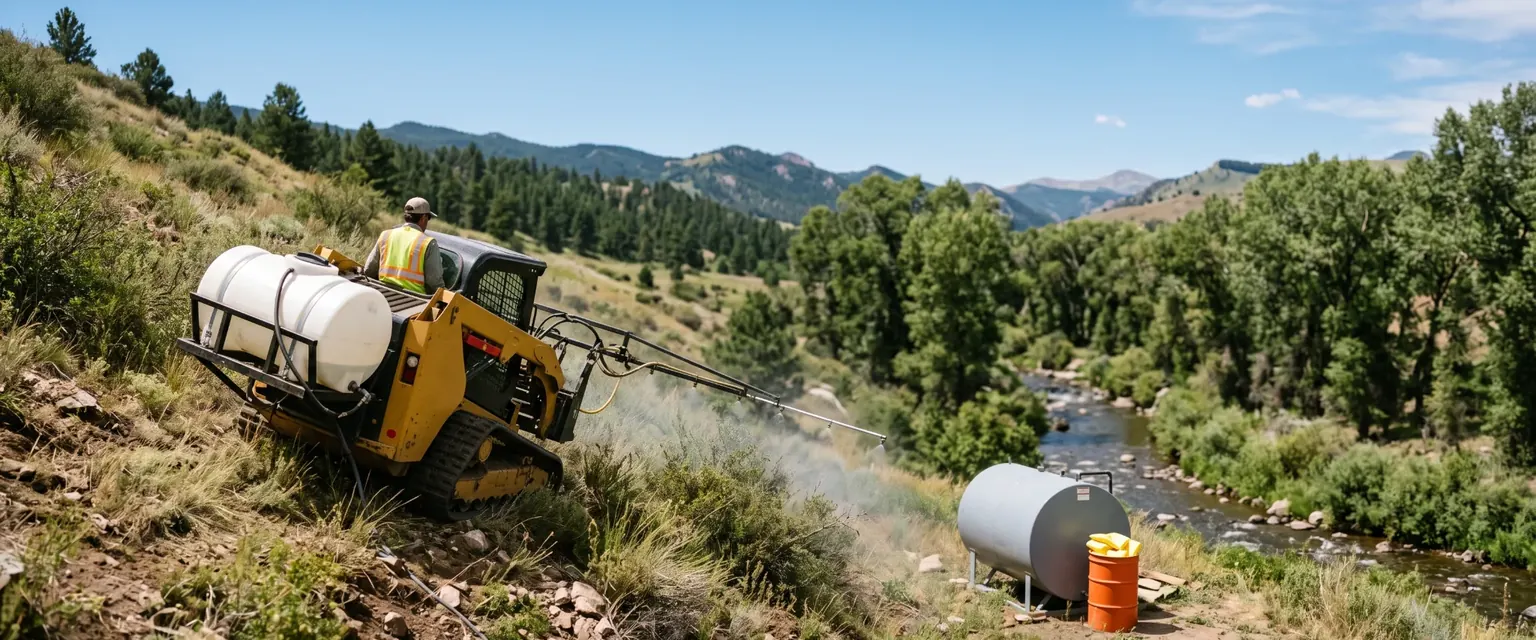
- Chemical drift. A ride-on spreader-sprayer puts down a broadleaf herbicide on a windy afternoon in Greeley, wind on the plains carries it, and the neighbor’s vegetable garden dies. Under most standard GL forms that is a pollution claim, and the pollution exclusion is broad.
- Crew injuries. A crew member slips on a wet slope in Denver’s Highlands after a downpour and puts a foot under a running walk-behind deck. Workers’ compensation, and Colorado requires it from the first employee.
- Trailer and equipment theft. An enclosed trailer with three mowers and every trimmer the crew owns disappears from a gas station off I-76 in Brighton on a 100-degree July morning. Inland marine, and the schedule decides what comes back.
- The winter half of the business. The crew truck, now wearing a Boss blade, clears an HOA lot in Green Valley Ranch after a Chinook melt refreezes overnight. Someone falls at 6 a.m. The GL policy never mentioned snow and the truck is on a personal auto form.
Things go wrong every week on a maintenance route. The stack below is built so each of these lands on a policy written to catch it.
The coverage stack we’d build
| Coverage | Why | Typical contract requirement |
|---|---|---|
| General liability, with snow disclosed if you plow | Rock-throw, trimmer injuries, a trailer backed into a garage, a slip on a walk you cleared. The defense comes with it. | $1M per occurrence / $2M aggregate; HOA and management firm as additional insured; primary and non-contributory |
| Commercial auto | Crew trucks, the trailer behind each one, and the plow in winter. Personal auto forms commonly exclude business use, and a trailer full of mowers is business use. | $1M combined single limit; hired and non-owned auto for the crew member driving his own truck |
| Contractors equipment (inland marine) | Mowers, trimmers, aerators, the mini skid steer, and the trailer they ride on. Theft is the claim. | Not usually in the contract; required by your lender and by the price of an empty trailer spot |
| Workers’ compensation | Crew work. Mower slopes, trimmer kickback, heat, and the audit after a summer of seasonal payroll. | Statutory; waiver of subrogation on most HOA and commercial contracts |
| Pollution liability, endorsement or standalone | Herbicide and fertilizer drift, a spill into a storm inlet, a fuel can tipped in a customer’s garage. Excluded under most standard GL forms. | Sometimes required on municipal and school district bids; the applicator statute does not require it |
| Umbrella / excess | For the management firm or municipal contract that asks for more than the GL and auto limits carry. | $2M on larger HOA and commercial accounts; rare on residential |
The line that bites on a maintenance outfit is the pollution exclusion. Still covered on a clean GL form: the rock through the window, the trimmer injury, the sod you scalped, the defense. Commonly excluded even then: the herbicide that drifted, the fertilizer that ran into the inlet, and the cleanup. If chemicals are part of your program, the fix is the pollution line in the table. The policy language controls, so we read the endorsement, not the summary.
Contract requirements you’ll run into
Residential accounts rarely ask for paper. Everything else does.
- HOAs and property managers. $1M/$2M general liability, the association and the management firm as additional insured, primary and non-contributory wording, and a waiver of subrogation on workers’ comp. Some management firms want every entity they manage listed. A blanket additional insured endorsement handles that without a new endorsement each time.
- Municipal and school district mowing. Higher limits, an umbrella, and sometimes pollution coverage if the scope includes weed control on district property. Read the insurance section before you price the bid.
- The applicator license. The Department of Agriculture wants a certificate showing the statutory minimum with cancellation notice to the Commissioner. That certificate is a licensing document, not proof of drift coverage.
- Commercial properties. The same shape as HOA work, plus a certificate request every renewal. Certificates usually go out the same business day; it depends on the carrier and the holder’s wording.
Colorado notes for lawn care contractors
No state license. Colorado has no state landscape-contractor license (DORA licenses landscape architects only); landscapers answer instead to local business-license, right-of-way, and trade-permit rules that vary by city, and most Front Range building departments do not issue a landscape-specific contractor license. (DORA Division of Professions and Occupations program list; City of Aurora and Denver contractor class lists) So the question in Denver, Aurora, and Greeley is the city business license and whatever right-of-way rules apply to the parkway strip you mow. Ask each city. The answers differ.
Pesticide application. Under C.R.S. 35-10-106(1)(a), a Colorado commercial pesticide applicator business must carry liability insurance of at least $400,000 (a policy with a pollution exclusion still qualifies) with ten days' cancellation notice to the Commissioner of Agriculture. (C.R.S. 35-10-106(1)(a); 8 CCR 1203-2) Read the parenthetical twice. A licensed applicator can be fully compliant and still have no coverage for the drift claim. That’s how the statute is written, and it’s why the pollution line is in the table above.
Workers’ comp. Colorado employers must carry workers' compensation insurance as soon as they have one or more employees, whether part-time, full-time, or family members (C.R.S. 8-40-203(1)(b), 8-44-101); the state can fine an uninsured employer up to $500 for every day without coverage. (C.R.S. 8-40-203(1)(b); 8-44-101; 8-43-409) A crew of two hired for April through October is two employees.
Class codes. Landscaping contractors are typically rated under NCCI code 0042 (Landscape Gardening & Drivers; lawn maintenance under 9102), excavation under 6217 (Excavation & Drivers), tree work under 0106 (Tree Pruning), and stand-alone snow-clearing under 9402 (Street Cleaning & Drivers); the carrier makes the final assignment under NCCI rules. (NCCI Scopes Manual) [VERIFY] Mowing and landscape gardening commonly rate under different codes, and a crew that does both needs its payroll split. If you take down trees, that is a third code and a separate conversation on the tree service page.
The plow truck. Colorado requires minimum auto liability limits of $25,000 per person and $50,000 per accident for bodily injury and $15,000 per accident for property damage (C.R.S. 10-4-620; 42-7-103(14)(a)), unchanged as of 2026; commercial contracts commonly ask for $1,000,000 combined single limit instead. (C.R.S. 10-4-620; 42-7-103(14)(a)) The state minimum keeps the truck legal. It says nothing about whether a personal auto form covers a trailer full of mowers in July or a blade in January, and under most personal forms it doesn’t.
Where to go from here
Already carry a landscaping policy? Send the dec pages to the policy review and we’ll mark the pollution exclusion, the snow question, and the payroll split against what your crews actually do. Starting fresh? Get Insured lists what to have ready. No online quote. A lawn care book is built around the chemical program, the plow trucks, and the crew count.
Serving businesses located in Colorado. Coverage is determined by the policy language and the carrier.
Coverage
Coverage built for lawn care and maintenance.
-
 Coverage
General liability
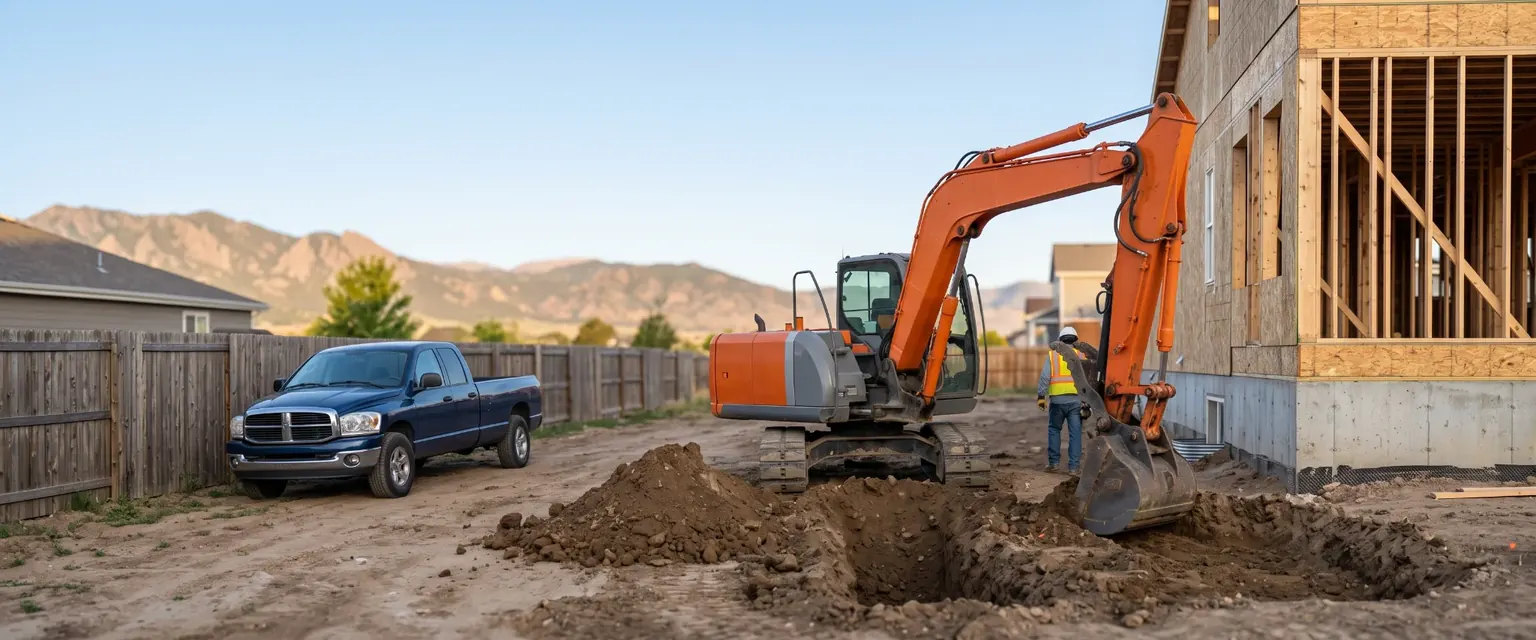
Pays when your work hurts someone else or their property. The one every GC asks about first. General liability explained -
 Coverage
Pollution liability
Covers the fuel spill, the brine runoff, the herbicide drift. GL excludes all three under most forms. Pollution liability explained -
 Coverage
Workers' compensation
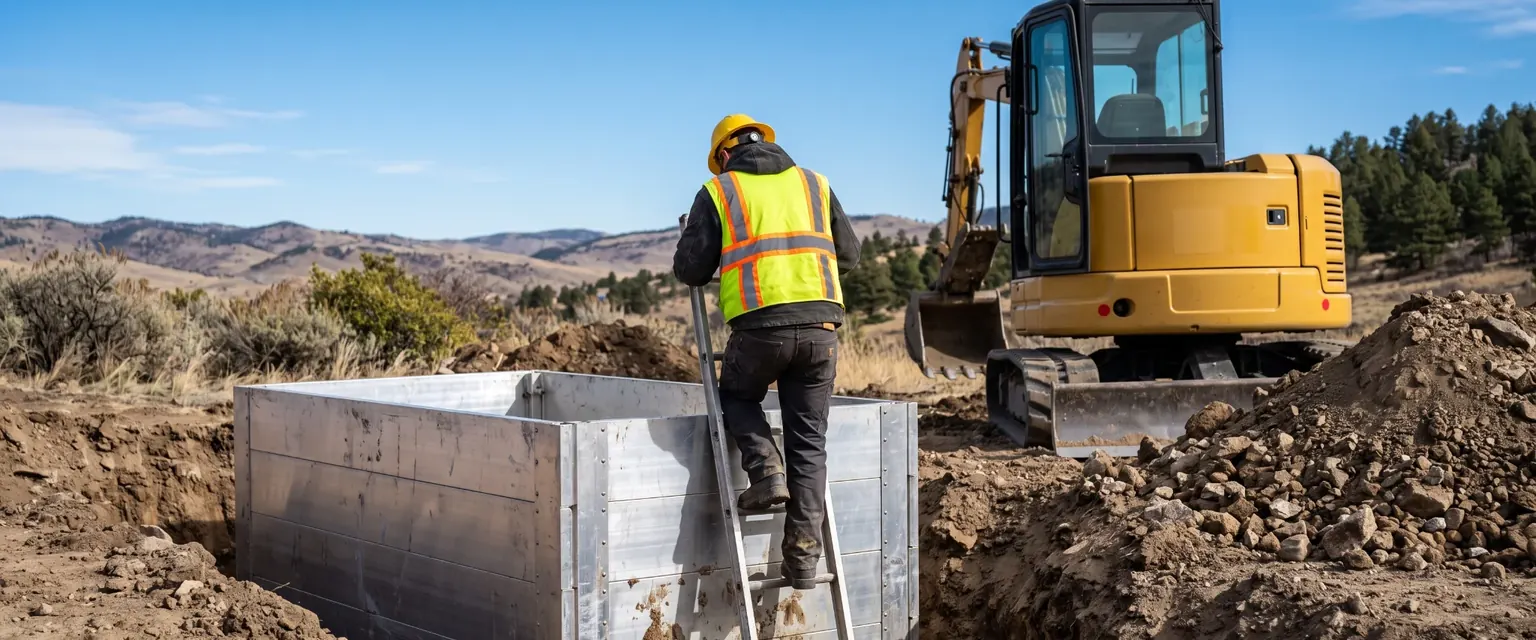
Pays your employee's medical and lost wages when they get hurt. Required at the first hire in Colorado. Workers' compensation explained
Does general liability cover a rock my mower threw through a window?
I hold the commercial applicator license and carry the $400,000. Am I covered for drift?
Do two seasonal mowing crew members need workers' comp?
I mow in summer and plow the same accounts in winter. One policy or two?
Statutes and numbers on this page last verified September 2, 2026 by a licensed Colorado producer. How we verify.