COLORADO · SOUTHERN FRONT RANGE
Excavation, Landscaping, and Snow Insurance in Pueblo
Pueblo digs through a century of unmapped pipe and adobe clay, the county writes its own insurance minimums into the contractor code, and the contracts ask for less paper than Denver until the day something breaks.
Pueblo at a glance
- Licensing
- PRBD licenses city contractors with separate Demolition and Excavation - Earth Work classes; Pueblo County's code requires a county license or registration with its own GL and workers' comp minimums; county right-of-way excavation takes a permit, a bond, and a GL aggregate; PDPHE licenses septic installers under Regulation VIII; one acre triggers the county stormwater permit.
- Ground
- Adobe clay that cracks in August and turns to gumbo in April, cobble and a high water table along the Arkansas and Fountain Creek, caliche and gravel in Pueblo West, and older neighborhoods built over clay tile laterals, cast iron, and pipe nobody drew.
- Snow
- Pueblo sits in a warm pocket that gets less snow than the cities north of it, so the work is ice, wind, and drifting on the Mesa and out toward Boone, and contracts run per-push with mostly municipal, school, and industrial accounts.
- Contracts
- Contract limits run lower than Front Range norms, with the county's own license minimums as the floor; municipal, school district, and metro district work builds up from there; industrial and rail adjacency on the south side asks for the umbrella; ag work on the Mesa runs on a handshake.
Pueblo is an old city on a river, and that is the whole insurance story. The neighborhoods on the east side, Bessemer, and the Mesa were plumbed generations ago with clay tile, cast iron, and steel, and a lot of it was never drawn. The ground is adobe clay that cracks in August and swallows a Mack dump truck in April. And the contracts ask for less than Denver, right up until the claim, when the numbers on the certificate are the numbers you have. This page sits under our excavation, landscaping, and snow removal hubs and the Colorado map.
The licensing reality in Pueblo
Pueblo has a regional building department for the city and a county code for everything outside it, and they do not read the same.
Inside the city. The Pueblo Regional Building Department (PRBD) licenses contractors for the City of Pueblo and lists separate Class D specialty licenses for Demolition (D08) and Excavation - Earth Work (D15) and a plumbing-class Lawn Sprinkler Systems license (P01); it lists no landscaping license. (Pueblo Regional Building Department, License Types list) Two things stand out. Pueblo is one of the few jurisdictions we’ve seen with an excavation license class of its own, so a grading or trenching outfit here is licensed as a trade rather than riding on a general’s paper. And a lawn sprinkler license sits under plumbing, which is where an irrigation contractor should start asking questions. PRBD sets insurance requirements by ordinance and states no dollar figures on its licensing pages, as of our last check, so ask them directly.
The unincorporated county. Pueblo County Code 15.10.110 makes it unlawful to perform construction work in the county without a county-issued contractor license or registration, and 15.10.150(a) requires licensees to carry commercial general liability insurance of at least $250,000 per occurrence and $500,000 aggregate plus workers' compensation. (Pueblo County Code 15.10.110; 15.10.150(a); 15.10.180; 15.10.190) That is the floor the county writes into its own code, and it is lower than what a Front Range GC asks for. Meeting the county minimum does not mean the policy is sized for the job. A demolition crew taking down a two-story brick house on the east side can pass the county minimum and still be underinsured for the neighbor’s wall.
County right-of-way. Before excavating in a Pueblo County right-of-way, the excavator must obtain a county permit (Pueblo County Code 12.08.050(A)) and post a $10,000 license and permit bond plus evidence of commercial general liability insurance with a $1,000,000 general aggregate (12.08.040). (Pueblo County Code 12.08.040(A), (B); 12.08.050(A)) The bond and the aggregate are two different asks. The bond is surety, written on your financials. The aggregate is your general liability limit for the policy year, and every claim on every job draws it down.
Stormwater. Pueblo County Code Chapter 8.26 requires a Pueblo County Stormwater Construction Permit before land-disturbing activity of one acre or more (or less than one acre when part of a larger common plan of development) inside the county MS4 permit area, for activity commencing after July 1, 2019. (Pueblo County Code 8.26.050; 8.26.090.B) Pueblo West lots are big, and a pad plus a driveway plus a leach field can cross an acre without anyone noticing.
Septic. In Pueblo County, the Pueblo Department of Public Health and Environment administers On-Site Wastewater Treatment Regulation No. VIII and licenses OWTS contractors/installers and cleaners; no person may install an OWTS without a PDPHE license (Reg. VIII 43.4(K)(1)). (Pueblo Board of Health Regulation No. VIII, 43.4(K)(1), 43.4(K)(3), 43.5(I)) Pueblo West, the St. Charles Mesa, Avondale, and Boone are largely on septic, and a septic installer here holds a PDPHE license first and a policy second. The application asks for neither insurance nor a bond. The property owner’s attorney will ask about both when a field fails.
Terrain and soil
Locals call it adobe. It is heavy clay, and it behaves like the expansive clay in Denver with the volume turned up: in a dry August it opens cracks you can drop a tape into, and after a wet April it turns to gumbo that stops an 84” Bomag in its own track. Compaction on adobe is a moisture game. Too dry and it will not knit. Too wet and it pumps. A graded pad or a retaining wall built on it at the wrong moisture starts moving inside a year, and that is the completed-operations claim we see most from Pueblo.
Along the Arkansas and up Fountain Creek it changes to cobble and sand with a high water table, so a basement or a tank hole near the river is a dewatering job. Pueblo West and the ground north toward the county line are the opposite: dry gravel, caliche that rings under a bucket, and rock that turns a septic field into a hammer job.
Then there is the pipe. The older neighborhoods, Bessemer, the Eastside, the Grove, were built over clay tile sewer laterals, cast iron water mains, and abandoned steel lines that may or may not show on any map or locate. A locate ticket protects you from the lines the owners know about. It does not protect you from the tile lateral that broke when the bucket found it, and that claim runs to your general liability, or to pollution liability once sewage is in the excavation. The dump truck side of this town is the river gravel pits along US 50, and a loaded Mack on adobe after rain is a recovery job waiting to happen.
Snow, and what the contracts trigger
Pueblo gets less snow than the cities north of it. The city sits in a warm pocket at the bottom of the Front Range, and an upslope storm that closes Monument Hill often gives Pueblo a dusting and a hard wind behind it. So the work is not depth. It is ice on north-facing lots, drifting on the Mesa and out toward Boone and Avondale, and the refreeze that follows a warm afternoon.
That shape shows up in the contracts. Per-push dominates, because nobody wants to pay a seasonal rate for a town that may see only a handful of plowable storms. Ice management, product, and the log matter more than the blade. The accounts are municipal, school district, hospital, and industrial lots, with fewer of the HOA seasonal contracts that fill a Castle Rock plow book. We have not found a verified sidewalk-clearing ordinance for the city in our registry, so we don’t quote one; ask the city before you write a response time into a contract.
Contract norms we see here
Lower limits, same claims. Pueblo contracts commonly ask for less than the $1M/$2M that has become standard up the interstate, and some property owners here still accept whatever the county license requires. We tell every contractor who asks the same thing: the claim does not know what the contract said. A neighbor’s foundation, a broken lateral, or a fall on ice costs what it costs.
Municipal and district work. The city, the county, the school districts, and Pueblo West Metropolitan District each carry their own insurance exhibit, and county right-of-way work starts from the permit bond and aggregate above. Additional insured, primary and non-contributory, and a waiver of subrogation show up on all of them.
Industrial and rail adjacency. The steel mill, the rail yards, and the power plant on the south side push umbrella asks and site-specific safety paperwork down to anyone who grades, hauls, or plows inside the fence. The commercial auto policy on the haul trucks gets read as closely as the GL.
Ag on the Mesa. Chile farms, alfalfa, and ditch work east of town run on a handshake. Get a ditch crossing approved in writing anyway.
Nearby
We work with contractors across Pueblo County and up the Arkansas: Pueblo West and the Mesa, Avondale and Boone out east, Colorado City and Rye under the Wet Mountains, and Cañon City and Florence up US 50 in Fremont County. North on I-25 the licensing changes at the county line and the pre-marking ordinance kicks in at Colorado Springs. Past the Palmer Divide, the HOA density and the heaving bedrock of Castle Rock and Douglas County are a different market entirely.
Where to go from here
Send the dec pages to the policy review and we’ll check the limits against the county code and the pollution exclusion on the GL. Starting fresh? Get Insured lists what to have ready. No online quote. A Pueblo book gets built around what’s under the ground.
Serving businesses located in Colorado. Coverage is determined by the policy language and the carrier.
Trades
Trades common in Pueblo.
-
 EXCAVATION TRADE
Demolition Contractor
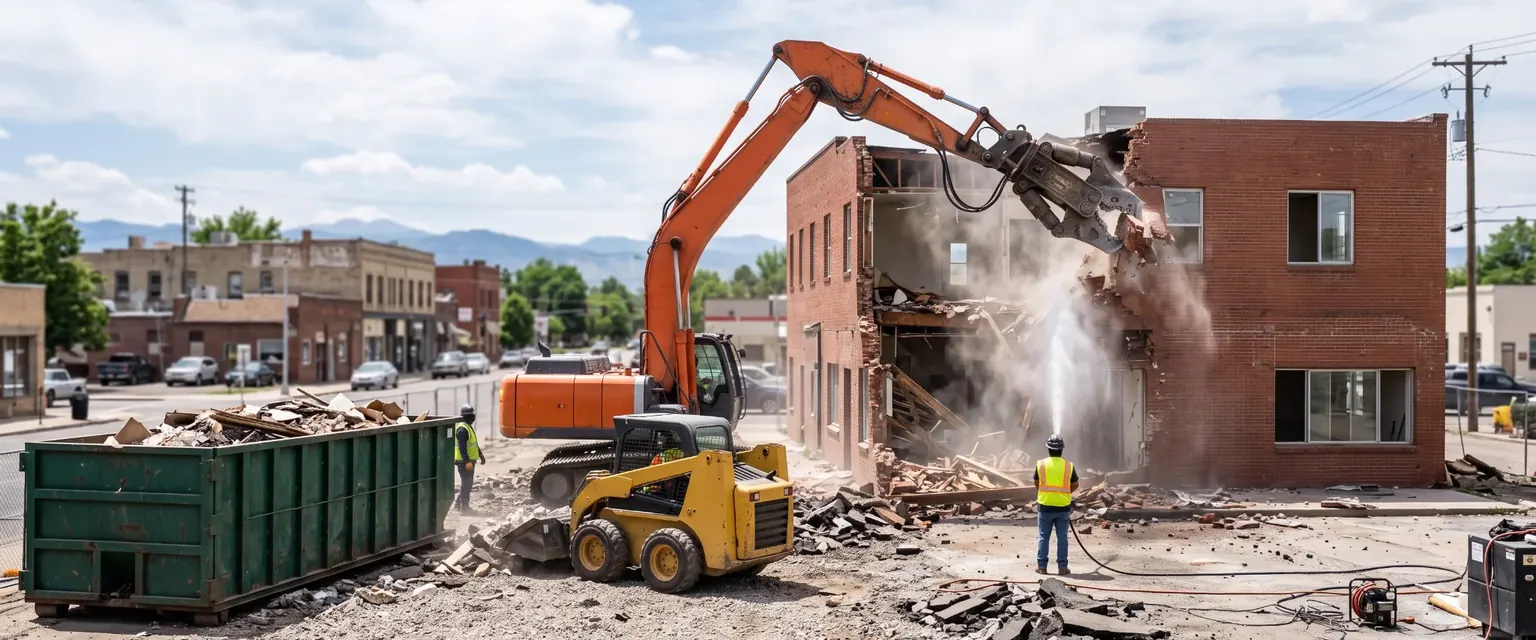
Demolition is excavation with the building still in the way. The underwriter rates it higher, the neighbor's wall is always closer than it looks, and the material you're tearing out may be the claim. Here's what the policy has to do. Demolition Contractor insurance -
 EXCAVATION TRADE
Septic Installer
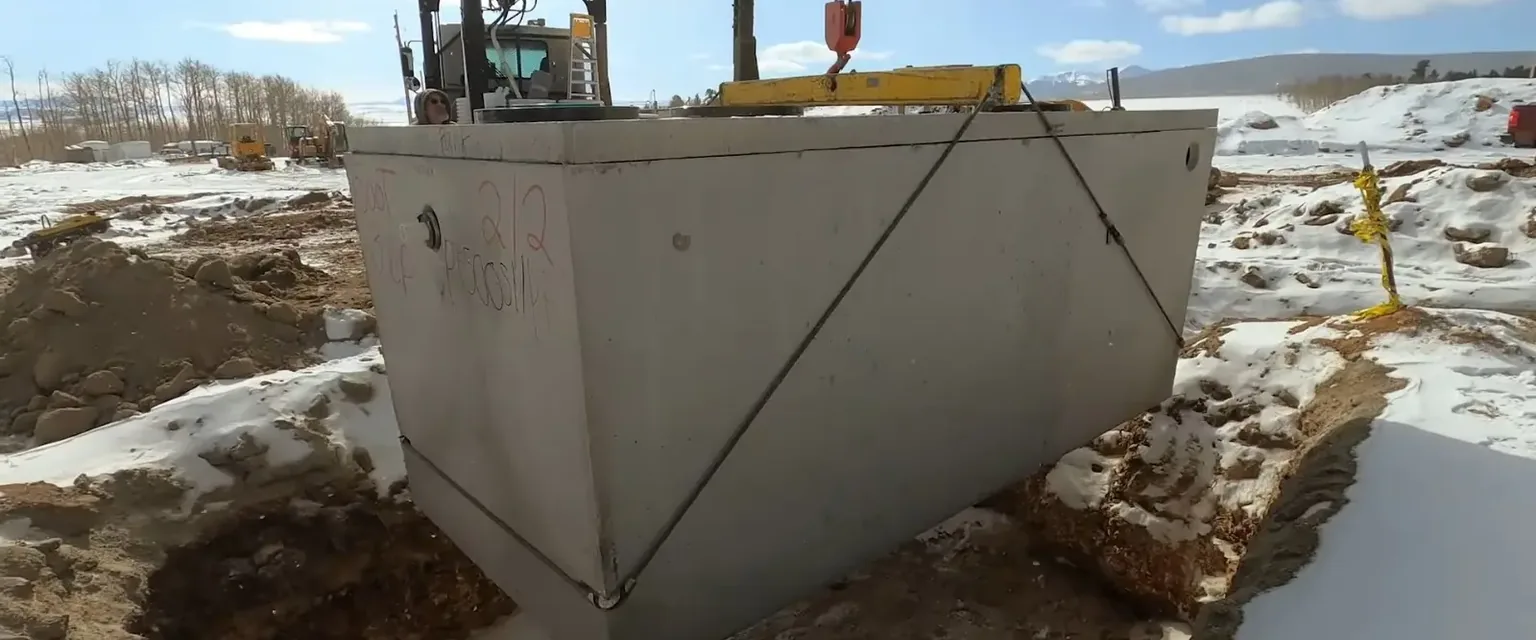
The tank is in, the county signed off, and the customer paid. Your exposure on that system runs for years after that. Here's what a septic installer's policy has to do in Colorado, and where the standard forms fall short. Septic Installer insurance -
 EXCAVATION TRADE
Dump Truck and Aggregate Hauling
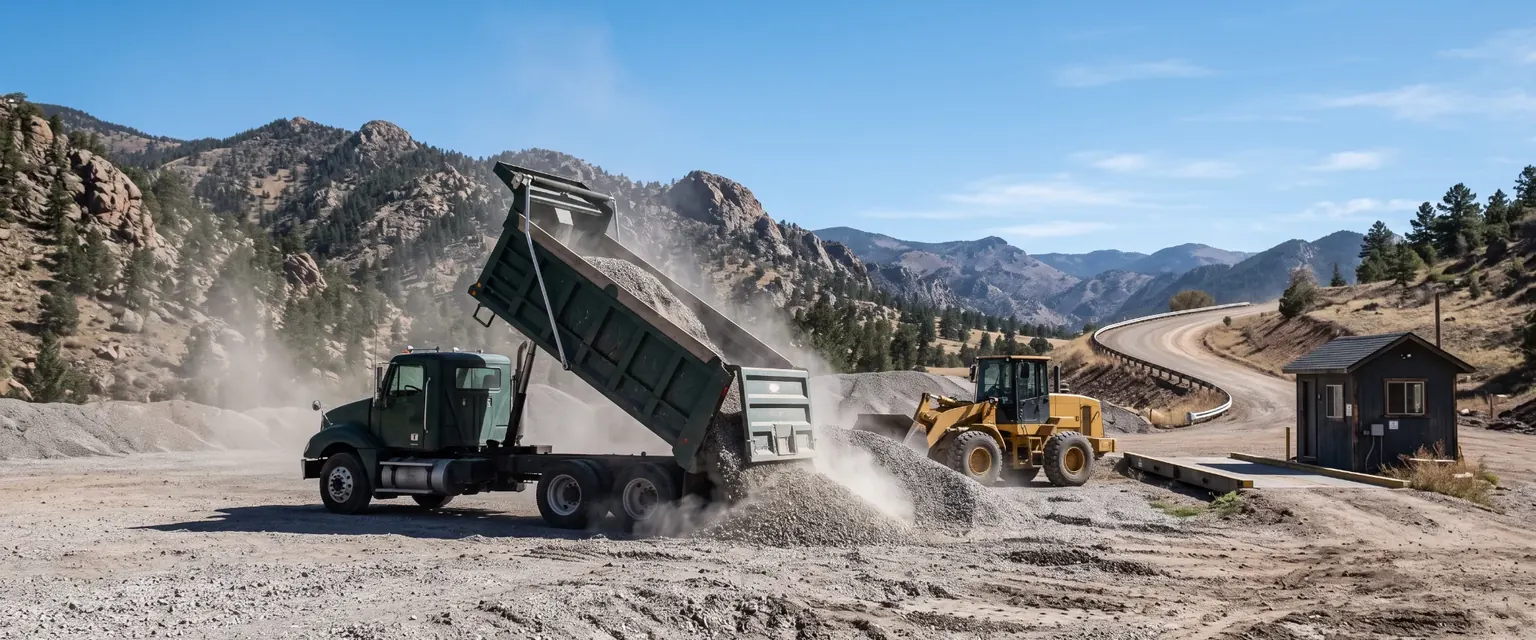
A loaded Mack dump truck is the most expensive thing most dirt outfits put on a public road. Whether it hauls your own material or someone else's for a fee changes the whole policy. Here's where that line sits in Colorado, and what the truck, the load, and the driver each need. Dump Truck and Aggregate Hauling insurance
Nearby
Working outside Pueblo? The next pages over.
Do I need a license to excavate in Pueblo?
What does Pueblo County require to dig in a county right-of-way?
Who licenses septic installers in Pueblo County?
Statutes and numbers on this page last verified September 2, 2026 by a licensed Colorado producer. How we verify.