EXCAVATION TRADE
Dump Truck and Aggregate Hauling Insurance in Colorado
A loaded Mack dump truck is the most expensive thing most dirt outfits put on a public road. Whether it hauls your own material or someone else's for a fee changes the whole policy. Here's where that line sits in Colorado, and what the truck, the load, and the driver each need.
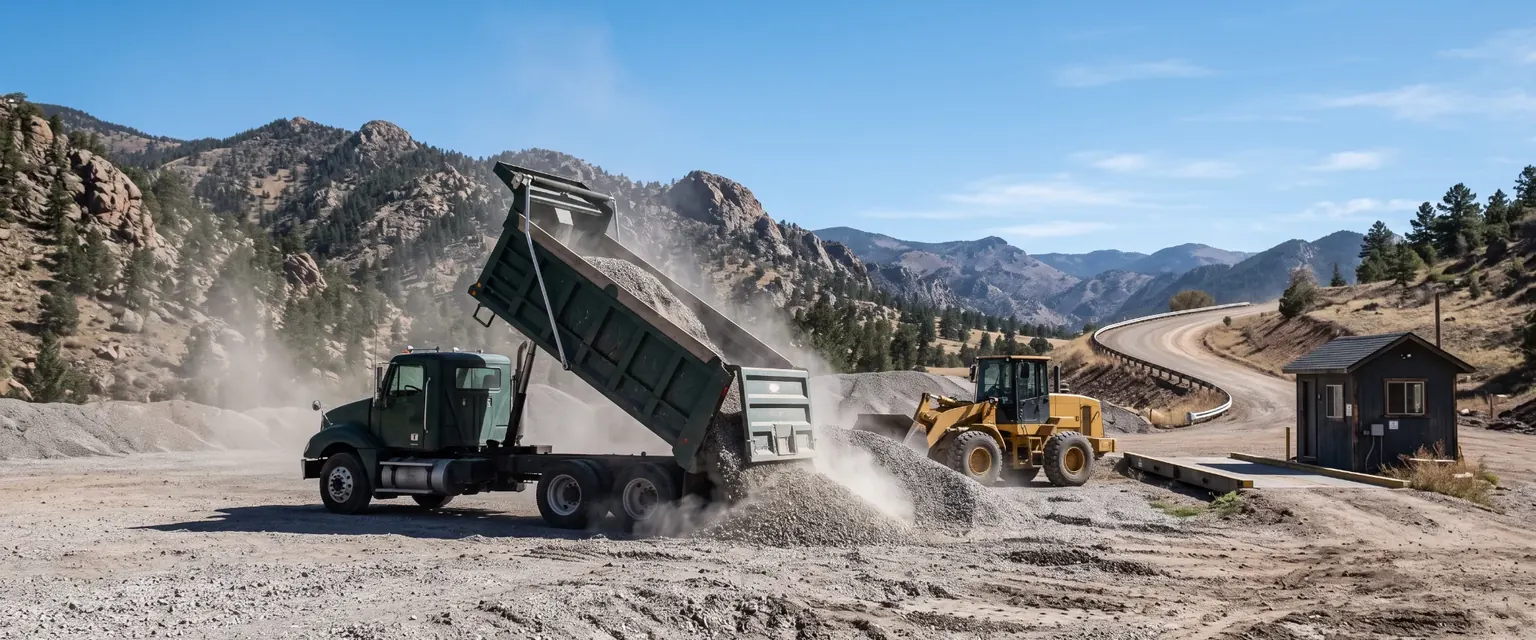
Two trucks, two policies. The Mack dump truck with a plate on it is commercial auto. The Bell articulated truck that lives at the pit is contractors equipment. The load in the bed is a third thing, and whether you own it or somebody pays you to move it decides what kind of auto policy you’re allowed to have. We run both trucks out of Park County and haul road base down US 285 most weeks, so this is written from the driver’s seat. It sits under our excavation hub; if you also tear things down and haul the debris, the demolition page covers that side.
What the underwriter sees on a hauling application
Radius, weight, and who owns the load.
Radius of operation is the first thing an auto underwriter looks at. A truck that runs from the pit to jobs within fifty miles of Fairplay is one class. A truck that runs Front Range to Western Slope on I-70 is another. Be accurate here. A radius that doesn’t match your fuel receipts comes up after a claim. Then gross vehicle weight and the count: a tandem Mack, a tri-axle, a lowboy pulling the excavator, each rated on weight, use, and the driver’s record.
Then the question that changes everything: for-hire or own account. Hauling your own material to your own jobs is own-account use, and it rides on a contractor’s auto policy. Hauling somebody else’s aggregate for a per-ton or per-hour rate is for-hire trucking. Different class, different forms, and past the weight and revenue lines the federal government draws, a registration and a filing the policy has to match. Plenty of dirt outfits drift into for-hire a load at a time, hauling for a neighbor’s GC when the machines are idle, and never tell the agent. The policy stays own-account. The work doesn’t.
Colorado adds grade and weather. Crow Hill, Kenosha Pass, Floyd Hill on I-70, all with a loaded truck and freeze-thaw on the road half the year. Wind around Greeley that pushes an empty end dump across a lane. Hail in the yard from May to September.
The five exposures that produce hauling claims
- A loaded truck on a grade. A Mack dump truck with fourteen tons of road base comes down Crow Hill on US 285 toward Bailey in the first freeze-thaw of November, the brakes are hot, and it rear-ends a car at the light. Commercial auto liability, and the limit is the whole story.
- Gravel spillage and windshields. A tailgate that didn’t latch leaks three-quarter rock along I-70 near Idaho Springs on a Friday afternoon. A dozen windshield claims come in over the next week, and each one wants to know whose truck it was.
- Hauling for hire without the paperwork. You haul pit-run for a GC in Weld County at a per-ton rate on a policy written for hauling your own material. The underwriter reads that as for-hire trucking, which is a different class and, past a point, a federal filing.
- Rollover on the pit road. A Bell articulated truck slides off a soft haul road at a gravel pit outside Pueblo after a monsoon downpour and tips into the ditch. It has no plate, so that is an equipment claim under inland marine, not auto.
- The subhauler you brought on. A big pour in Greeley needs three extra trucks, so you hire subhaulers. One of them clips a parked car in a 50 mph wind, and his policy lapsed last month. Without hired and non-owned auto on your policy, that claim is looking at you.
Tailgates leak and drivers have bad days. The stack below is built so each of those lands where it was supposed to.
The coverage stack we’d build
| Coverage | Why | Typical contract requirement |
|---|---|---|
| Commercial auto, liability plus physical damage, with hired and non-owned auto | Every plated truck: the Mack, the tri-axle, the lowboy, the service pickup. Personal auto forms commonly exclude business use, and a loaded dump truck is business use. | $1M combined single limit; certificate to the GC or the pit; for-hire work adds the MCS-90 or state equivalent |
| Motor truck cargo (usually placed with the auto carrier) | The load, when it belongs to someone else. Aggregate, asphalt millings, a customer’s topsoil. | Sometimes on hauling contracts; the limit should match the priciest load you carry |
| Contractors equipment (inland marine) | The Bell truck, the loader that fills it, and the excavator on the lowboy. Rollover, fire, theft, transit. Nothing without a plate belongs on the auto policy. | Your lender, not your customer |
| General liability | The truck off-road on the site, the pile you dumped on the wrong lot, the spotter you didn’t have. Ongoing and completed operations. | $1M per occurrence / $2M aggregate; GC as additional insured |
| Workers’ compensation | Drivers, spotters, and the guy under the box with a grease gun. Required at the first employee. | Statutory; waiver of subrogation on GC and public work |
| Umbrella / excess | A loaded truck into a car with two people in it can pass $1M before the lawyers are done. | Often on public work and larger GC contracts; sometimes on for-hire agreements |
| Pollution liability | Diesel and hydraulic oil out of a rolled truck into a ditch or a creek. Excluded under most standard auto and GL forms beyond a small buyback. | Rare on hauling contracts; common on pit and public work |
The line that bites is the auto policy’s use description. If the policy says own account and the work is for-hire, the carrier can argue the class was misrepresented, and the MCS-90, if you were supposed to have one, isn’t there. Still covered on an honest own-account policy: the Crow Hill rear-end, the windshields, the physical damage to your truck, subject to limits and deductibles. Commonly missing: the for-hire class, the filing, cargo, and hired and non-owned auto. Check those four first on any hauling policy that comes through for review.
Contract requirements you’ll run into
Hauling paper is lighter than GC paper, but it shows up in different places:
- The pit agreement. Most aggregate suppliers we’ve dealt with want a certificate before your truck crosses the scale: auto at $1M combined single limit, GL, and workers’ comp.
- GC subcontracts. The usual: $1M/$2M GL, $1M auto, hired and non-owned, additional insured, primary and non-contributory, waiver of subrogation. Some GCs now ask for a higher auto limit or an umbrella on heavier trucks.
- For-hire agreements and brokers. Evidence of the federal or state filing and cargo at a stated limit. If you don’t have the filing yet, the load isn’t yours to haul.
- Public and CDOT work. CDOT utility and special-use permits for work in state highway right-of-way require commercial general liability of $1,000,000 per occurrence and $2,000,000 aggregate and $1,000,000 auto liability, with CDOT named as additional insured and certificates furnished before work starts; access-permit projects may also require a performance bond. (CDOT Form 1233 (Utility Permit) and Form 1283 (Special Use Permit); 2 CCR 601-18 § 2.2.2) [VERIFY] The same template shows up on county road departments and water districts, usually with a bond behind it. Our bonds page explains why surety is not insurance.
Colorado notes for haulers
The state minimum is legal, not commercial. Colorado requires minimum auto liability limits of $25,000 per person and $50,000 per accident for bodily injury and $15,000 per accident for property damage (C.R.S. 10-4-620; 42-7-103(14)(a)), unchanged as of 2026; commercial contracts commonly ask for $1,000,000 combined single limit instead. (C.R.S. 10-4-620; 42-7-103(14)(a)) A single loaded dump truck into a sedan on Kenosha Pass can use up 25/50/15 before the ambulance leaves. Nobody hauling aggregate should be on the minimum.
USDOT numbers and the PUC. Whether you need a USDOT number, and whether Colorado’s Public Utilities Commission wants a permit on top of it, turns on gross vehicle weight, whether the truck crosses a state line, and whether you haul for hire. We don’t print the thresholds because they get revised and the agent isn’t the authority. FMCSA and the PUC are. Ask them first, then send us the answer, because the auto policy has to match the registration.
Workers’ comp. Colorado employers must carry workers' compensation insurance as soon as they have one or more employees, whether part-time, full-time, or family members (C.R.S. 8-40-203(1)(b), 8-44-101); the state can fine an uninsured employer up to $500 for every day without coverage. (C.R.S. 8-40-203(1)(b); 8-44-101; 8-43-409) A driver is an employee. So is the seasonal spotter at the dump point.
Class codes. Landscaping contractors are typically rated under NCCI code 0042 (Landscape Gardening & Drivers; lawn maintenance under 9102), excavation under 6217 (Excavation & Drivers), tree work under 0106 (Tree Pruning), and stand-alone snow-clearing under 9402 (Street Cleaning & Drivers); the carrier makes the final assignment under NCCI rules. (NCCI Scopes Manual) [VERIFY] On a dirt outfit that also hauls, the excavation code includes drivers. An outfit that is only trucks typically rates under a trucking code, and the carrier makes that call from the payroll and the vehicle list.
The tarp. A tarped, latched load is your defense on the windshield claims, and the adjuster will ask.
Where the trucks run. The pit agreements, weigh stations, and road conditions differ between Park County, Greeley and Weld County, and Pueblo. Those pages carry what we know about each.
Where to go from here
Already carry commercial auto? The fastest move is a policy review. Send the dec pages and the vehicle schedule and we’ll mark the use description, the radius, the hired and non-owned line, and whether cargo and the filing are there. Starting fresh? Get Insured lists what to have ready: the vehicle list with weights and the honest own-account versus for-hire split. No online quote. A hauling policy is built around where the trucks go and who owns what’s in the bed.
Serving businesses located in Colorado. Coverage is determined by the policy language and the carrier.
Coverage
Coverage built for dump truck and aggregate hauling.
-
 Coverage
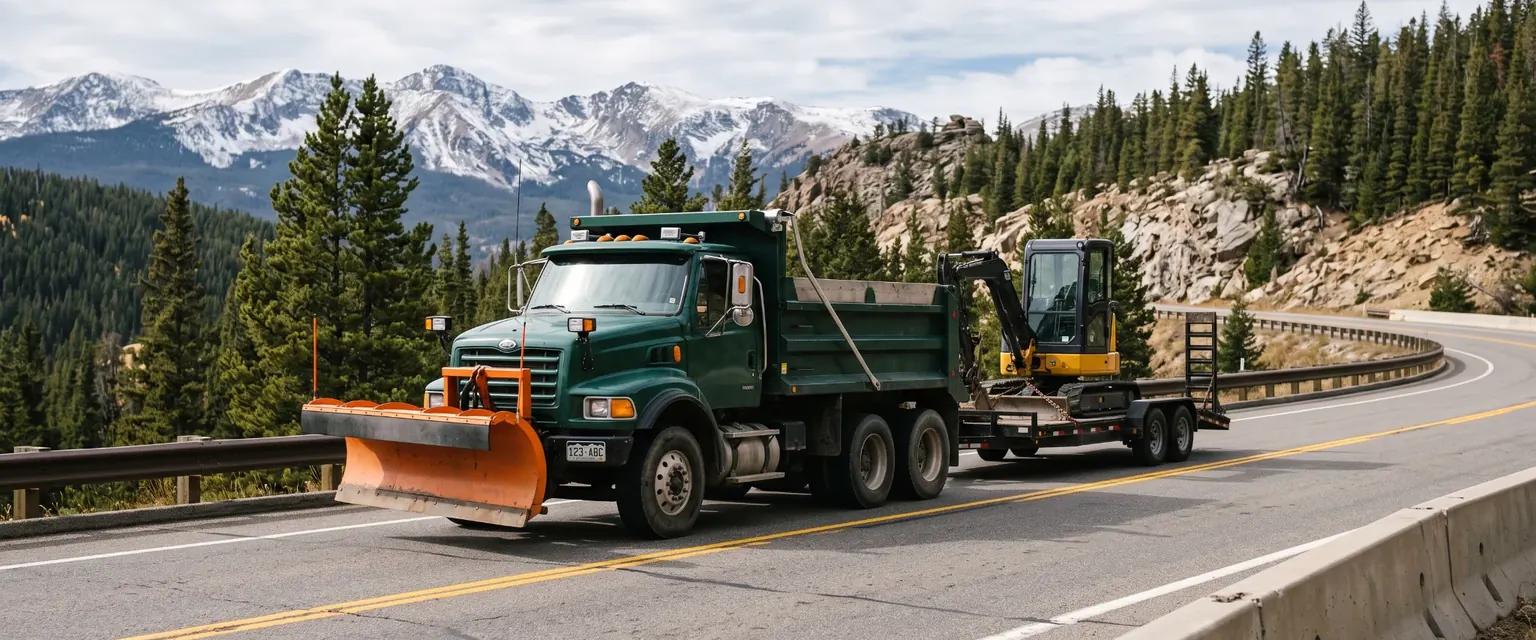
Commercial auto
Covers the dump truck, the plow truck, and the crew pickup on the road. Personal auto typically won't. Commercial auto explained -
 Coverage
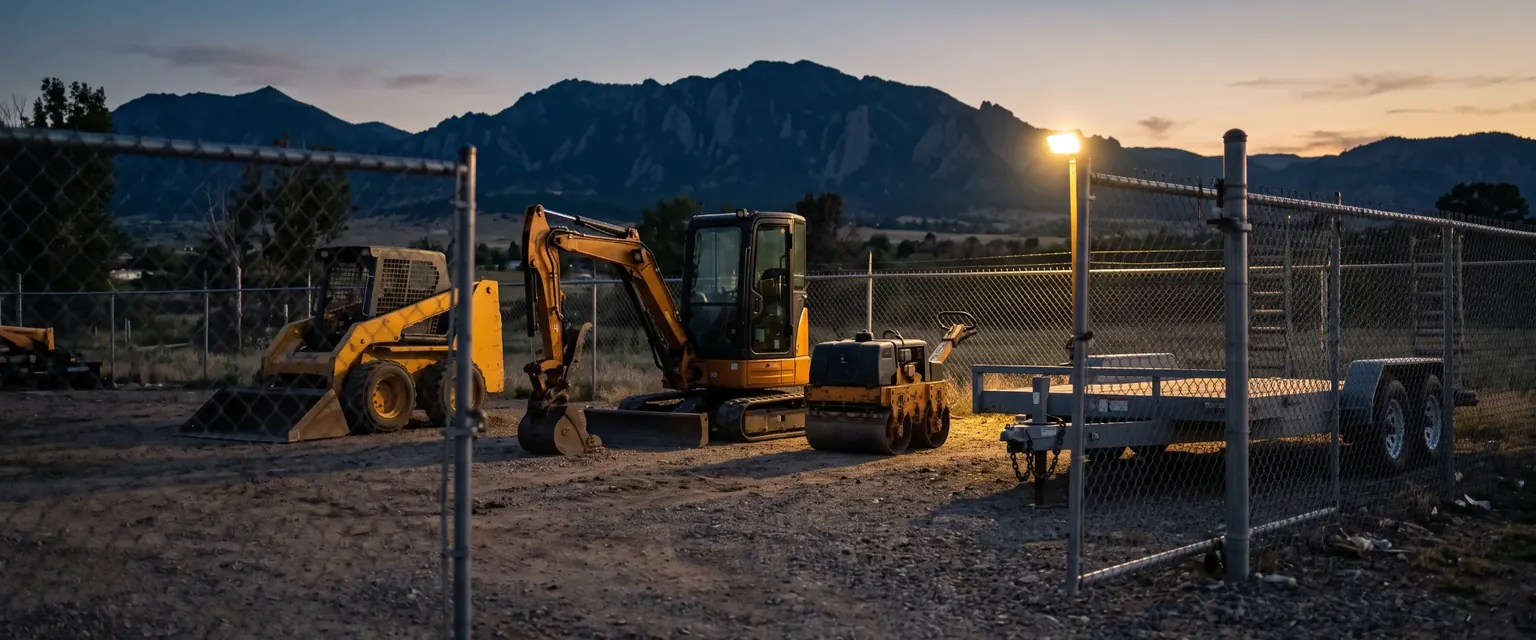
Contractor's equipment (inland marine)
Insures your own iron: theft, rollover, fire, transit. Pays what you scheduled, so the schedule matters. Contractor's equipment (inland marine) explained -
 Coverage
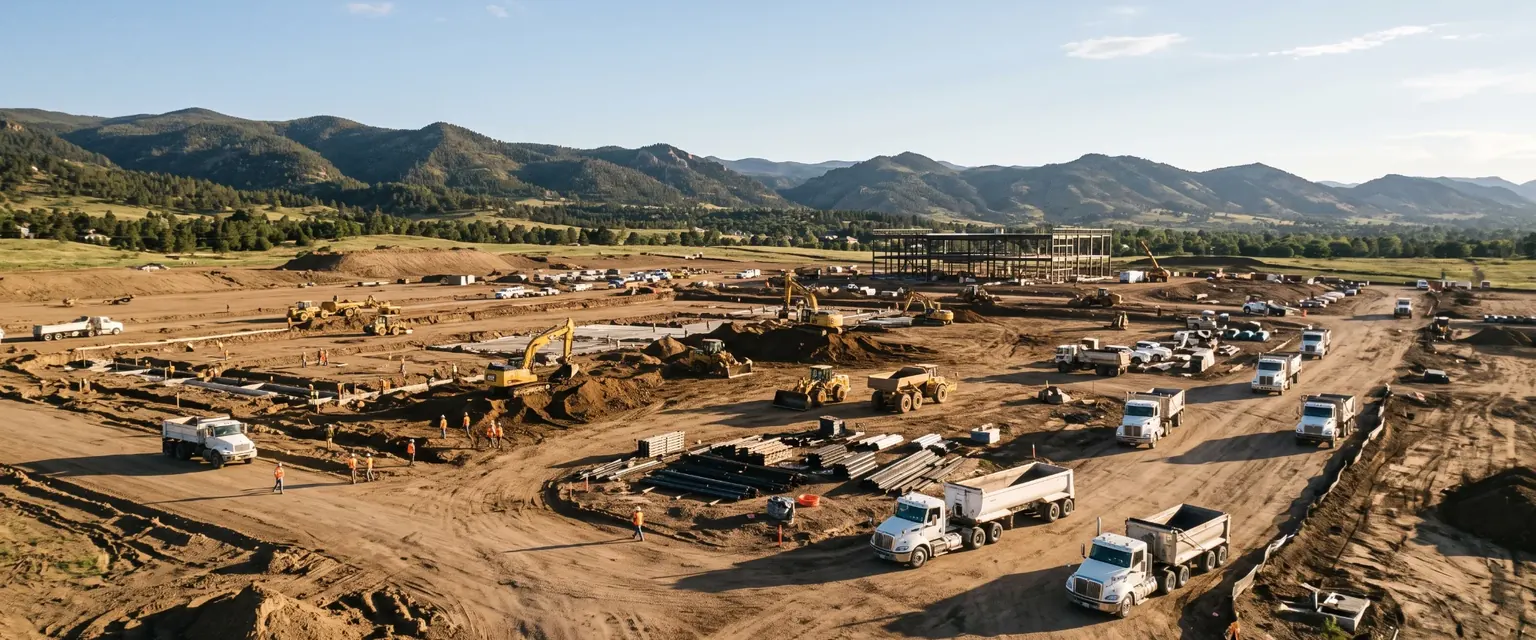
Umbrella and excess
Stacks on top of GL, auto, and employer's liability for the claim that blows past $1M. Umbrella and excess explained
Do I need a USDOT number to run a dump truck in Colorado?
What is an MCS-90 and does my policy need one?
Is gravel that falls off my truck covered?
Does general liability cover my dump truck?
Statutes and numbers on this page last verified September 2, 2026 by a licensed Colorado producer. How we verify.