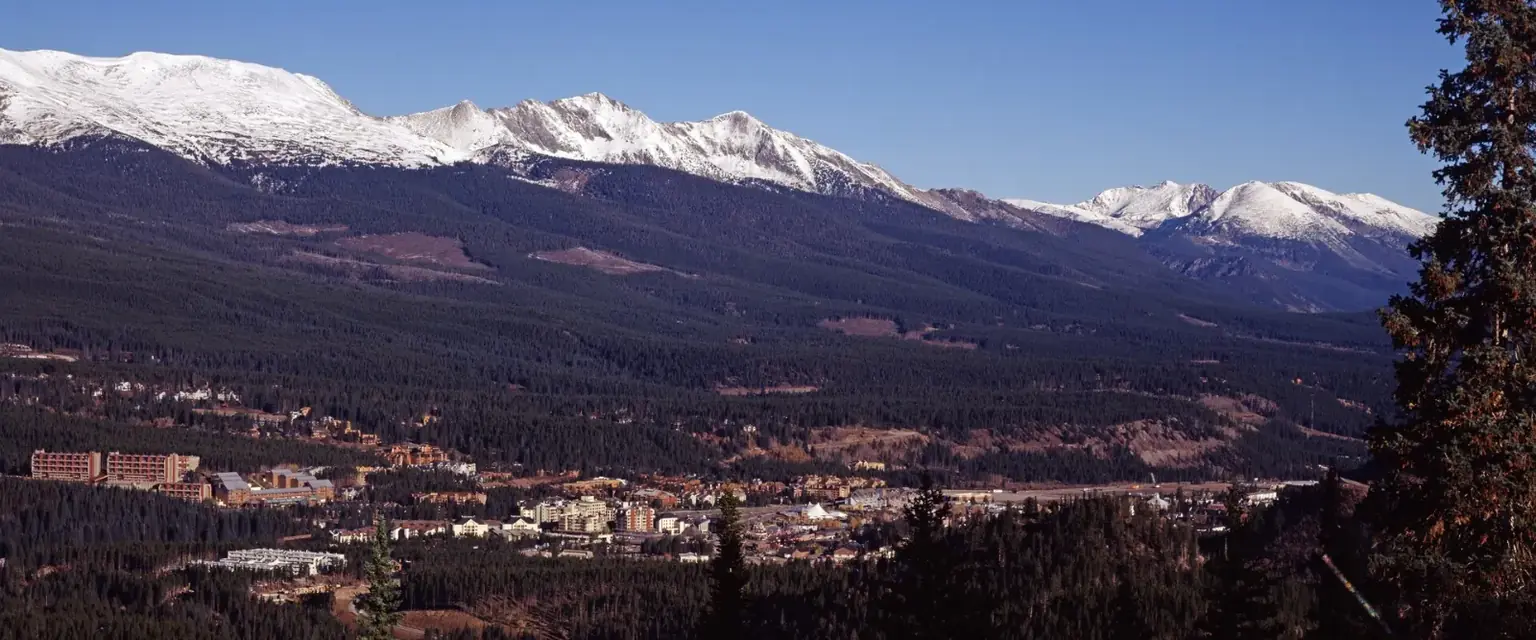
COLORADO · MOUNTAINS
Excavation, Landscaping, and Snow Insurance in Vail and Eagle County
Vail and the down-valley towns are where a small landscaping or excavation outfit finds itself working on some of the highest-value residential ground in the state. The certificate asks match the property values, and so do the claims.
Vail at a glance
- Licensing
- Vail requires every contractor doing construction work in town, excavation included, to register annually and keep a certificate of liability insurance on file with the Town as holder; unincorporated Eagle County does not license general contractors but permits all soil disturbance, permits right-of-way work with insurance and collateral, and licenses septic installers.
- Ground
- River cobble and a high water table on the valley floor along Gore Creek, decomposed granite and shale-derived clay on the hillsides, drier sandy clay benches down valley toward Gypsum, and mapped avalanche and steep-slope hazard zones the town reviews before it permits.
- Snow
- Snow stacks up in the valley on a west wind; resort lodging in Vail Village, Lionshead, and Beaver Creek runs on accumulation triggers with storm standby, HOA and property-management work in Avon and Edwards carries one-inch or two-inch per-push or seasonal contracts, and roof shed onto walks is the recurring claim.
- Contracts
- Property managers ask for $1M/$2M general liability with the association and manager as additional insured, primary and non-contributory, a waiver of subrogation, $1M auto, completed operations by endorsement, and an umbrella more often than anywhere else in the mountains, with $5M asks on large lodging properties.
The first thing a contractor notices in Vail is the driveway. Heated, snowmelted, stone walls on both sides, and a house behind it worth more than every machine you own put together. The second thing is the certificate request from the property manager, which is longer than the contract. This page covers how excavation, landscaping, and snow removal coverage gets built for Vail, Avon, Edwards, Eagle, and Gypsum.
The licensing reality in Vail and Eagle County
Vail registers. The county permits. Neither one licenses an excavator or a landscaper by trade, and both will stop a job that skipped the paperwork.
In town: Vail Town Code 4-7-2 requires every contractor performing construction work in the town, expressly including excavation work, to register with the Town before starting work or applying for a permit; registration is $67 a year and a certificate of liability insurance naming the Town of Vail as certificate holder must be kept current. (Vail Town Code 4-7-2; Chapter 4-7 (4-7-5 Insurance)) The certificate is the part that matters for us. The Town of Vail as certificate holder means the town gets notice if the policy cancels, and the town code has an insurance section we haven’t read in full, so we won’t quote minimums. Ask Community Development what they expect on the certificate before you register, then send it to us.
In the unincorporated county: Owner-builders and general contractors need no registration or license to build in unincorporated Eagle County, but plumbers and electricians must hold state licenses and septic installers must be licensed through Eagle County Environmental Health. (Eagle County Building Department FAQs) That’s the building side. The engineering side is where dirt work actually gets permitted. Eagle County requires a grading permit for all soil disturbance, grading, excavation, and earthwork construction under Appendix J of the 2021 IBC and Chapter III of the Land Use Regulations, and a permit for any work within county right-of-way under Chapter 11 of the Engineering Criteria Manual, which requires permittees to maintain insurance and collateralize the work. (Eagle County Engineering, Grading Permits and ROW Permits; Engineering Criteria Manual Ch. 11; 2021 IBC App. J) “All soil disturbance” is the operative phrase. There is no small-job exemption on the county’s page, so a retaining wall cut in Edwards or a driveway regrade in Eagle-Vail goes through the permit, and the right-of-way permit carries an insurance and collateral requirement the county sets job by job.
Septic got stricter this year. The Eagle County OWTS Regulations, adopted January 20, 2026 and effective March 6, 2026, require every OWTS to be designed by a Colorado registered professional engineer and installed by an installer licensed in Eagle County, and all installers and cleaners must hold an annually renewed System Contractor license from the Eagle County Environmental Health Department. (Eagle County OWTS Regulations (adopted Jan. 20, 2026; eff. Mar. 6, 2026)) Engineer-designed on every system, licensed installer on every system, license renewed every year. If you install from Wolcott to Gypsum, the county license comes first and your pollution and completed-operations coverage comes second.
And for landscapers, the rule that changes what you can plant: Vail's wildland-urban interface standards add Chapter 7A (Fire Resistive Construction) requiring non-combustible or ignition-resistant exterior wall coverings, decking, eaves, soffits, doors, and vents, and require ignition-resistant landscaping under Title 14 from the building drip edge out to 100 feet or the property line, whichever is less. (Town of Vail, Wildland Urban Interface Building, Planning and Development Standards Summary; Vail Town Code Ch. 7A; Title 14) That zone covers most of a Vail lot. Plant the wrong shrub inside it and the town’s inspector, not the homeowner, is the one who rejects the job.
Terrain and soil
Vail sits on a narrow valley floor with the mountain on one side and I-70 on the other, and the lots run up the hillsides on both. The soil changes with the elevation. Along Gore Creek you hit rounded river cobble in sand, wet by June, with the water table close enough that a septic test pit fills overnight. Up the slopes in East Vail and above Avon you’re into decomposed granite and shale-derived clay on grade, which sheds water one week and holds it the next. Down valley, from Edwards to Gypsum, the ground turns to sandy clay and cobble benches on old river terraces, easier to dig, with a wind that dries a cut before you can compact it.
What it does to the work. Everything in Vail is on a slope, so every wall is a retaining wall and every wall holds back snowmelt. The failure we see is hydrostatic: a stone wall built tight to the cut with no drain rock behind it, leaning by the second spring. That claim lands on the hardscape contractor years later, under completed operations. Trenching on the valley floor means dewatering, and dewatering means a discharge somewhere, which is a pollution question before it’s a GL one.
Avalanche paths are real here. East Vail and parts of the upper valley have mapped hazard zones, and building or grading inside one brings the town’s engineering review with it. We don’t quote the maps. Ask the town or the county for the current hazard mapping on any lot under a steep north-facing slope before you price the work. What it means for your policy is simpler: a machine parked below a slide path in February is an inland marine question, and the answer is usually to move the machine.
Snow, and what the contracts trigger
Vail’s snow comes in on the west wind and stacks up in the valley, and the town’s own plows are good enough that most of the private work is driveways, walkways, and the parking decks under the condo buildings. Heated driveways cut the plow work on the high-end homes but not the shovel work on the decks and stairs, which is where the slip-and-fall claims live.
Contracts here read three ways. Resort-managed lodging in Vail Village, Lionshead, and Beaver Creek runs on accumulation triggers, often with a standby crew during storms and a deicing schedule the manager sets. HOA and property-management contracts in Avon, Edwards, and Eagle Ranch commonly carry a one-inch or two-inch trigger with per-push or seasonal billing, and they ask about roof shed because the snow off a steel roof lands on the walk. Down-valley municipal work in Eagle and Gypsum is bid, seasonal, and lighter on snow than the upper valley.
The clause to look for in every one of those is the indemnity paragraph. Colorado's Snow Removal Service Liability Limitation Act (C.R.S. 13-21-129, effective August 8, 2018) voids any snow-and-ice contract clause that requires one party to indemnify, hold harmless, or defend the other for the other party's own acts or omissions, but only where the service provider was prohibited, by the contract or in writing, from mitigating the specific snow or ice event at issue. (C.R.S. 13-21-129(3), (4); SB 18-062) So the statute can void the version that makes you pay for the manager’s own negligence, but only when the contract also kept you from treating the event, and the contracts still arrive with it. The certificate ask underneath it doesn’t change. Our residential and HOA plowing page covers what the plow truck needs to be on.
Contract norms we see here
Property values set the limits. A Vail property manager commonly asks for $1M per occurrence and $2M aggregate general liability, $1M commercial auto, the association and the management firm as additional insured, primary and non-contributory, and a waiver of subrogation. The umbrella ask shows up more often here than anywhere else in the mountains, and a $5M ask on a large lodging property is not unusual. Some managers also want a per-project aggregate and completed operations shown on the certificate by endorsement, not just by a line on the form.
Tree work and clearing on Vail lots gets its own certificate ask, because the tree is worth more than the machine that takes it down, and so is the neighbor’s roof. Our tree service page has the height and removal questions the carrier will ask.
Here’s the honest part. The property manager’s template is written for a national contractor, and a three-truck Edwards outfit will be asked for the same paper. Most of it is producible. Some of it isn’t, and the manager usually doesn’t know which is which. Send us the requirements before you sign.
Nearby
In the Vail valley we work with contractors in Avon, Beaver Creek, Edwards, Eagle, Gypsum, Minturn, and Red Cliff, and the crews that run I-70 in both directions. East over Vail Pass is Summit County, Breckenridge, and Frisco, where the permit calendar is stricter and the snow contracts are bigger. West down the canyon the ground changes completely; irrigation and shale are the story on our Grand Junction and Mesa County page. The full map is on the Colorado hub.
Already carry coverage? Send the dec pages to the policy review and we’ll check the umbrella, the completed-operations endorsement, and the equipment values against what the manager is asking for. Picking up your first Vail contract? Get Insured lists what to have ready.
Serving businesses located in Colorado. Coverage is determined by the policy language and the carrier.
Trades
Trades common in Vail.
-
 SNOW TRADE
Residential and HOA Snow Plowing
Most residential plowing in Colorado starts with a pickup, a blade, and a personal auto policy that was never told. Here's what an HOA and driveway plowing policy has to do, from an agency that plows driveways above 9,000 feet in the dark. Residential and HOA Snow Plowing insurance -
 LANDSCAPING TRADE
Hardscape and Paver Installer
A retaining wall is the one thing a landscaper builds that can hurt somebody three years after the final payment. Pavers heave, walls lean, and the block stacked on the driveway belongs to you until the owner signs. Here's what a hardscape outfit's policy has to do in Colorado. Hardscape and Paver Installer insurance -
 LANDSCAPING TRADE
Tree Service
Tree work is the landscaping trade carriers are most careful with, and the one landscapers most often do without telling anyone. Here's what a Colorado tree service policy has to cover, and why the honest answer starts with whether a carrier will write it at all. Tree Service insurance
Nearby
Working outside Vail? The next pages over.
Do I have to register with the Town of Vail to do excavation or landscaping work?
Does Eagle County require a permit for a small grading job?
What insurance do Vail property managers ask for from a snow or landscape contractor?
Statutes and numbers on this page last verified September 2, 2026 by a licensed Colorado producer. How we verify.