EXCAVATION TRADE
Land Clearing and Forestry Mulching Insurance in Colorado
A tracked forestry mulcher is a diesel engine and a spinning drum in a stand of dry lodgepole. Fire is the claim underwriters think about first, and it is not always the claim your policy was written for. Here's what a clearing outfit's coverage has to do in Colorado, from the machine to the land it works on.
Fire is the claim. Everything else on this page is secondary. A tracked forestry mulcher above 9,000 feet in August is a hot exhaust, a spinning drum, and a mat of shredded lodgepole in the driest fuel in the state. We run one in Park County on defensible-space jobs, and we watch the belly pan closer than the work. This page sits under our excavation hub; if you clear lots and then grade pads on them, the grading and site prep page covers the second half.
What the underwriter sees on a clearing application
The machine, the fuel it works in, and the land it works on.
The machine first. A dedicated tracked mulcher, a skid steer with a mulching head, or a mid-size excavator with a flail. Value, age, hours, and whether fire suppression is installed. Some carriers ask about mulching by name because they’ve paid for a burned machine before. Answer honestly; it keeps the claim clean.
Then the fuel. Not diesel, the vegetation. Dense lodgepole above 9,000 feet, beetle-kill standing dead for a decade, gambel oak on the south slopes near Durango, cured grass on South Park where the wind never quits. An underwriter who knows Colorado reads those as ignition risk and spread risk, two different claims on two different policies.
Then the land. Private lots are one picture. HOA fuel breaks are another. USFS, state forest service, and county mitigation contracts are a third, with their own insurance sections, their own fire plans, and a landowner (the public) that takes damage to standing timber seriously.
Colorado adds the wildland-urban interface. More cabins in the trees every year, and more contracts that spell out when you can run and when you can’t. Red-flag days, a water tender on site, a spark arrestor on the exhaust. That paper is your friend at a claim.
The five exposures that produce clearing claims
- The machine catches fire. A tracked forestry mulcher packs shredded lodgepole against a hot exhaust on a defensible-space job above Bailey in August, and the belly pan lights while the operator is on the far side of the lot. That is your equipment burning, so it is inland marine, and only if fire is on the form.
- The fire leaves the lot. The same mulcher throws a spark into cured grass on a windy afternoon on South Park and the fire runs to the neighbor’s fence line before the crew knocks it down. Their fence, their outbuilding, and the suppression bill are general liability, and the numbers climb fast in the WUI.
- Fuel on the ground. A saddle tank on a mid-size excavator grubbing stumps outside Durango splits on a rock and forty gallons of diesel go into a dry creek bed. Under most standard GL forms that is a pollution claim, and the exclusion is broad.
- Rollover on slope. A skid steer with a mulching head slides sideways on a 30 percent slope of decomposed granite above Breckenridge after a morning rain. Operator injury is workers’ comp; the machine is inland marine; the tree it took out on the way down is nobody’s claim.
- Damage on someone else’s land. Clearing a fuel break on state land under a contract that runs to a survey line, the crew mulches twenty feet past it onto a private parcel near Fairplay. The landowner wants the trees valued, and that is a general liability claim with a timber-trespass argument attached.
Machines run hot and wind comes up. The stack below is built so each of those has a policy waiting for it.
The coverage stack we’d build
| Coverage | Why | Typical contract requirement |
|---|---|---|
| Contractors equipment (inland marine), fire included, scheduled at replacement | The mulcher, the excavator, the skid steer, the heads. Fire, rollover, theft off a remote lot, transit on the lowboy. GL pays none of this. | Your lender, not your customer |
| General liability, occurrence form, no wildfire or “hostile fire” exclusion | The fire that leaves the lot, the neighbor’s trees, the survey-line overrun, the rock the drum threw through a windshield. Ongoing and completed operations. | $1M per occurrence / $2M aggregate; owner, HOA, or agency as additional insured |
| Contractors pollution liability | Diesel and hydraulic oil from a split tank or a rolled machine into ground, ditch, or creek. Excluded under most standard GL forms beyond a small buyback. | Common on state, federal, and district contracts; rare on residential |
| Workers’ compensation | Rollover, chainsaw, and slash-pile injuries. Required at the first employee. | Statutory; waiver of subrogation on agency and GC work |
| Commercial auto | The lowboy hauling the mulcher up US 285, the water tender, the crew truck. Personal auto forms commonly exclude business use. | $1M combined single limit on any contract with an insurance section |
| Umbrella / excess | A fire with three neighbors and a suppression bill on it can pass $1M. | Often on agency and district contracts; worth pricing on any WUI work |
The line that bites is the wildfire question on the GL. Some contractor GL forms carry a wildfire, “hostile fire,” or “logging and lumbering” exclusion that reads fine on a driveway outfit and takes the whole clearing operation off the policy. Still covered on a clean occurrence form: the neighbor’s property, the injury, the defense, subject to limits. Commonly excluded even then: your own burning machine (inland marine) and the diesel in the creek (pollution). Read the exclusions page before you bid a WUI job.
Contract requirements you’ll run into
Clearing paper runs from a handshake to a federal solicitation:
- Homeowners and cabins. Usually nothing in writing. Some ask for a certificate after their own insurer asked about defensible space. Send it anyway.
- HOAs and fire protection districts. $1M/$2M GL, the association or district as additional insured, auto, and workers’ comp. Cost-share programs often want a fire-prevention plan with the certificate.
- State forest service and county mitigation programs. The same certificate, plus contract terms about spark arrestors, water on site, and stopping work on red-flag days. Those terms become the standard of care if a fire starts.
- USFS and other federal contracts. The insurance section is set in the solicitation and varies by contract type. Expect the agency as additional insured, a fire plan, and sometimes a performance bond. Our bonds page explains why surety is not insurance.
Colorado notes for clearing outfits
Workers’ comp. Colorado employers must carry workers' compensation insurance as soon as they have one or more employees, whether part-time, full-time, or family members (C.R.S. 8-40-203(1)(b), 8-44-101); the state can fine an uninsured employer up to $500 for every day without coverage. (C.R.S. 8-40-203(1)(b); 8-44-101; 8-43-409) A seasonal sawyer on a fuel-break crew is exactly who the statute means.
Class codes. Landscaping contractors are typically rated under NCCI code 0042 (Landscape Gardening & Drivers; lawn maintenance under 9102), excavation under 6217 (Excavation & Drivers), tree work under 0106 (Tree Pruning), and stand-alone snow-clearing under 9402 (Street Cleaning & Drivers); the carrier makes the final assignment under NCCI rules. (NCCI Scopes Manual) [VERIFY] Mulching on a dirt outfit typically rides with excavation. If the crew also fells, climbs, or chips, expect that payroll to rate as tree work, which some carriers won’t write at all. Say so up front. Our tree service page covers that market honestly.
Stormwater on big clearings. Construction that disturbs one acre or more, or is part of a larger common plan of development or sale that will disturb one acre or more, needs coverage under CDPHE's COR400000 Construction Stormwater General Permit (or a CDPHE-qualified local program for sites between one and five acres). (CDPS General Permit COR400000 (effective April 1, 2024)) A subdivision clearing or a long fuel break can cross that line. The permit holder is usually the owner or the GC, but the erosion control is your work. Ask who holds it.
Stumps are excavation. Colorado law requires notice to Colorado 811 at least two business days before excavating, not counting the day you call (C.R.S. 9-1.5-103(3)(b)); Colorado 811 phrases the same window as three full business days, so a Monday call means a Thursday dig. (C.R.S. 9-1.5-103(3)(b)) Grubbing a stump near a cabin puts the gas line, the well line, and the power to the shed in play. Mulching on the surface generally isn’t a dig. Pulling roots is.
WUI codes and defensible-space rules. Counties and towns in the interface have adopted wildfire codes, and the specifics (which zone, what clearance, what needs a permit) change by jurisdiction and revision cycle. We don’t quote them. The county building or wildfire office is the source, and your contract should say which version applies. Park County, Summit County, and La Plata County each run their own program, and those pages carry what we know.
Burn permits and red-flag days. Whether you can burn slash, and when the mulcher has to shut down, is set by the county sheriff or fire authority and the day’s weather. Running through a red-flag warning is the first thing an adjuster looks for.
Where to go from here
Already carry GL and an equipment policy? The fastest move is a policy review. Send the dec pages and the equipment schedule and we’ll mark the wildfire exclusion, the mulcher’s scheduled value, and whether the pollution coverage would answer for a split tank. Starting fresh? Get Insured lists what to have ready: the machine list with values, the mix of private and agency work, and where you run. No online quote. A clearing book is built around the fuel you work in and what you’d lose if the machine burned.
Serving businesses located in Colorado. Coverage is determined by the policy language and the carrier.
Coverage
Coverage built for land clearing and forestry mulching.
-
 Coverage
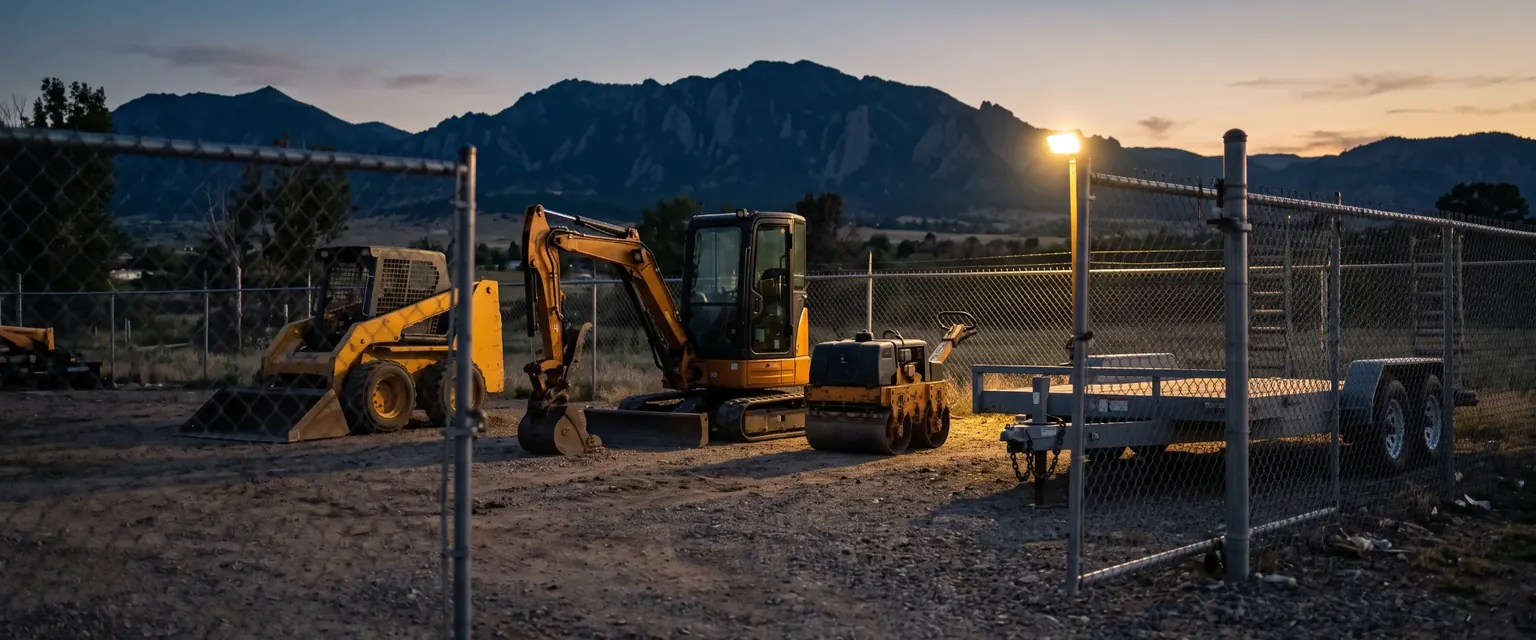
Contractor's equipment (inland marine)
Insures your own iron: theft, rollover, fire, transit. Pays what you scheduled, so the schedule matters. Contractor's equipment (inland marine) explained -
 Coverage
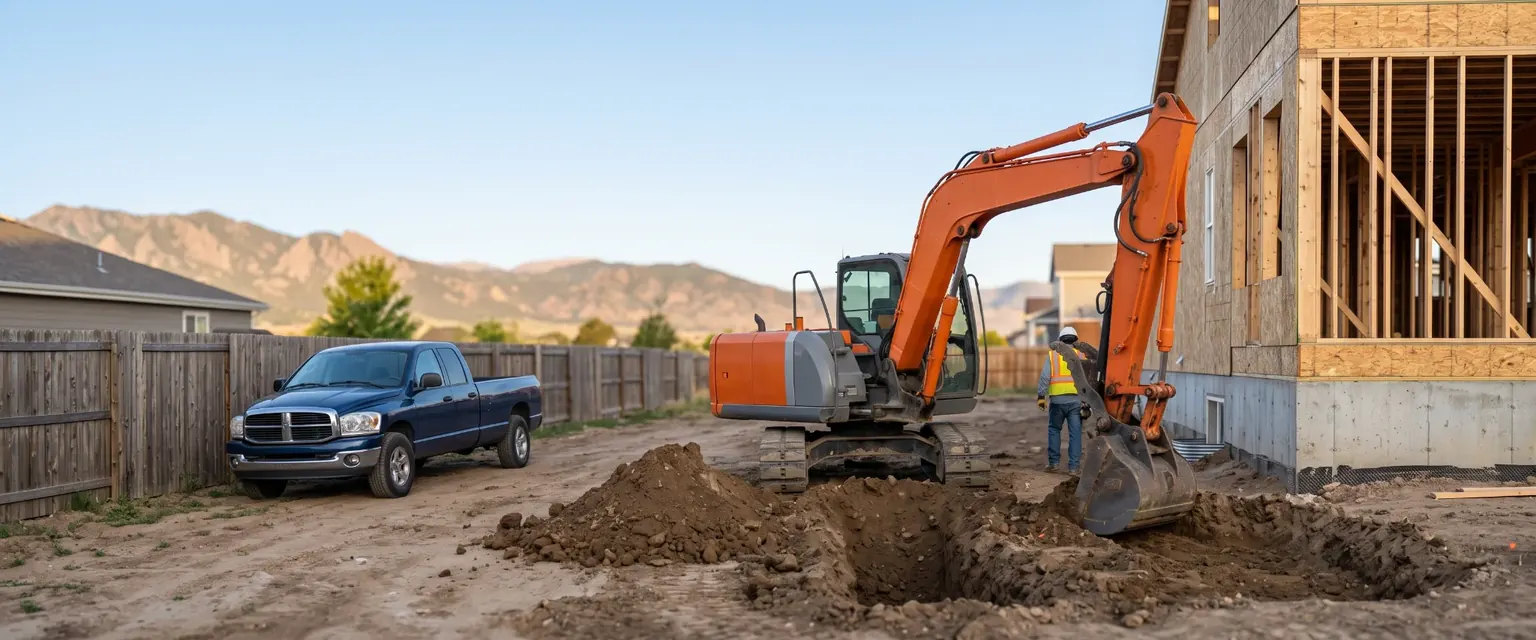
General liability
Pays when your work hurts someone else or their property. The one every GC asks about first. General liability explained -
 Coverage
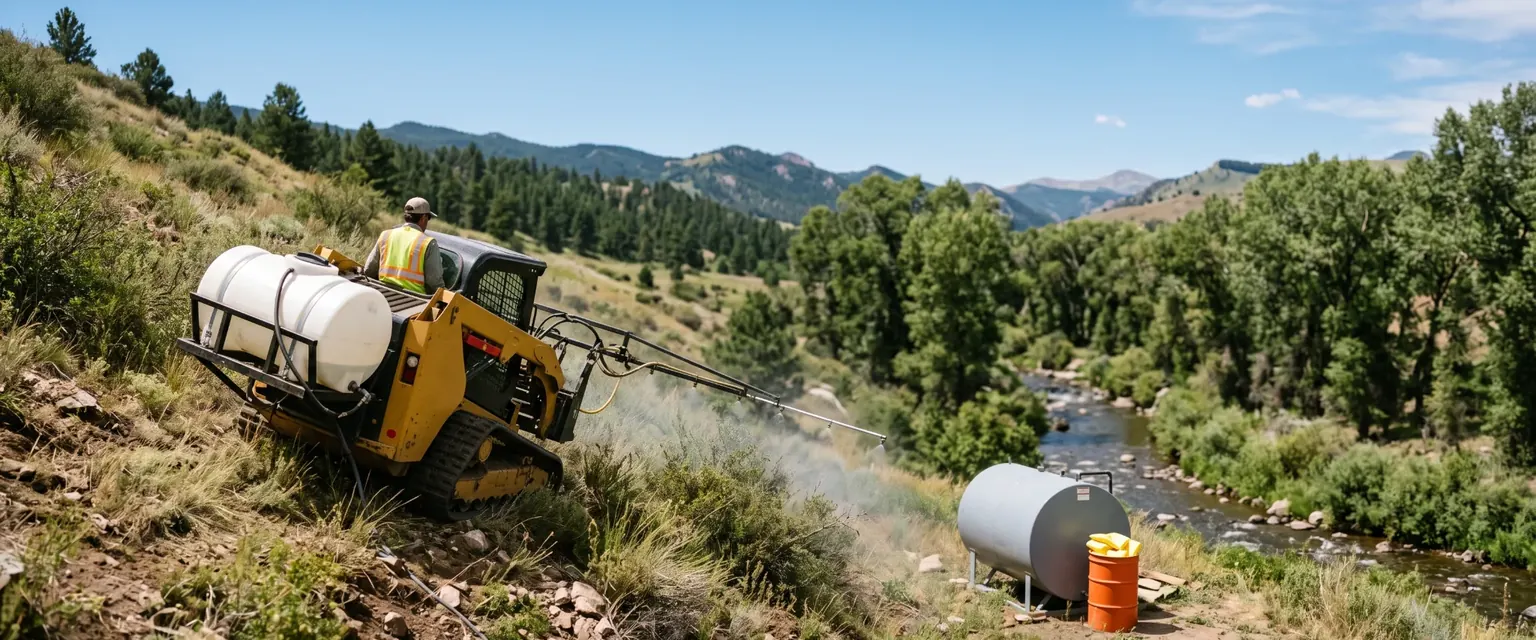
Pollution liability
Covers the fuel spill, the brine runoff, the herbicide drift. GL excludes all three under most forms. Pollution liability explained
Does my equipment policy cover a forestry mulcher that catches fire?
Am I covered if a fire I start spreads to a neighbor's property?
What insurance do I need to work on Forest Service or state land?
Is forestry mulching rated as excavation or tree work?
Statutes and numbers on this page last verified September 2, 2026 by a licensed Colorado producer. How we verify.